ny.jpg
Northeast Woodlands:
Iroquois Confederacy
The Seneca:

Geography: Location and Environment
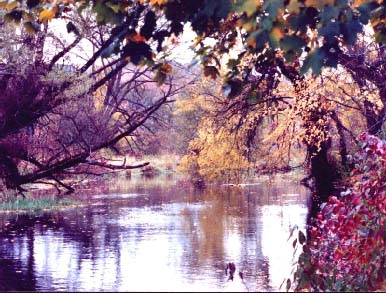
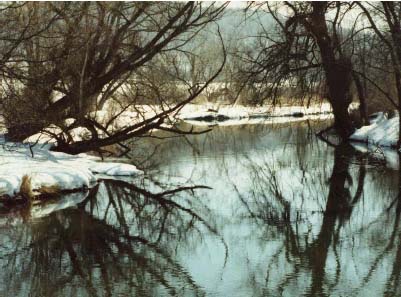
The eastern part of North America had plentiful of rainfall. Forests spread over mountains and valleys. There were many lakes and streams. This land had both valleys and mountains.
The People:
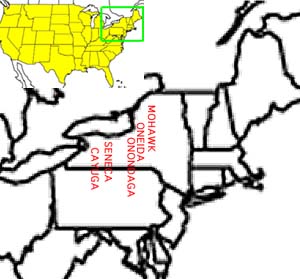
Iroquois Confederacy is six nations or tribes. All the Eastern Woodland Indians lived in much the same way but they were not alike in every way. The following are the six nations that make up the Iroquois Confederacy : The Cayuga, the Mohawk, the Oneida, the Onondaga, the Seneca, and the Tuscarora. (You can click on their name to find out where they live.)
Science
Plants:
This area is called a Woodland because there are so many trees. The many kinds of trees included pine, maple, oak, birch and elm. The Iroquois planted corn, pumpkin, squash, beans, tobacco, and gourds. This are also has many kinds of wild plants such as greens, nuts, fruits and berries. The plants flourished in the warm, rainy summers. You could also find sunflower seeds, mushrooms, strawberries, and herbs.

tiogh.jpg

Animals:
The lakes and the rivers were rich with fish. The area had sturgeons, bass, and shad, plus other fish. There were also eels and some shellfish. Mammals such as rabbit, elk, bear, and deer, woodchucks, and beaver could be found. The most important animal to the Iroquois was the deer. There were also birds and wildfowl such as turkey, ducks, geese and partridge.

Basic Needs:
Foods:
The three most important foods to the Iroquois were the Three Sisters. The Iroquois grew these plants. They three were corn, beans and squash.
The women also planted pumpkin, squash, tobacco, and gourds in the gardens. The Cayuga did not farm. They hunted, fished and gathered wild foods. In the other tribes the men also went on long hunting and fishing trips. They trapped forest animals such as deer for food. The women were the farmers and made decisions for the tribes. They gathered wild plants, berries and wild greens. They harvested the crops, prepared the food and preserved it for winter use.

tiowinter.jpg

Women ground the dry corn into meal by pounding it in a mortar made of a hollowed log. They pounded the dry corn using a small log for a pestle. Another method for using corn was to soak the corn grains until it loosened the tough hull of the corn kernel. This is how they made hominy. To have food for the cold months they dried corn, squash, berries, meat, and fish.
The Iroquois stewed corn and beans into succotash. They also made soups of corn with meat or fish in pottery jars.
The Iroquois also made special things to eat. They tapped the sugar maples and boiled it down into syrup and sugar. Then the sugar could be wrapped into strips of bark to eat all year.

For more information on food:
Traditional Indian Corn Soup

Other: They used tree bark and branches to make many of their weapons and utensils. Porcupine quills were used for decoration and for writing. The Iroquois also made stone, bone, antler and wood farming tools.

Clothes:
Men:
All of the Iroquois men wore deerskin breechcloths. The Mohawk also tattooed their bodies with elaborate geometric designs. The Tuscarora men held up their deerskin breechcloths with a woven-fiber belt. The Seneca and the Tuscarora both added moccasins and fur robes or robes made of woven feathers. The Tuscarora were not originally from this area. They brought new ideas with them from North Carolina.
The men usually shaved their heads, leaving only a scalp lock. Their headdresses were of dyed deer hair or a few feathers. (If the Iroquois had worn a large headdress, the tree branches would have torn off its feathers.)
Women: All of the Iroquois women wore short deerskin skirts. The Mohawk women also wore cornhusk slippers.
Clothes for cold temperatures :Men and women added moccasins and warm deerskin capes or fur robes. Winter's fur robes left one shoulder bare.

For more information on clothes:
Iroquois Paper doll (Women's clothing) and Iroquois Paper doll (Men's clothing)
Regional Overview of Native American Clothing and Regalia
REGIONAL OVERVIEW OF NATIVE AMERICAN CLOTHING STYLES : Northeast Region - Iroquois Tribes
Seneca beaded skirt, c. 1849
Regional Overview of Native American Clothing and Regalia
Map of North America with Native American Varieties of Moccasins
NATIVE AMERICAN CLOTHING Overview of Footwear: Moccasins
NATIVE AMERICAN CLOTHING Leather Bags and Pouches
Tanning Deer Hides and Small Fur Skins

longhou.jpg
Shelters:
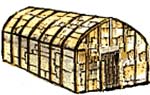
The Iroquois lived in longhouses. These were rectangular barrel shaped houses.

Transportation: The Cayuga had elm-bark canoes. The Mohawk, Oneida, Onondaga, Seneca and Tuscarora tribes had birch-bark canoes. The Seneca also used snowshoes.
The Iroquois made bark canoes in which they swiftly and silently moved over the lakes and rivers. Their used canoes to hunt and fish. On land the Indians traveled on foot and carried burdens on their backs. Their roads were only narrow paths. In winter the Seneca could travel on snowshoes.

Literature - To understand more of the culture of the Iroquois people read an original story by clicking on one of the following sites.
Sites for Literature:
The Origin of the Iroquois Nation
Seek Your Father (seneca)
Iroquois

The Iroquois Today
2000 Population
In the 1990 US census there were 53,000 Iroquois living in the United States alone. The Iroquois population is about the same in Canada.
Of these 53,000 Iroquois there were 9,133 Seneca and 1,225 Seneca-Cayuga.

Social Studies- Reservation Locations There are eight Iroquois reservations in New York State, five Iroquois reservations in Ontario and Quebec and one Iroquois reservation in Wisconsin. Some Iroquois live in Oklahoma.
The Cayuga moved to the Seneca Reservation in western NY and to Canada. Today they live in NY and Canada. The Mohawk today live in Canada and many parts of the United States. The Oneida purchased land from the Menominee Indians and moved to Wisconsin. They are also in NY and Canada. The Onondaga have reservations in Canada and NY. The Seneca has several reservations in Ontario, Canada and NY State. The Tuscarora purchased land from the Seneca near Niagara Falls.
All of the Iroquois do no not live on reservations.

For more information on the Iroquois:
The Seneca Nation of Indians
www.tuscaroras.com
Haudenosaunee Children's Page

Return Me to the First Page What is Culture?
Native American Early History Native American Contributions
I want to take Quiz 1 I want to take Quiz 2
I want to take Quiz 3 Dictionary
References and
More Information

Hosted by www.Geocities.ws

1