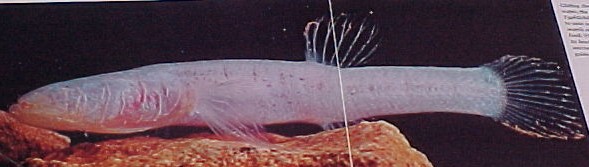
Gliding slowly through
the water, the blind cave fish Typhlichthys pauses occasionally to nose
under rock ledges in search of isopods and other food. Vibration receptors on
its head and sides detect movements in the water and guide it to its prey.
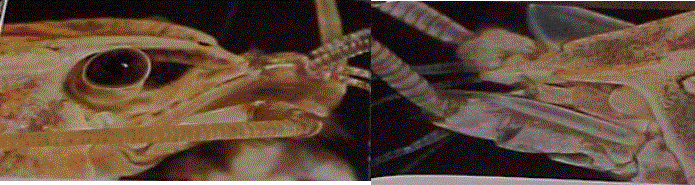
Left: The large compound eye of a surface
crayfish glints with hundreds of minute lenses. Right: The troglobitic
(cave) crayfish has no eyes, only a knoblike supporting stalk. It retains eyestalks
since the structures contain several organs not related to vision.
View the third picture in another window: http://www.geocities.com/kubyimm3/cray2.gif
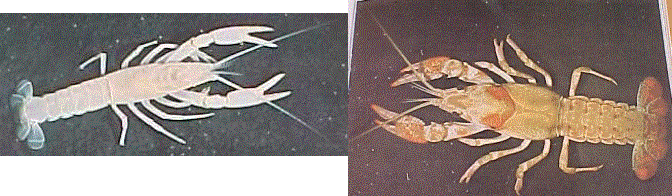
Legend of the third picture for this page: A pale shadow of its surface-dwelling
relative, the blind and colorless cave crayfish (left) seems in every way more
delicate than its larger surface relative (right). The cave species is
slower-moving and able to fast between infrequent meals. It has a slimmer body,
more slender legs, and longer antennae than the dark, robust surface dweller.
Page 3.