 |
|
| The Kouhi Family |
| In 1630, in the small Swedish province of Finland, in the village of Kauvatsa, a baby was born. Escil Joranson Escil grew up on the family farm joining his parents, grandparents, brothers and sisters, aunts, uncles and cousins as they all worked together. In 1652 Escil and his wife Walborg celebrated the birth of their son Kustas Kustas grew up on the same farm his father did, sharing life with the family around him. |
| In 1691, Kustas married Brita. Brita was the daughter of Heikki and Margareta who farmed the Jalli farm in Kauvatsa. On most farms weddings took place after the harvest. And so on the 26th of December 1681, Kustas took Brita as his bride. Together Kustas and Brita farmed the Kuoppakoski sheep farm. At that time , the Finn people did not have surnames. They were known by their patronymic (their father's name) - Kustas would have been Kustas Escilpoika Kuoppakoski as he worked, owned, or lived on the Kuoppakoski farm. If you changed farms, that part of your name changed too. It wasn't until land registration became formalized that surnames became permanent. Back in 1688, Kustas and Brita had a daughter Walborg. In 1694, Kustas and Brita welcomed a son to their family. Heikki Four years later the family moved to the Wahtari farm. From now on they would be known as Kustas, Brita, Walborg and Heikki Wahtari. When Heikki was 20, he married Maria Kastettu. For the next seven years Heikki worked the farm with his father. When Kustas was 69 years old, he pased the ownership of the Wahtari farm on to Heikki. The following year, in 1722, Heikki and Maria gave birth to their son Jaako. Several years passed. Kustas was 88 years old when he passed away in November of 1740. Two years later, in 1742, 48 year old Heikki passed the Wahtari farm on to his son Jaako. In 1747 Jaako married Brita Prahti. A few years later, in 1753, their son was born. The new baby was named after his father Jaako. |
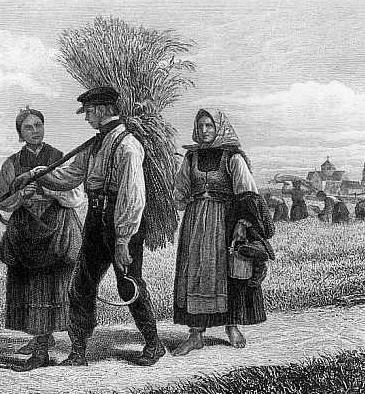 |
| During the early years in Finland, farm land consisted of parcels of land owned by a variety of families. Your family may have owned a peice of land here, and another peice of land there. In between, you have had a neighbor's parcel of land. Often the farmers lived together in a village and went to work each day on their farm lands. It was not unusual for farmers to come to a land-swapping agreement that woulds see farmlands exchanged so that a family's land was joined together. As farms became joined parcels of land, the families moved onto the farms and began to live there instead of in the village. And this is what happened to the Wahtari family in 1763. |
| The Story Continues. Click the Book for the next Chapter in the Kouhi Family Story |
 |
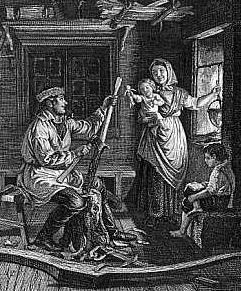
| Over 371 years ago the farmers of Finland were trying to support their families on their meager harvest. Swedish taxes saw them pay a portion of their harvest to the government. Farm families lived in the local village and walked to their farm plots each day. Many generations lived in the family home. The family home would be a small log building, usually only one or two rooms. Out back was the family sauna. An important part of the Finnish culture, the sauna was not only a place for the weekly bath. The warm, steamy, sterile room was the perfect place for childbirth. Water was drawn from the village well. Most homes had a small vegetable garden where vegetables like cabbage, turnips and potatoes could withstand the short growing season and early frosts. A chicken or two, maybe a cow or horse would live in the lean-to built on the side of the family home. Finnish families also counted on fish from one of the many inland lakes to provide additional sustenance to their families. |