| Chemists: Big People in a Big World |
| FIRE EXTINGUISHERS |
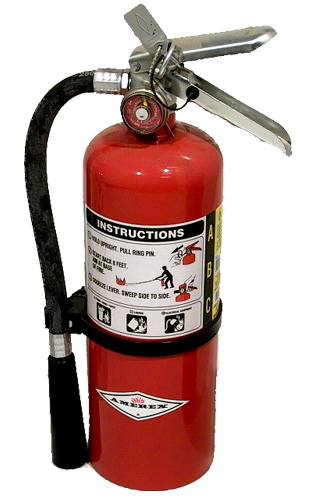
| How does something extinguish a fire? In order to burn, fire needs three things: heat, oxygen and fuel. To extinguish a fire, at least one of these factors must be removed. To remove heat, the most effective way is to pour water on the fire. This will make the fuel too cold to be able to burn. To remove oxygen, smothering the fire is the best option, to cut off the air supply. This can be accomplished using nonflammable materials such as sand or baking soda, or by covering the flame with a thick blanket. Removing fuel is the most difficult. Anything flammable near the fire could be potentially used a fuel. Sometimes the fuel cannot be removed until it has all burned up. |
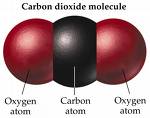
| Carbon Dioxide Extinguishers Carbon dioxide, in pressurized liquid form, is a common substance used in fire extinguishers. When the extinguisher is used, pressure is released and the carbon dioxide is able to expand into gas form. Because carbon dioxide is heavier than oxygen, it will displace the oxygen, which will smother the fire. This type of fire extinguisher is popular for in or around machinery or restaurants because the carbon dioxide will not leave a residue on the equipment or contaminate food. However, it is vital that the carbon dioxide released from extinguishers never come in contact with humans because of the extremely cold temperature. |
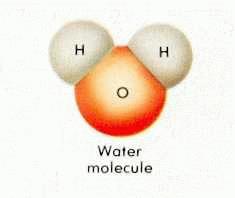
| Water Extinguishers Water is an effective substance to use in putting out an ordinary fire, such as burning paper, wood or cardboard because it lowers the temperature of the burning substance. Many water fire extinguishers also contain surfactants, a substance that allows the water to penetrate deeper into the burning material and attatch better to steep surfaces. Water cannot be used for electrical or some flammable liquid fires. Water can conduct electricity, so spraying it on an electrical fire can result in electrocution. If a flammable liquid is polar, such as alcohol, water will be able to put out the fire. However, if the flammable liquid is nonpolar, such as petroleum, the water will only spread the fire and make it worse. |
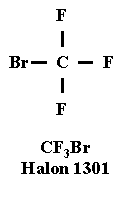
| Halon Extinguishers Halon extinguishers were made illegal in Canada in 1992, and in Europe in 2003, because they are chloroflourocarbons, which are damaging to the atmosphere. They are also slightly toxic in confined spaces. Ironically, halon extinguishers are quite popular aboard aircrafts because other substances are potentially corrosive to the aircraft. Halon extinguishers work by disrupting the fire's thermal balance and interrupting the chemical reaction of the fire. The bromine atoms in halon 1301 convert the active hydrogen atoms, resulting in a halt of combustion. |
| Dry Chemical Extinguishers Dry chemical extinguishers generally use sodium bicarbonate, potassium bicarbonate, or monoammonium phosphate in a finely powdered or a foam form. The substance is propelled by either carbon dioxide or nitrogen. The foam or powder smothers the fire by landing on the fuel source, cutting off the supply of air. Sodium bicarbonate (commonly known as baking soda) begins to decompose at 70 degrees celcius, which releases carbon dioxide. The carbon dioxide contributes to the smothering of the flames. |
 |
|
 |
 |
 |