Learn Korean
Travels By Taxi
Cultural Notes
In densely populated areas such as downtown Seoul, getting around can be a problem. The best means of transportation for visitors is a taxi. However, unless you are familiar with the local customs and conditions, even getting a taxi may prove to be a difficult task.
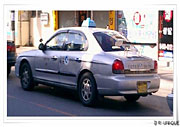
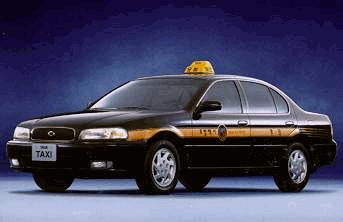
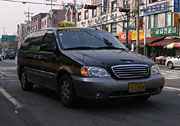
There are two kinds of taxis: the "Mo-beom" taxi(medium-sized black sedan) and the regular taxi (compact to medium size). The fare for regular ones starts at 1,600 won while the mo-beom taxis have a 4,000 won minimum fare. For the same trip, a mobeom taxi would actually cost about 3 to 4 times more than the regular ones. Other than the car size and the driver(Mo-beom taxi drivers are known to be exemplary drivers, thus the term "mo-beom" = exemplary), there is no big difference. They are both available on call, including the "jumbo" taxi or van taxi(good if you have many baggages or there are more than 4 people travelling. Should be called in advance, not many of these taxis roam around). You can catch regular taxis at pre-designated taxi stands, or at any convenient stop in the street.
In Seoul and other major cities, taxi stands are generally located near subway exits, major hotels, department stores, and other large buildings. A taxi stand is marked by the sign, which reads "Taek-shi"(taxi, what else?^.^). When there are no designated taxi stands available, you need to catch taxis by shouting "Taxi!" (of course! ^^) or waving your hand. When the cab slows down or pulls over, you should approach quickly because others may cut in.
For various reasons the cab drivers are often selective about the destinations. So you should ask the driver, before you get in, if he could go in the direction of your own destination. During rush hour, you may have to share a taxi with other passengers going in the same direction. This practice is called "hap-seung" (ride-together). Tipping is not customary, but it is often done when the cab driver helps you with your baggage.
Communicative Exchanges
| "odi ka-ji kaseyo?"
|
How far are you going?/ Where are you going?
|
| " 'Yong-san-u-ro ' kap-sida "
|
Take me to 'Yong-san' please
Literally: Let's go to'Yong-san'
(Again replace the word "Yong-san" with the name of the place you're going.)
|
| " Ne. 'Yong-san' odi ka-ji kaseyo?"
|
Okay. Where in 'Yong-san' are you going?
|
| "'Yong-san yok ap ka-ji kamnida?"
|
I'm going 'in front of Yong-san station' ?
|
| "Ne. al-ge sumnida"
|
I see.
|
| "Sejong-no-ro ka-yo?"
|
Can you go to Sejong-no?
|
| "Sejong-no-ro' odi kaji kaseyo?"
|
Where in Sejong-no are you going?
|
| "'Miguk tesa-gwan ap ' ka-ji kapsida."
|
Take me in front of the US Embassy, please.
|
| "Ne. Ta-seyo."
|
Okay, get in, please.
|
| "cho-gum man tto ka chuseyo."
|
Could you go a little further, please.
|
| "dwe-sumnida. yogi se-wo chuseyo."
|
Okay. Stop here, please.
|
| "yo-gum olmam-nikka?"
|
How much is tha fare?
|
| "yo-gi issum-nida"
|
Here, mister!
|
Some Useful Words and Phrases
| Let's go to_______ |
"_______ kapsida" |
Please let me off. |
"ner-yo chuseyo" |
| Here |
"yo-gi" |
There |
"ko-gi" |
| Next |
"da-um" |
Up to the front of_________ |
"_________ ap kaji" |
| In front of ________ |
"_______ ap" |
How much is it? |
"olma-imnikka?" |
| Embassy |
"tesa-gwan" |
Airport |
"kong-hang" |
| to the 'right' |
"'u-roon-chook' u-ro" |
to the 'left' |
"'wen-chook' u ro" |
| Entrance |
"ip-gu" |
Subway station |
"chon-chol yok" |
Thank You. |
"ko-mapsumnida" |
I see/understand. |
"al-gessumnida" |