

HOME
OUR TEACHERS
ABOUT US
CLASS INFO.
EMAIL US!
|
|
LISTEN
|
|
|||||||
|
HOME |
OUR TEACHERS |
ABOUT US |
CLASS INFO. |
EMAIL US! |
|
LISTEN |
|
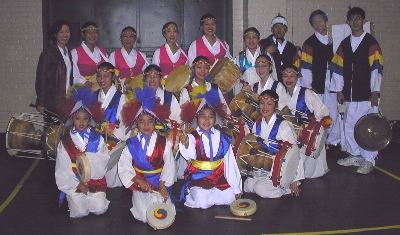 |
KOREAN DANCE IN MINNESOTA? Ya, Sure! You betcha! Minnesota is blessed with one of the largest populations of people who were adopted from South Korea, and an established active local Korean population as well. It is only natural that a school be formed to pass along the tradition of Korean dance and drumming to both groups of Korean-Americans.
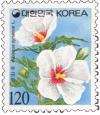
MUGUNG - What? (If you drop the "t", you'll be close). The lovely pink Hibiscus (better known there as Mu gung hwa) is the national flower of South Korea. The root word "mugung" means immortality which aptly reflects the determination and perseverance that the Korean People have demonstrated throughout their long and turbulent history.
|
|||
| NONG-AK - The Farmer Dance | ||||
|
Likely the Grandfather of all Korean Folk
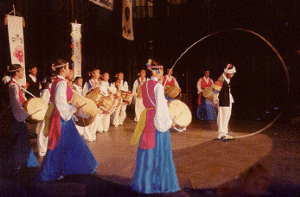
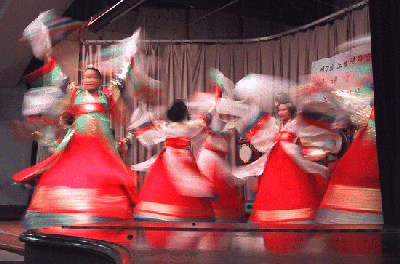
Dance. For centuries, every spring and every fall, Korean farmers have performed this lively processional dance to assure a bountiful crop and successful harvest. Today, the Farmer Dance is performed simply to celebrate, any time of year. Mrs. Lee says that this dance expresses HINO-era or intense joy and hope for the future. No additional accompaniment is needed because the drums - Sogo, Changgo, and Puk, and the gongs - Ching (large) and Kwaengwari (small) make plenty of noise to scare away even the most pesky troubles. Every one gets their chance at center stage, but the Sangmo or Ribbon Hat Dancer is the star of the performance as he spins a 10 yard ribbon from the top of his hat while performing acrobatic moves! |
 |
|||
 |
A CONTRAST... But just as
exciting.
Sam Go Mu
- Standing
Drums
are recently introduced from China into Korean Culture, only a couple of
centuries. Like in the Farmer Dance, Korean drummers are not satisfied just
to create interesting sounds, they also have to dance! And dance they do,
all the while playing complex rhythms, on not one, but on three drums.
The rhythms are Buddhist and the
desired effect is to move in perfect unison, and to make one sound. |
|||
|
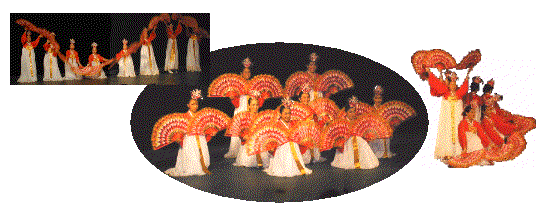
Buchae Chum is the
most popular folk dance at home and the most recognized Korean dance abroad. The
highlight of the dance is when the dancers form scenes from nature - rolling
waves, clusters of flowers and butterflies fluttering in the breeze. This ensemble dance is based upon ancient rituals done by a individuals. Though the ritual is gone, what remains is a lively folk dance full of joy, elegance and surprise. |
 |
|||
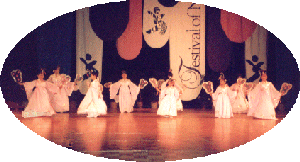 |
SAHNYO CHUM - ANGEL DANCE
Heavenly maidens are common characters in
Korean Myth. Here they descend into a high mountain valley where they have
the entire day to dance and play until sadly, they must retune to their
duties in heaven. This modern dance is very elegant, and a little bit sad. The dancers are dressed in a flowing angel gown, carry shear rigid fans, and wear a headpiece that represents such an elaborate coiffure that only an angel could do it! |
|||
|
WHA GWAN MU (Flower Crown)
is
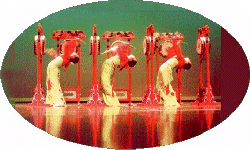
definitely not modern This version was created especially to entertain the queen, so throughout the performance you will observe a series of elaborate bows. The music and dance are unhurried and convey propriety, elegance and grace. The costumes are formal court dress of the Shilla period, and the special sleeves (hansam) completely cover the dancers hands. Wha Gwan Mu is generally performed as a simple line dance. While retaining the regal fundamental aspect of the dance, Mrs. Lee added additional movement for interest and appeal.
|
 |
|||
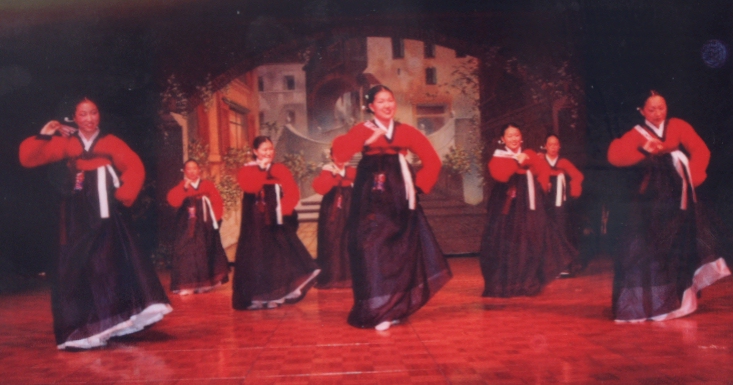 |
Heung Chum (Happiness Dance) A demure yet joyful dance learned at the studio of Mrs. Yu Rim Jin. The students started out not liking it because it was "so slow", but by the time they learned it, it became a favorite because it was so interesting to perform (and difficult) and it actually made them feel happy. Isn't that interesting? |
|||
