On-line Curriculum (5 of 7)
|
|
|
|
Slide 5 of 7
Some fully on-line courses are facilitated through the
university’s or college’s own server. Other on-line courses are provided via
professional server companies. These companies free the institution to teach instead of
maintaining and supporting a network. One example of an on-line educational service is
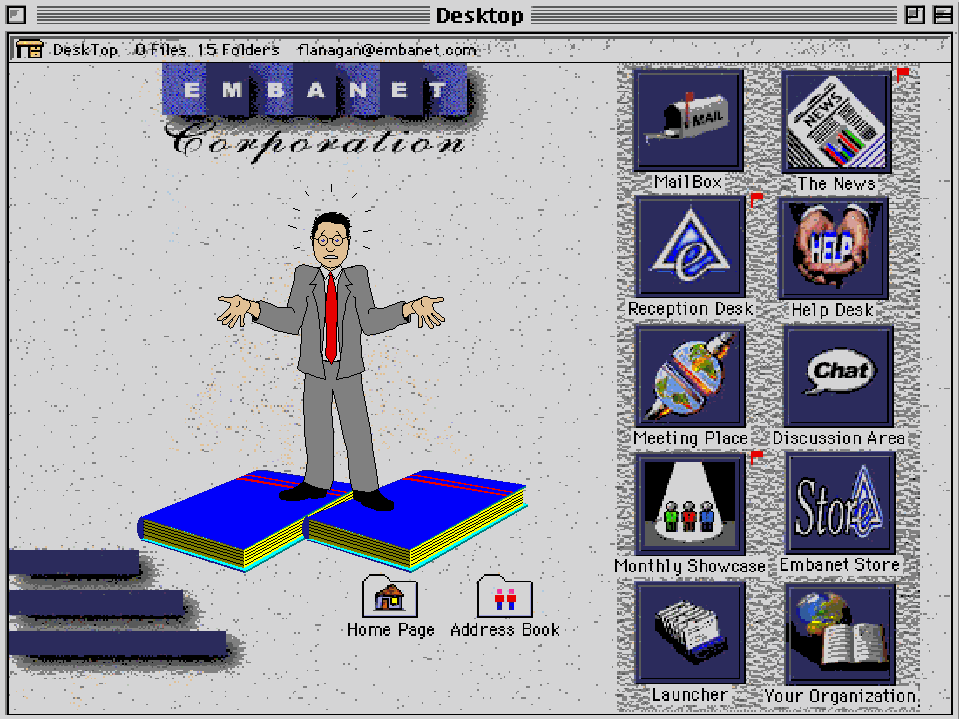
Embanet Corporation (1997). The service provides 24 hour access to private educational
sites with full support and numerous instructional modalities within one learning
environment.
Instructional Tools
E-mail permits asynchronous communication between students and
faculty or between groups of students (Olmstead, 1997). Casual communication can often
augment instruction and aid in social relationships within the learning group. Instruction
can be transmitted via e-mail or as attachments to e-mail messages. Students may also
transmit completed assignments or examinations to the professor via e-mail. Faculty can
provide individual or group feedback using this tool.
Web forms allow instructors to gather data, assignments, or test students via the
Internet. The instruments can be in the form of open-ended questions (short answer,
completion, or essay), selected items (multiple-choice or true-false), fill-in-the-blank,
or pull-down menu selections. Tests can be e-mailed to the instructor or can be gathered
in a database and then retrieved. Objective exams can be hand-graded upon receipt or can
be computer-graded upon submission by the student prior to delivery to the instructor
(Olmstead, 1998).
Return to the top
of this page:

Go
one page back or go to the next page: