|
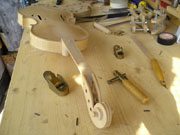 During the construction procedure, I discovered how delicate work was to curve the wood and to bring it into the shape of the violin and many more secrets were hiding in this elegant instrument. There are so many details I had to follow during the construction, so when I finished my first violin, although was looking perfect, I had doubts whether it could bring out a good sound.
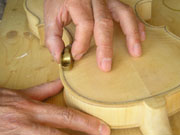
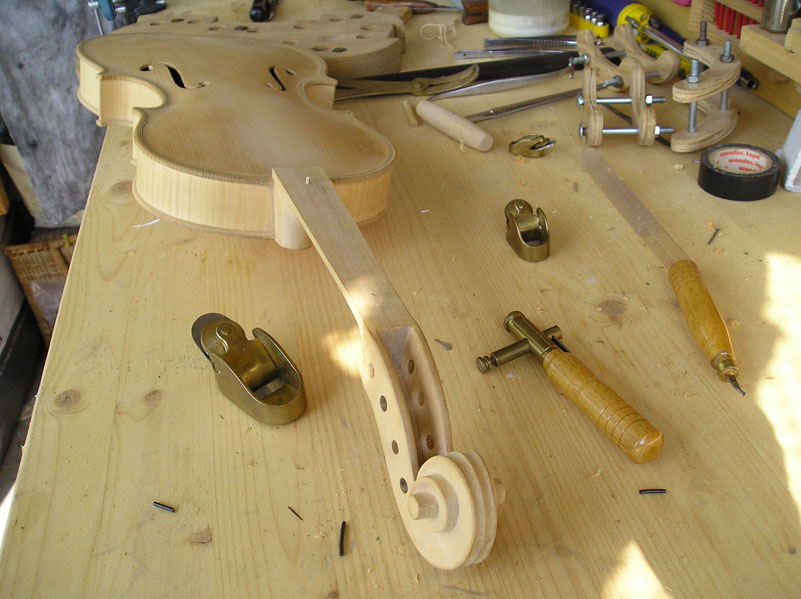
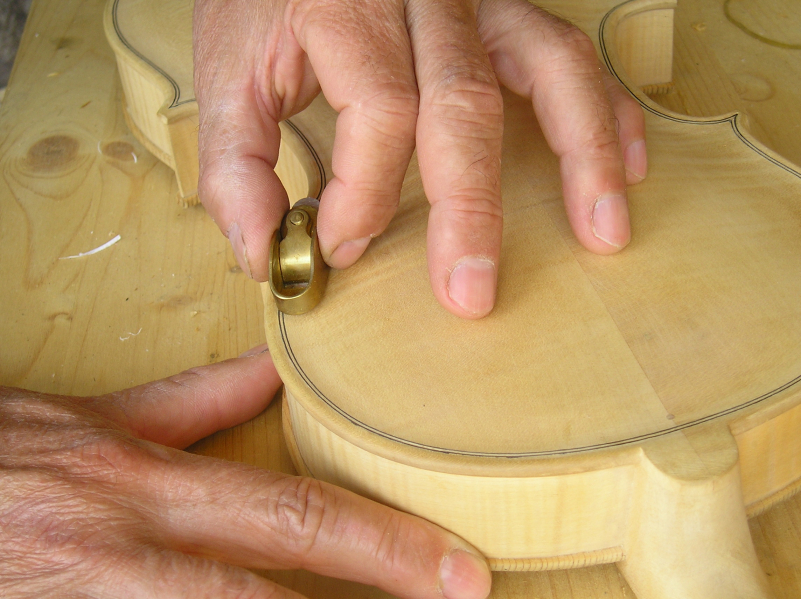
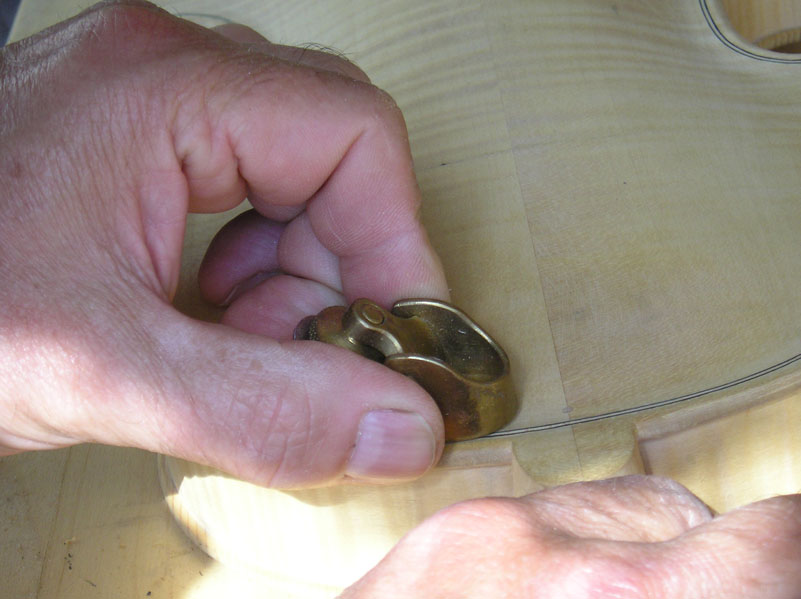
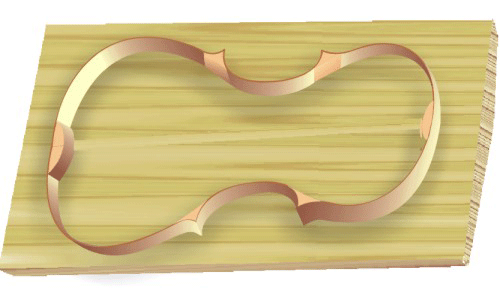
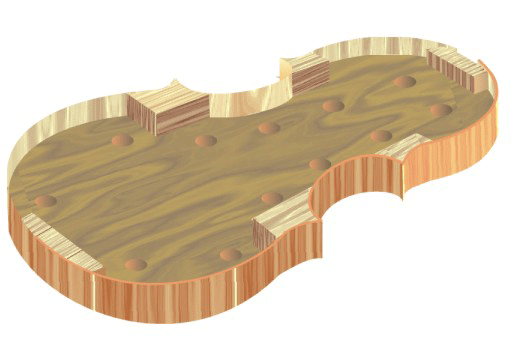
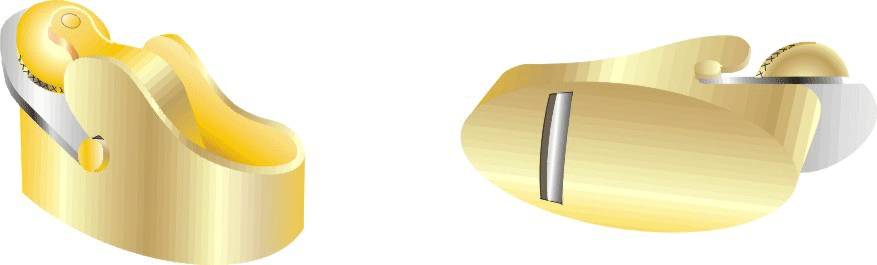
First I join the ribs together with the help of the mold, then, I cut and shape of the top and the back plates using small planes of different sizes.
For the top plate I use spruce well seasoned and for the back plate maple wood, that wood with the amazing light and dark grain witch is characteristic on the masterpieces of the old Italian Masters.
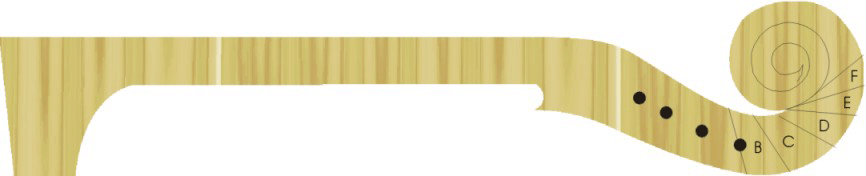
From maple wood are made also all the other parts of the instrument, such as the ribs and the neck with the scroll.
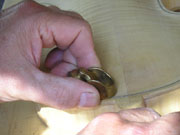
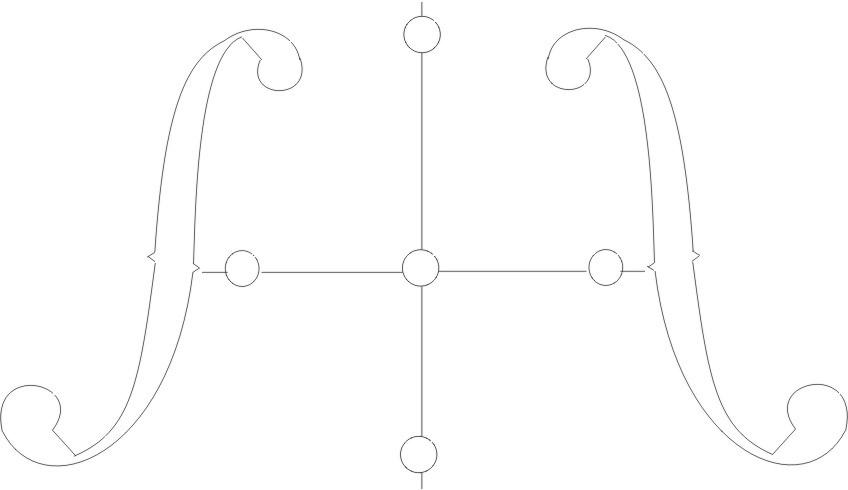
When the top plate is completed, the two "f" holes would be cut very carefully.
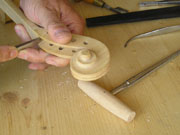
The slightest mistake, inattention or asymmetry could be critical to the final result and mainly to the sound, which comes out of the strings when the bow slights softly on them.
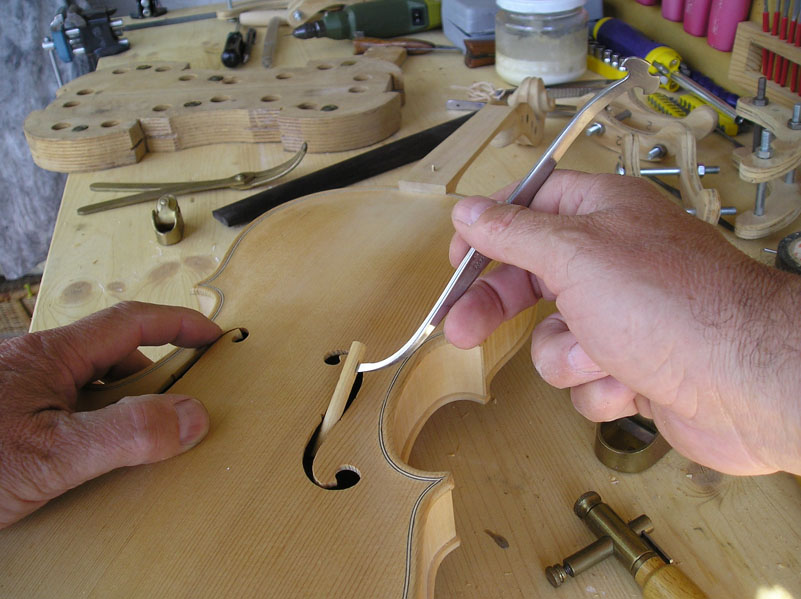
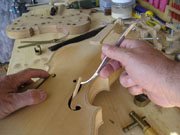
The soundpost is a small piece of rounded spruce which is passed through the "f" hole, with the help of the soundpost setter, in position below the bridge and on the line of "mi" string.
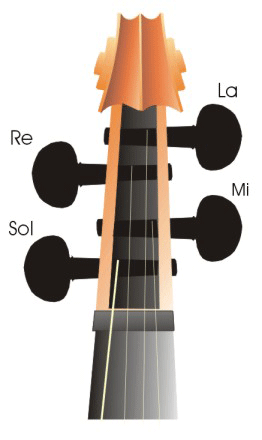
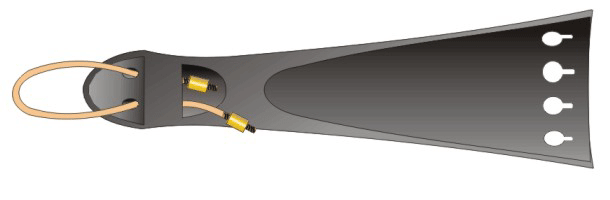
The final stage of constraction is the varnishing of the violin which is an essential job. After the varnishing, the strings are to be fixed in place on the pegs and on the tailpiece.
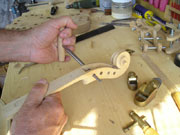
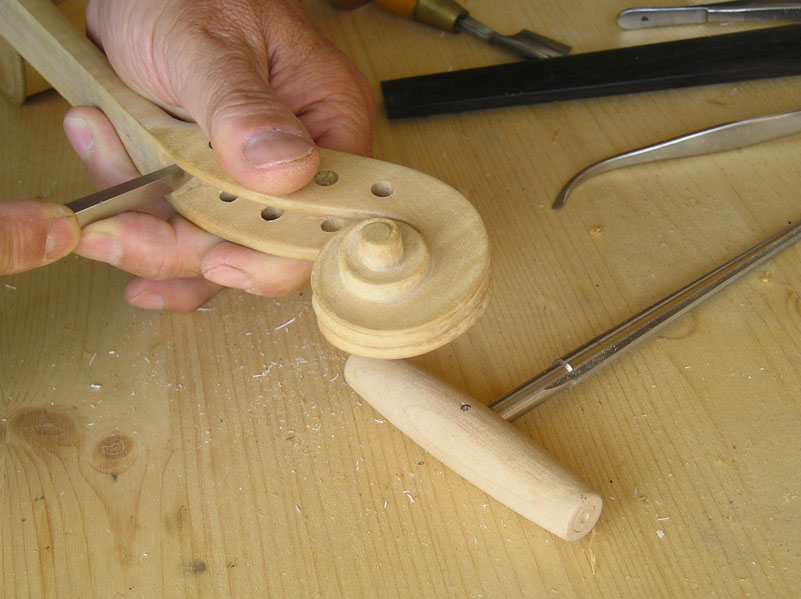
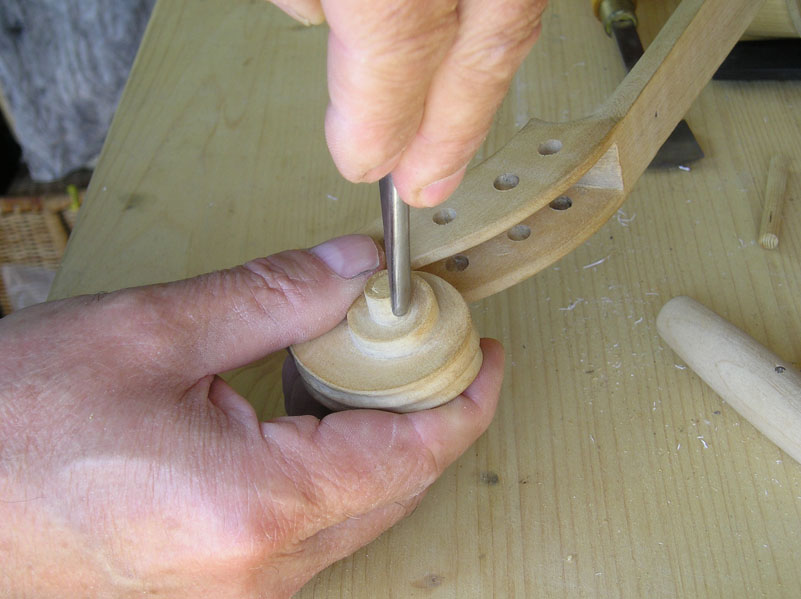
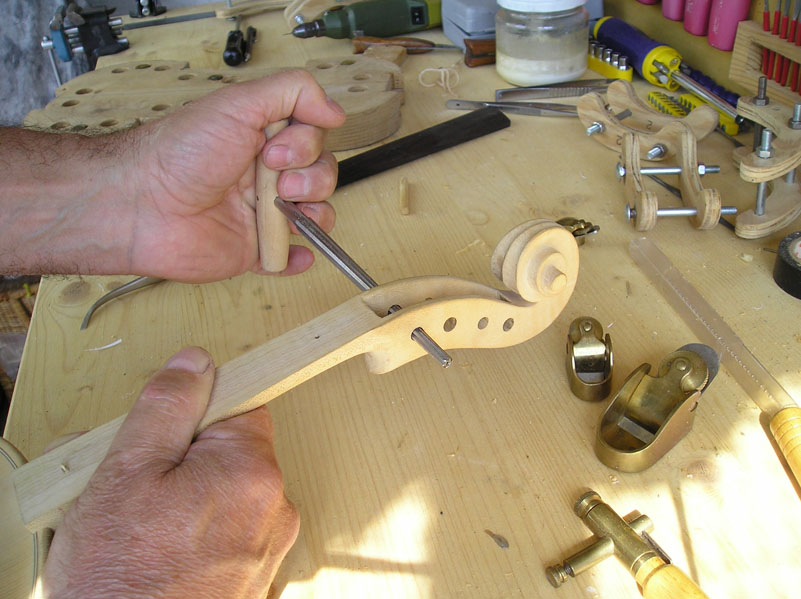
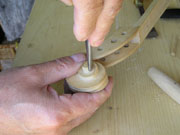
The pegholes have to be trimmed perfectly with the special rimmer in order
to match with the peg conical angle.
On the hands of an expert violinist who, once, visited me at home, I heard with emotion, the well-known heavenly sound coming out from my creation. He insisted me to continue on making violins. Since then I have constructed four instruments with a very clear sound.
Copyright 2005 © All rights reserved
|