 |
 |
 |
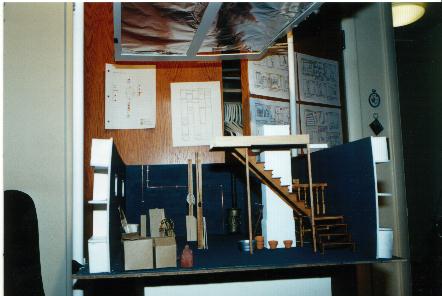
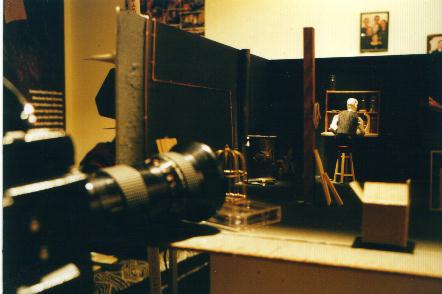
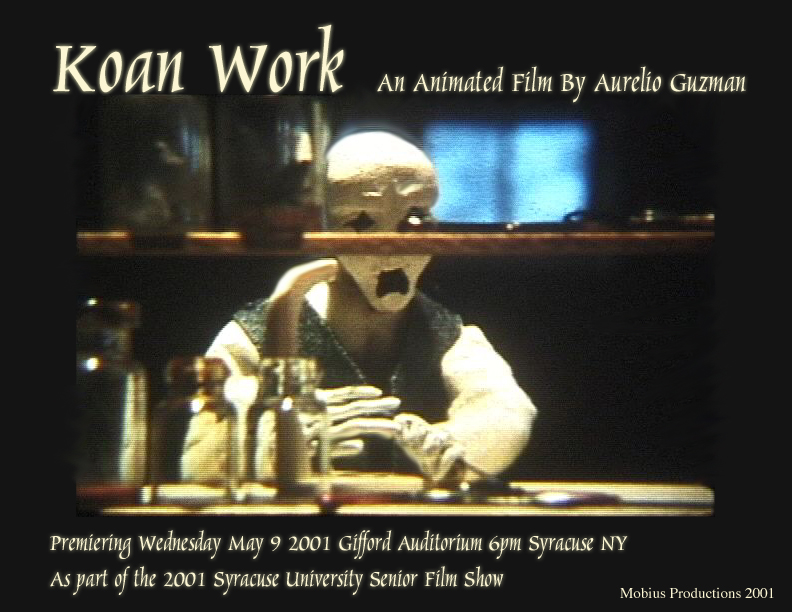
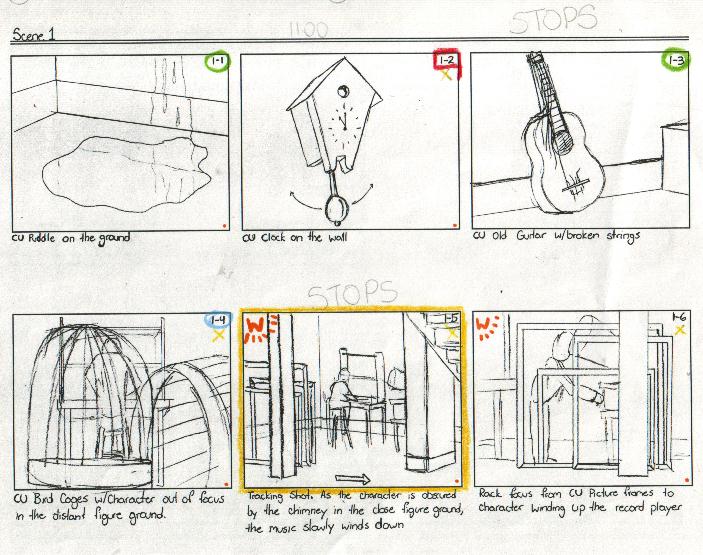
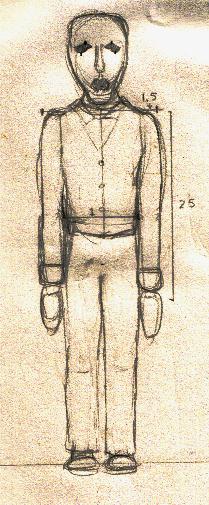
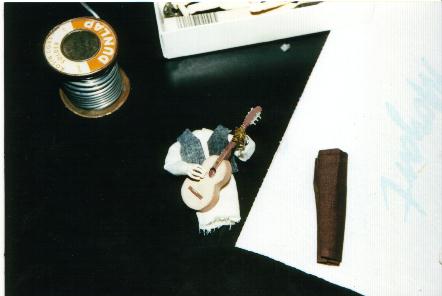
| Principal photography began in October with the 2ft by 3ft set perched on a pedestal in the middle of Guzm�n's own room. The set, lights and camera took up most of the space leaving little room to move around. "My room was also my studio space. Besides my bed and closet, there wasn't any living space in there. I had a desk with all the props and materials, a rig for the lights and often one for the camera too. I had access to a shared studio space but everything was so delicate I didn't want somebody to bump the set and ruin everything." The film was shot using stop-motion technique where each frame is photographed one at a time with subtle changes in the character from frame to frame. The result is 24 photographs shot for every second of screen time. The process is very meticulous and very slow. Any mistake in any frame can mean a whole shot is ruined and must be re-shot. This means that great care has to be taken when moving anything in the shot. "I'm a big fan of improvisation in my work. I know what has to happen in each shot but I usually won't plot out exactly how I want it to happen. That way subtle movements the character makes as I move him get incorporated and everything looks more natural. I also like to build my own armatures. They're the skeletons that let me pose and move the characters. In this film I ran into the problem of having made a pretty weak armature that tended to fall apart. I considered buying a professional one but I liked the imprecise movements that mine gave. Also, the film is about a strange frustration so movements should also be a little strange." Shoots would often run through the night and into the morning with many hours needed to equal one minute of screen time. Often times the room would get very hot from the lights and even though there was snow outside, windows would have to be opened. The film was shot on Kodak Vision 200 T in order to compromise between having rich blacks and not melting the set with the hot lights. The film was shot with a Bolex EL often times with two diopter lenses taped to the front in order to get closer and reduce the depth of field. Whenever the shot called for camera movement, the whole rig had to be placed on a wooden sled with a ruler taped to the side. This ruler moved alongside another ruler taped to the ground. When the sled was pushed one millimeter for every frame, a tracking shot was produced. "I thought I was going to go crazy during the tracking shots. For one of them I had to animate the character, the clock, and the record player while making sure to move the camera during each click. All this while trying not to bump the lights and trying to remember what part of the clock pendulum cycle I was shooting." For the shot where the camera cranes up the stairs, Guzm�n developed a rig out of an old car jack and some wood. By turning the car jack once for every frame, the camera appeared to crane up the stairs to the character trying to open the door upstairs. Principle photography went on until early January. During the final intense shoots, Guzm�n would lock himself in his room and work for full days without stopping. "At one point, I was working for a week without any contact to the outside world. It was like the film became a documentary about itself. Here's this character that's stuck in a room working on something he can't seem to finish but he can't get out either. I was in the same situation. In a way the film was about the making of the film." By the end of January, all the film was back from the lab and very few re-shoots were needed. The film was edited through the end of the winter using a steenbeck for image and Final Cut Pro for sound. The soundtrack consisted of 14 track of sound effects and original music written by Guzm�n. Many of the sounds, including the basement stairs were recorded in his own basement where the actual objects roughly matched the ones in the film. Post-production went quickly in part because of extensive storyboarding and pre-production work. "I'm really big on pre-production. I'll storyboard every last detail until the film is clear to me. A lot of times I feel like the film is done before I start shooting. The reason I shoot is so others can see it." The film premiered at the Syracuse University Senior Film Show 2001 in a packed theater. Response was phenomenal both throughout the film and afterwards. "I was very happy with how well the film was received. People seemed to be able to relate not only to the story, but to the work involved in making the film. I guess the two really go hand in hand." The film also received the Carol Shmuckler award for best senior film. |
| Copyright Aurelio Guzman 2001, All rights reserved. |
| Production Notes Part 2 |
 |
 |
 |
 |
 |
 |
 |