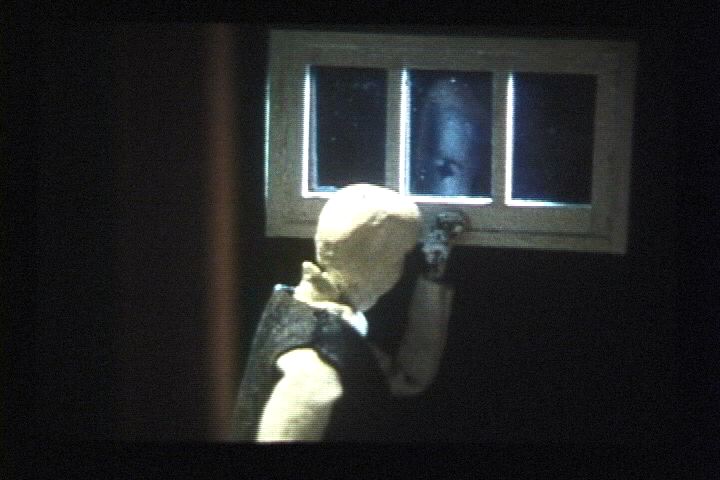
The film itself is a synthesis of ideas about enlightenment, frustration and the Kafka nightmare. It was conceived and written by Aurelio Guzm�n in late spring of 2000. Following many sketches and short writings the final story began to take shape. Over the summer, funds were raised primarily through summer work at a local video store. The film was to be a one-man operation and as such, all aspects of pre-production, production and post-production would have to be dealt with by Guzm�n.
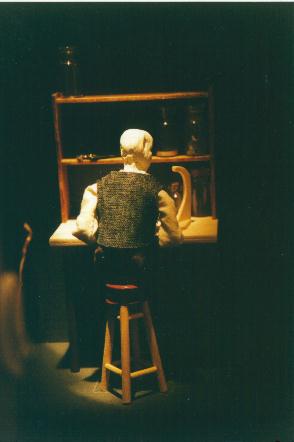
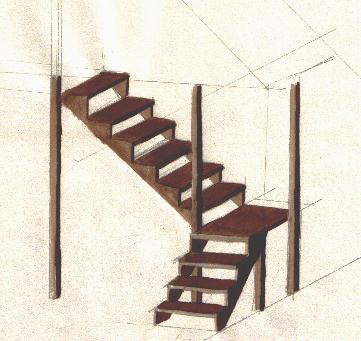
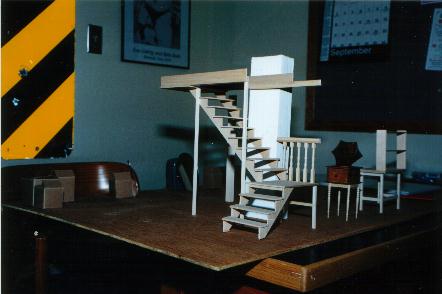
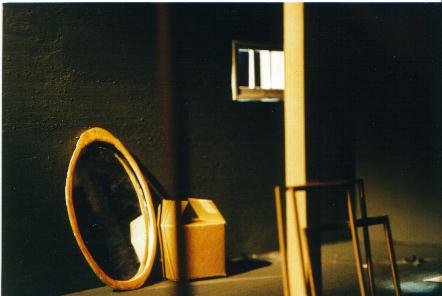
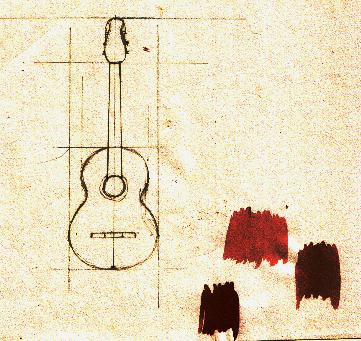
After compiling several sketchbooks worth of pre-production artwork, the visual aesthetic of the film was worked out and preliminary set construction could begin. The film called for a miniature basement set that had to appear solid but in reality, needed to accommodate a camera, lights and the animator. The set was to be shot from many directions so walls and props would need to be removed and replaced without disturbing the continuity of action. The basement also had to convey a sense of claustrophobia and decay as it acted almost like another character in the film. In the end, a 1/12th-scale miniature was constructed greatly resembling the basement of Guzm�n's Binghamton home complete with wooden staircase and plaster chimney. The walls and floor were coated with several plasters to give a greater texture and then spray-painted dark gray. Props were then created and added, one at a time, to give the set a greater sense of realism. Great care was taken to ensure the props would work well within the space and in terms of story. Guzm�n built or found every prop used in the film including a scale model wooden guitar, which he built from scratch.
"I wanted to maintain truth to materials. I tried as much as possible to make sure all the props were constructed to look believable. The desk and Victrola are wooden, the bottles are made of glass and even the pipes are actually made of tiny copper piping."
As a final touch, Guzm�n cast a scale model potbelly stove out of white bronze making sure to give it an old rusted out look.
With the walls and props in place, the next challenge was to come up with a lighting scheme that would compliment the visual aesthetic but at the same time, work with the miniature set. Working at 1/12th scale, the lights are equivalent to the size of a car. The extreme heat of the bulbs also had to be taken into account as they could easily melt the foam core walls.
"At first I though about using multiple lights with spotlight attachments on them but I saw that this wasn't going to work. They smoked and smelled so bad I couldn't even shoot stills of the set."
After several attempts, Guzm�n devised a system for lighting the set with only one light and diverting it so that it would spotlight different parts of the set. The result was a dark basement cluttered with everyday items rich in texture and color.
"The key to making any miniature look real is the lighting. You have to take huge lights and somehow make them behave like part of the space. This is the part that'll make or break your visual strategy."
Throughout most of the film only one light was used with the exception of a few shots where a second light was brought in to create the effect of moonlight streaming through the window. |