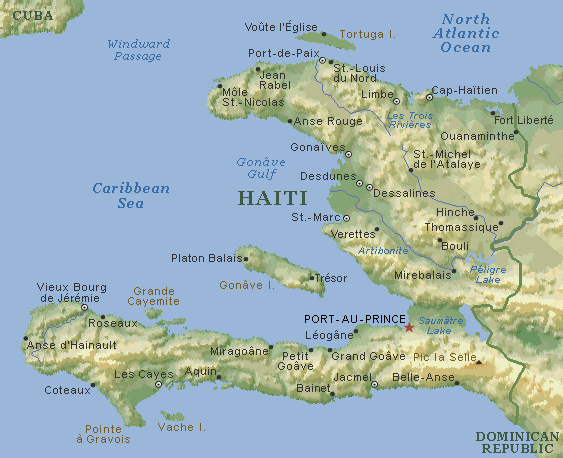
 Of Haiti
 Haiti's
history, her people and way of life.. Haiti's
history, her people and way of life.. |
It is not just
another island in the Caribbean, it is home.
From afar, it appears as any other island one might encounter.
But life is so different in Haiti, then any other island in the caribbean.
There are no tourist resorts dotting the
coasts, no high rise hotels with sand volleyball courts and marimba bands.
This is Haiti, this is different.
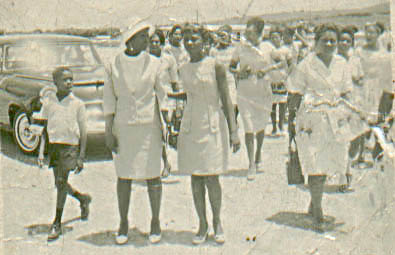
As I remember, despite her lacking in avery confort possible, life was a joy.
of tragedy and violence, of abuse and bloodshed, of power and greed. Why
does the country stand apart from its neighbors? The answer lies in the
turbulent history of this tiny nation.
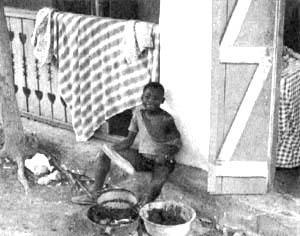
The Early YearsAs a child, I remember how we use to go to school sometimes without eating.
but we were expected to learn." And we learned, mostly by heart.We were all eager to learn, because it was,to us, the only way out of poverty. But we didn,t think of it that way. It was a way to past the time, to compete, to be the brightess among the nation.
The island was inhabited by local Arawak Indians who referred to their
home as "Hayti", or mountainous land. In keeping with imperialistic
ideology, the Spaniards used and abused the native Arawaks to the point
of near extinction. It's location and lush soil made Haiti a treasure constantly sought after by Britain, France and Spain. Finally, by the middle of the 17th century the island became a French colony. Under French rule Haiti flourished. Haitian products were in great demand in the European market and the tiny island became invaluable as a resource for cocoa, cotton, sugar cane and coffee. Unfortunately, the great demands for these products also created a demand for inexpensive labor. The French, as the Spanish before them looked to Africa as a solution to the labor problem. They imported slaves from the west coast of Africa. By 1780, Haiti was one of the wealthiest regions in the world. France relied heavily on the slave trade to maintain its economic base. This created a number of problems that would later affect the future of Haiti. First, the slaves brought with them the religious practices of voodoo which for them was more a lifestyle than a religion. Second, the French treated the slaves with undue harshness creating hatred amid an already resentful environment. Third, a class of mulattos arose from the relations of the slave owners and the slaves. There arose a class system, still present today, with a minority of light skinned, sophisticated, Catholic, French-speaking Haitians at odds with dark-skinned, voodoo worshipping, Creole-speaking masses. In 1791, a successful slave revolt was initiated
against the French. The Haitian slaves ousted Napoleon, and by 1804,
the island becomes the first black independent nation, with General
Dessalines declaring himself emperor. With power comes abuse and the
abuses of Dessalines led to his assassination. He was followed by Henri
Christophe, an illiterate ex-slave who ruled in the north and Alexandre
Petion, a mulatto who ruled in the south. When Christophe died the north
and south united. In 1844, the island split into two countries, Haiti
and the Dominican Republic. The Occupation YearsBy 1915, American marines stepped in to calm the situation. The occupation had both positive and negative effects. Thanks to the Marines, the infrastructure of the country was enhanced. Paved roads, houses, hospitals and sewage systems were built. However, once again the Haitians found themselves in an occupied state and their rulers were white. This resulted in even greater power for the lighter skinned Haitians. Duvalier YearsWhen the Americans left in 1934 the country was still in shambles. There was a constant struggle for power between the Catholic Church and the followers of voodoo. The United States fruit companies that settled and developed on lands taken from Haitian peasants were a source of constant tension. Many leaders came and went but no one united or moved the nation forward. In 1957, Francois Duvalier, "Papa Doc", declared himself "President for life". Fear ruled the nation under Duvalier and his Tontons Macoutes. Terror reigned under the police repression of his government. Unfortunately, even that stable, structured government didn't help the people economically, educationally or otherwise. With the death of Duvalier, his son Jean Claude, ("Baby Doc") came into power. Life under Baby Doc was only slightly better for the Haitian people than before. His rule was tainted with crimes of repression and a plundering of the riches of the country. Finally, Baby Doc was exiled to France. Haiti TodayAfter the exile, the country was ridden with mass massacres and rigged elections. Today, power goes back and forth from one leader to the next without any positive results for the people. In 1990, a priest from the slums of Port Au Prince was elected by 67% of the people. Jean Bertrand Aristide was seen as the first leader of the people since 1804. The rooster emblem of Aristide replaced the guinea faun worn by the Tontons Macoutes. In 1991, a military coup ended the Aristide presidency and he went into exile. The Organization of American States imposed a strict embargo against Haiti causing the country great economic hardship. Many Haitians tried to escape by boat only to suffer death or relocation to camps at Guantanomo, Cuba. Today, Haiti is still struggling with poverty and instability. Elections have failed to produce leadership that can deal with the many problems of this tiny country. The future of Haiti depends on the ability of its leaders to discover solutions to bring it successfully into the 21st century. A tiny tropical island sits in the Caribbean, decorated with palm trees and colorful hibiscus flowers. Its mountains stand majestically looking down upon sandy beaches and green valleys. From afar it appears as any other island one might encounter sailing the turquoise waters of the Caribbean. Yet, as we draw closer we notice a difference. There are no tourist resorts dotting the coasts, no high rise hotels with sand volleyball courts and marimba bands. This is Haiti, this is different. If the land could speak it would tell of tragedy and violence, of abuse and bloodshed, of power and greed. Why does the country stand apart from its neighbors? The answer lies in the turbulent history of this tiny nation. The History continues. To see more, Please go here |
 |
 |
 |
|
 |
 |
|
|
|
|
|
 |
|
|
|
|
 |
|
|
|
|
| HOME | FRENCH RADIO | FRENCH CONNECTION | HISTORY | Apprenez le Creole | LA FRANCOPHONIE | CALENDRIER |
HAITIAN ARTS | BTD |
AIRLINES TO HAITI | CONTES | HAITIAN RECIPES | ||