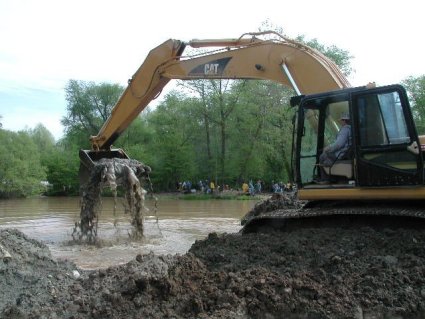
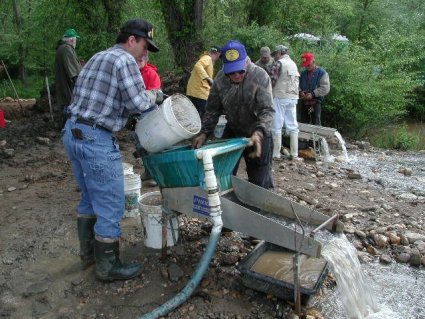
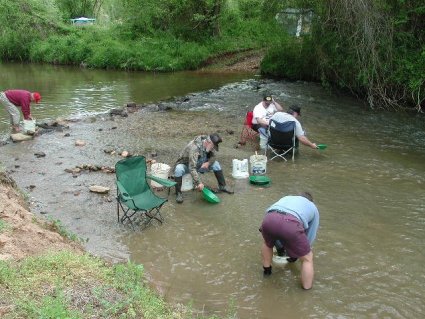
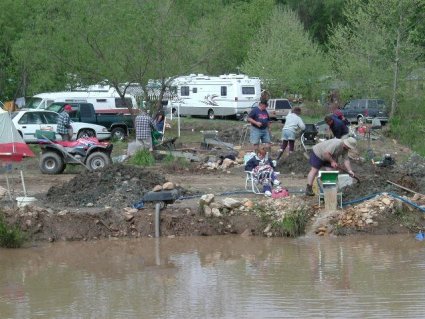
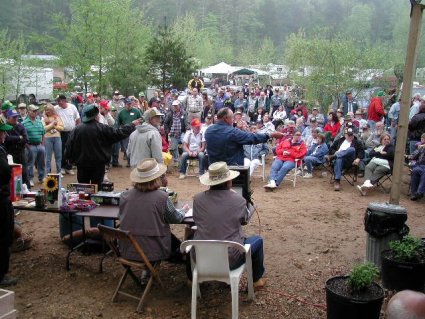
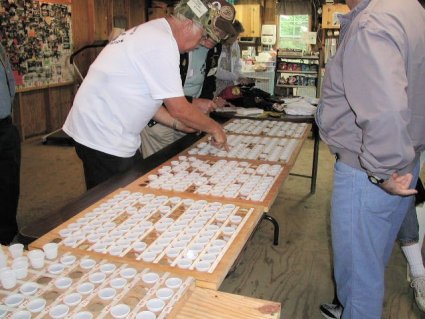
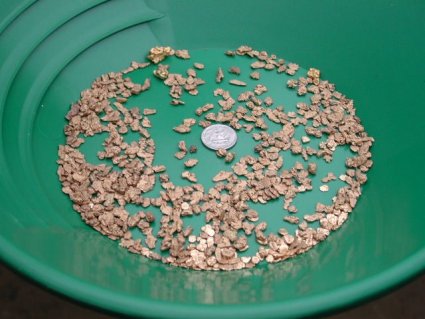
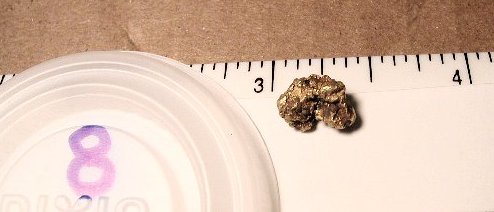
As a member of the Gold Prospectors Association of America, I attended an outing in northeast Georgia. About 400 gold panners worked together on at least two four hour shifts on a common dig to find and split the gold that was found. Registration fees were used to rent equipment that included a track-hoe, back-hoe/front-end-loader, high bankers, pumps, fuel, porta-potties, and other things to support the effort. At the end of the common dig, we split the find by the luck of the draw for the largest nugget, the next largest, etc., and a bag of concentrates to sort through at home. There were nearly 1,200 people there - the largest number at an outing despite the cool, rainey weather in April, 2002.
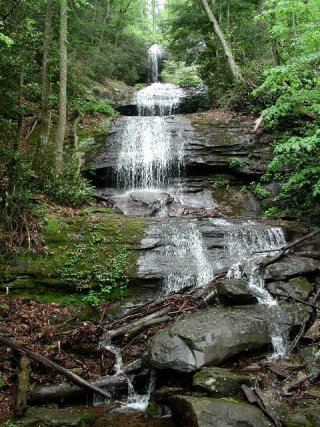
This was the site of an old gold mine. The old operation was not efficient and they lost a lot of gold in the tailings. We worked through part of it again. Not enough nuggets or 'pickers' were found so some nuggets from Alaska were added so all in the common dig would go home with at least one picker. Those wanting to pan on their own time could do so and keep all they found. This area is a part of the first gold rush in 1828 in the United States. The government had a branch mint in Dahlonega, Georgia, until the civil war to mint gold coins from gold mined in Georgia, North and South Carolina, and Alabama.
The pictures will tell the rest of the story. Click on some for a larger view then on BACK. |