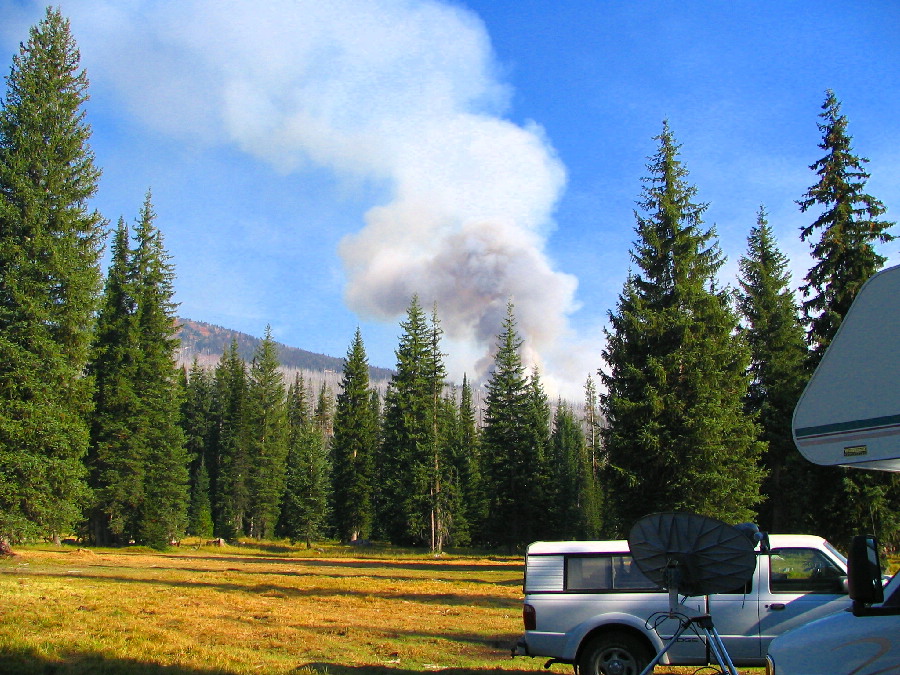
The begnning of Adventures for 2006-2007. Fire near Payette Lake, Idaho.
There was a big fire around 1993. Here is info on firefighting.
Wildland Fire
There are two types of wildland fire -- one that is suppressed and one that is allowed to burn and used to provide benefits to the environment. Today, the Payette National Forest averages over 155 lightning and human-caused wildland fires every year. Initial attack and suppression of these fires is often critical to the protection of human life, property,and natural resources. If wildland fires are used to provide benefits to the environment, they must meet strict pre-identified criteria. They are evaluated on many conditions, including distance from homes and improvements, time of year, long-range weather predictions, and moisture of forest fuels.
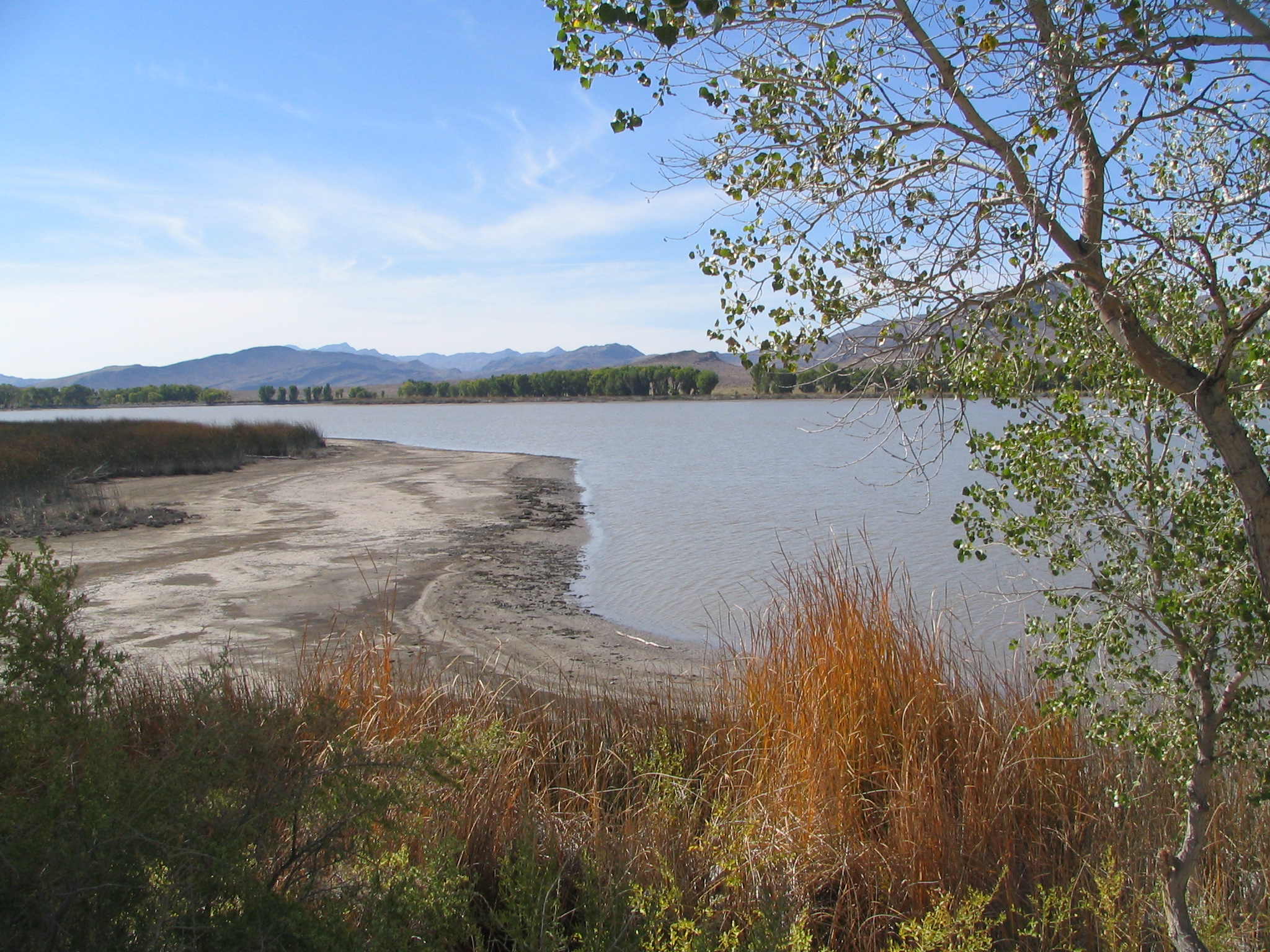
This has been our boondocking site for the last few days. We are going to be moving tomorrow as we are only allowed to stay 7 days. So on the road agin.
Have seen many of different typs of birds here. Its great to set out by the water in the evening and watch the little guys try to catch their food.
Birds of Pahranagat National Wildlife Refuge
Established in 1964, Pahranagat National Wildlife Refuge is an oasis in southern Nevada. Located 90 miles north of Las Vegas, the refuge contains 5,380 acres of marshes, open water, native grass meadows and cultivated croplands. It is an important stopping point for waterfowl and other migratory birds as they migrate south in the fall and back north in early spring.
The diversity of the area provides habitat for a variety of birds. Waterfowl and shorebirds are most numerous during the spring and fall migrations. Great blue herons, egrets and other shorebirds can be found in the shallow areas of the marshes and lakes. Raptors are most abundant in the summer. Warblers, orioles and finches are abundant in the cottonwood trees that border the shorelines of the North Marsh and Upper Lake. The cultivated and open fields attract meadowlarks, blackbirds and mourning doves.
Bird watching is a growing outdoor pastime that provides many hours of enjoyment in a natural environment. Over 240 different species of birds have been recorded on the refuge. Species diversity and density are highest in the spring and fall.
Helpful Hints:
The best time to see the greatest variety of birds is during the fall and spring migrations, especially in the early morning or late evening.
This is the end of Sept., on a Sat., about 10;30 A.M. And anout 75. With a very light breeze. Good camp site.
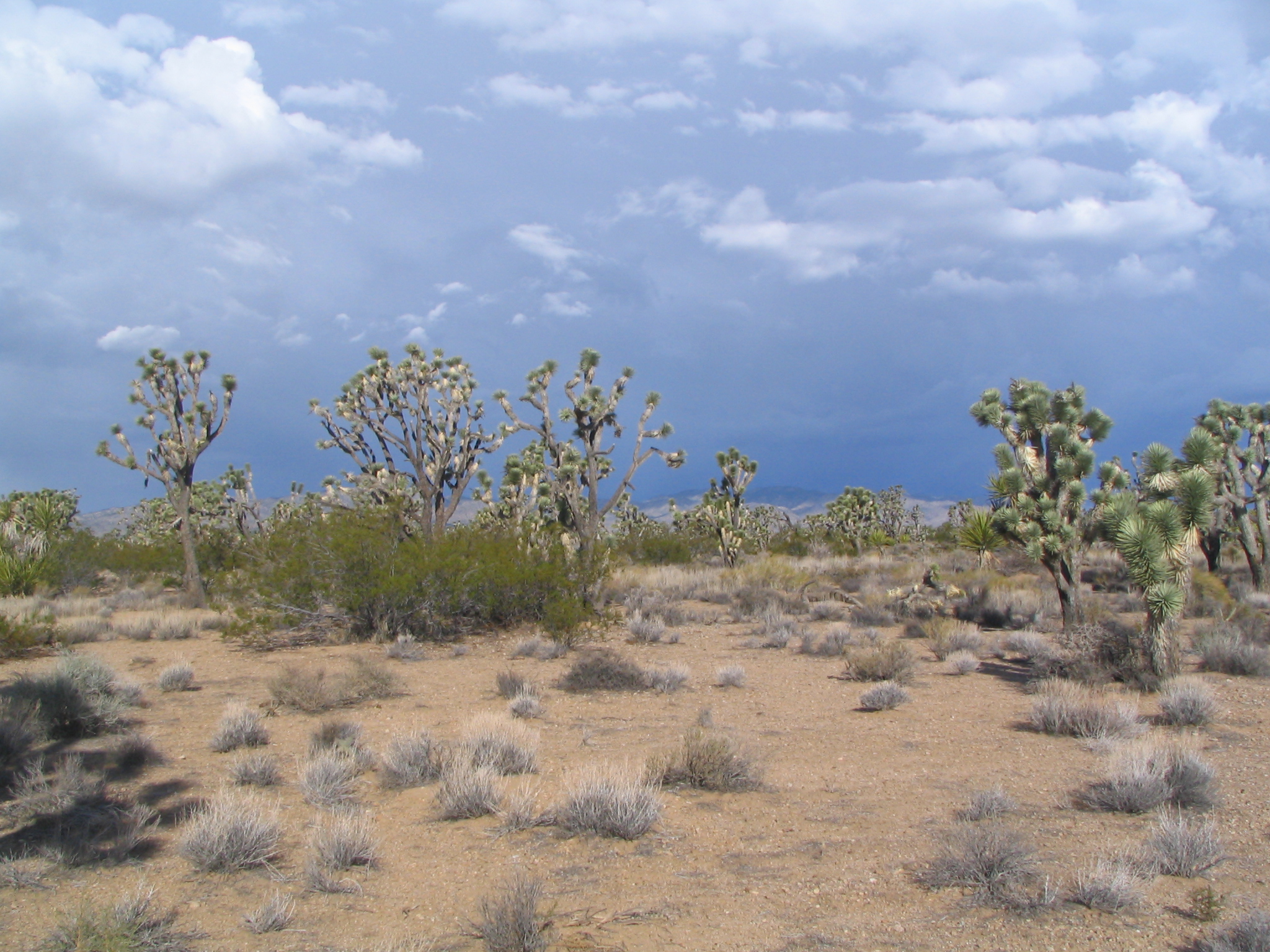
This was a stop over on our way to our winter quaters.
You can find the Joshua Tree in the following areas:
Mojave Desert of extreme southwest California, Nevada, Utah and Arizona, at elevations from 2,000 to 6,000 feet.
They need dry soil on plains, slopes and mesas.
Their flowers are bell-shaped, with 6 creamy, yellow-green sepals. Crowded into 12 to 18 inch, many-branched clusters with an unpleasant odor, in the spring. Not all trees flower all the time.
The Joshua Tree, is the largest of the yuccas and grows only in the Mojave Desert. Natural stands grow nowhere else in the world. Its height are from 15-40 feet with a diameter of 1-3 feet.
Joshua trees (and most other yuccas) rely on the female Pronuba Moth (Tegeticula) for pollination. No other animal visiting the blooms transfers the pollen from one flower to another. In fact, the female Yucca Moth has evolved special organs to collect and distribute the pollen onto the surface of the flower. She then lays her eggs in the flowers' ovaries, and when the larvae hatch, they feed on the yucca seeds.
Without the moth's pollination, the Joshua Tree could not reproduce, nor could the moth, whose larvae would have no seeds to eat. Although an old Joshua Trees can sprout new plants from its roots, only the seeds produced in pollinated flowers can scatter far enough to establish a new stand.
This site was a was very fascinateing place. They had specal watering holes built for the wild life in the area.I belive we was on B.L.M. land near Searchlight, Nv.

On our travels we a made a stop at Valley of Fire near Lake Mead.
A great camp site for boondockers is near Overton, Nv.
This was a photo that we took when making our drive threw the Valley of Fire.
"The Cabin" It was built with sandstone in the 30's for travlers as a place of shelter. It is now a picnic area for us weary travelers.
Valley of Fire State Park is located only six miles from Lake Mead and 55 miles northeast of Las Vegas via Interstate 15 and on exit 75. Valley of Fire is Nevada's oldest and largest state park, dedicated 1935. The valley derives its name from the red sandstone formations and the stark beauty of the Mojave Desert. The park offers a visitor center. They have many displays. There also is many group sites in the area.

This a photo of Mission Trails Psrk,s dam. The park was established in 1974. Colleen (Cwit,s daughter) took us there for birding the day after Thanksgiving. It sure was a surprise to see something like that so close to San Diego.
The history of habitants who predated the park establishment goes back to more than 10,000 years. The San Dieguito Culture lived in the region dating as far back as 10,000 years. The La Jollan Culture has been dated to over 6000 years and the Kumeyaay have been dated between 1000 and 2000 years.
More than 30 archaeological sites have been identified within the park.
In 1769 a group of missionaries, lead by Father Junipero Serra, arrived and settled on the hill above the San Diego River. Their goal was to establish a series of missions in the California region to bring Christianity to the native people. It was called Royal Presidio and was shared by the missionaries and the soldiers who escorted them from Mexico. In 1774, the Mission was moved approximately 6 miles upriver from the Presidio and was renamed San Diego Mission de Alcala.
The San Diego Mission de Alcala needed a source of water to sustain the residents so the Old Mission Dam was built in Mission Gorge. The construction of the Mission Dam was completed in 1815.
In 1889 the Mission Lands were opened up for settlement. Ranches and farms were purchased in the area. Some of the crops growen included fruit groves, olives, grapevines, grains and potatoes.
The area of Fortuna Mountain was used as a military training ground during the years of WWI, WWII and the Korean War. Unexploded ordinance was a problem in the region after the training grounds were transferred to the ownership of the city in 1960. In 1993 a sweep of the area was made and tons of unexploded materials were removed.
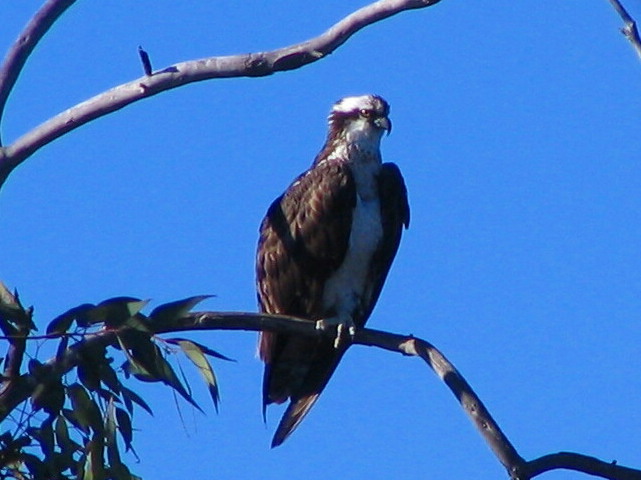
Cwit took this photo when we were birding in San Diego at The San Eligo Logoon, at Christmas 2006.
The fish-hawk, as the osprey is also known is a migratory raptors, which overwinter in South America (they are as familiar with tropical rainforests as with northern lakes and estuaries) and return to the same nesting sites on the Chesapeake for their spring courtship.
Their habitats include shallow water estuaries, lakes, and rivers.
Ospreys build their conspicuous nests on tall, offshore structures such as channel markers and duck blinds to protect their young (from human activity and predators such as racoons) and to place the birds near their food supply.
Ospreys usually mate for life. March ushers in a five-month period of partnership to raise their young.
Females lay three to four eggs by late April, and rely on the size and bulk of their nest�with its pronounced depression at the center�to conserve heat. The eggs are approximately the size of very large chicken eggs, mottled and the color of cinnamon. Osprey eggs incubate for about five weeks.
After hatching, the 2-ounce chicks become fliers within eight weeks. When food is scarce, the first chicks to hatch are the most likely to survive.
In spring and summer ospreys find an abundance of medium-sized fish, such as menhaden, to feed their young. Males forage widely, while females stay on or near the nest.
Ospreys hunt by fluing over water, scanning for surface schooling or spawning fish. They are spectacular divers: once they have sighted their prey, they fold their wings tightly, descend swiftly and enter the water feet-first, often submerging completely. They also perform shallow scoops for fish near the surface.
They are very fascinating to set on shore or in the boat and watch. As we did in the birding area in San Diego.
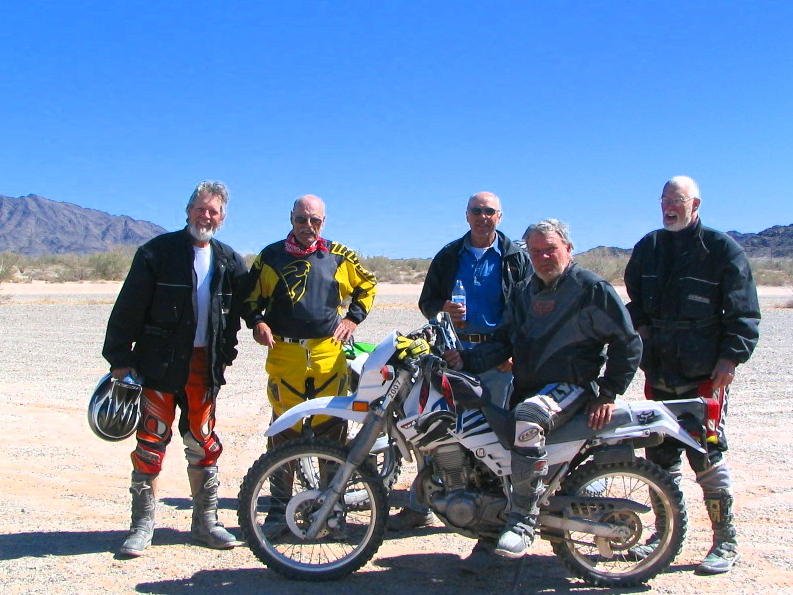
These are five of the best bunch of Boondockers around. These five riders are at Sidewinder Rd. in the Yuma area when it was taken. I think they all look mighty good and boy do they get around and not set on their back sides all day.
The sport of motocross has been around for many years. The sport involved racing off the road motorcycles (or dirt bikes) around man made dirt tracks. The sport has made many advances and developments in superiority of both machine and track design over the years.
In 1994 the lifestyle of an American pro motocross rider in action, 145ft plus jumps, 45ft high in the air soaring over sand dunes, mountains, houses, buses and anything else secure and steep enough to hold the weight of bike and rider was made.
The video Crusty Demons of Dirt . The launch of this video changed the face of motocross and create a sport that has become the most popular of all extreme sports today, Freestyle Motocross .
Cwit has been at it sence the 70's. He is in great shape in every way.
|
| |
| |
| |
| |
| |
| |
|
