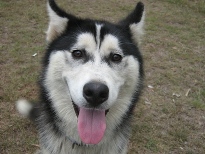
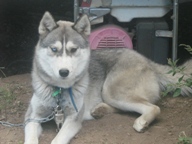
I got my first Siberian Husky about 5 years ago now, a red and white male Husky named Freewolf Kinook, just Kinook to us. He was surrended by his owners because they couldn't look after him. I found him, he introduced me to the breed and I fell in love.
I then got Arcticshadow Willow a female wolf grey husky who was also surrended due to the common problem of people buying a husky without being aware of the time and care requirements. When we got her she had spent the last 6 months on a chain and was petrified of males, however that was soon rectified. Unfortunately I lost both Willow and Kinook about 12 months ago.
Siberian Huskies are a wonderfully attractive dog which is making them an increasingly popular pet. Unfortunately their good looks also lead to many people getting a husky without being fully aware of the time, care and enclosure requirements of this breed and end up releasing these beautiful dogs into pounds and rescue organisations. I strongly urge you to look at rescues if you are looking for a pet siberian husky as there are many beautiful huskies out there looking for homes. If however you are looking for a registered puppy then send me an email and I will let you know when I have puppies available.
Appearance
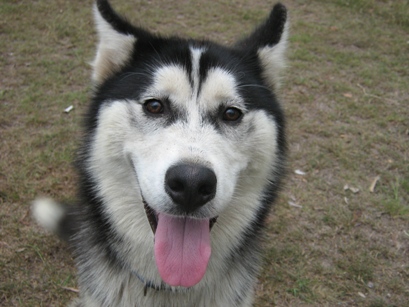
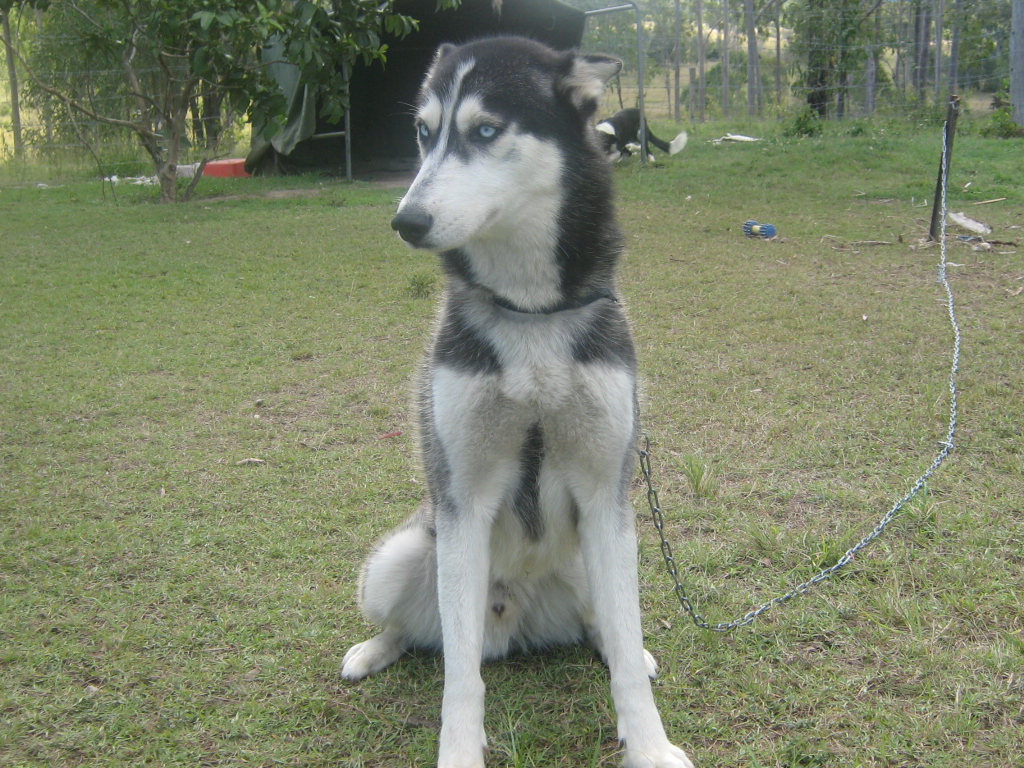
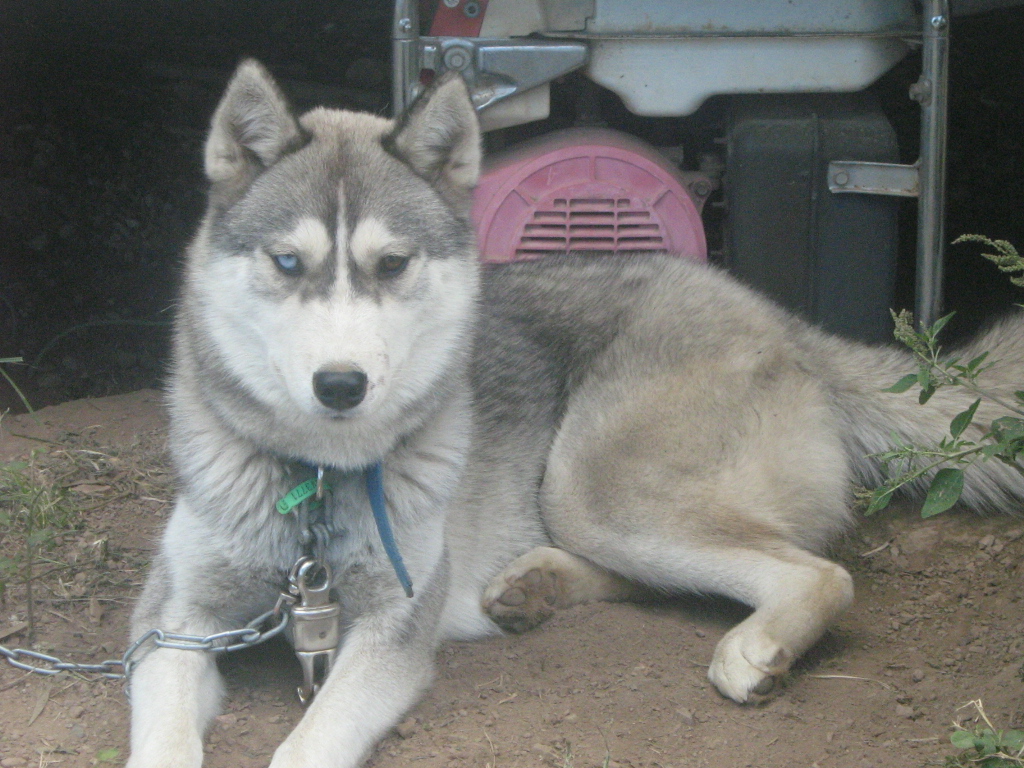
Siberian Huskies are a strong, compact working dog. They have high set and erect ears with almond shaped eyes set somewhat obliquely. Their eyes are usually blue, brown, amber and sometimes green or a combination of these colours. They can be bi-eyed, (having two eyes of different colours), and/or parti-eyed, (having two colours in one eye). These unusual eye colours and combinations of eye colours is quite often what initially draws people to the husky.
Huskies come in a range of coat colours and patterns, from all white to almost all black, to piebald. Not all huskies have strong facial masks however many do and this is another well known feature of the Siberian Husky.
The coat of the Siberian Husky consists of a thick wooly undercoat and a soft outer coat.
Male Siberian Huskies usually range in size from 53.5 - 60cm at the withers and weigh between 20-27kg. Bitches range in height between 51 - 56cm at the withers and weigh 16-23 kg. Weight is in proportion to height.
Temperament
The Siberian Husky has a wonderful temperament. They are an affectionate dog that has a gentle and friendly disposition. They are generally wonderful with children however can get boisterous and bouncy and can unintentionally knock over and hurt small children so, like any dog, should not be left alone with small children.
The Siberian Husky is a very alert dog and eager to please, however their high level of intelligence means they will not follow instructions blindly, but will often only obey if they see the point. Time and effort is required to effectively train a Siberian Husky.
The Siberian Husky is affecionate not just to its owners but most likely to all he meets. They are NOT a guard dog. They are however a pack animal and need a lot of interaction, either with their humans or with at least one other dog. They are not a dog suitable for the working family where they are left on their own all days. A lonely Husky can cause a lot of damage through digging and chewing, not to mention the noise they can make. They don't bark often, instead preferring to "talk" or howl.
Huskies are bred to run and will do this at any opportunity and often without regard to their own safety, huskies should never be allowed off leash in an out door area unless you are 110% sure of its secureness, even then the typical husky will find a way out if not carefully watched.
Siberian Huskies are known for the high predatory instincts, and whilst they normally get along well with other bigger breeds of dogs, it is advised to be aware that any small animals such as rabbits, guinea pigs, birds, cats and smaller dogs are possible victims of there expert hunting skills. This being said there are huskies that live in union with cats and smaller animals.
Grooming, Diet & Exercise
The Siberian Husky is a comparatively easy dog to care for. He is very clean by nature and is free from body odour and parasites. He is presented in the show ring well-groomed but requires no clipping or trimming. At least once a year the Siberian Husky sheds his coat, and it is then, when armed with a comb and a garbage bag, that one realizes the amazing density and profusion of the typical Siberian Husky coat. Shedding takes about two or three weeks; a warm bath may help loosen the hair so it can be combed out quicker.
Most first time husky owners are surprised at the amount a husky eats in relation to other similar sized dogs. The Siberian Husky will often self regulate the amount of food they eat, depending on the amount of energy they expend. Saying this however doesn't mean that they should have 24 hour access to food as if not getting sufficient exercise they will quickly become overweight.
The Siberian Husky is an extremely active dog and does require daily exercise. This can be achieved in the form of a good walk or jog, huskies make ideal jogging companions and will out jog the fittest owner. Sledding and scootering offer another way of excerising your Husky as well as allowing you to meet and socialise with other husky lovers.
A question frequently asked in Australia is how Huskies cope with hotter temperatures. The important point to remember in relation to Arctic breeds, is that these breeds were able to survive in the Arctic not only because they could tolerate cold but because more precisely, they could tolerate extremely wide swings of temperature in relation to their body temperature. Therefore, they are also, it appears, better adapted for severely high temperatures. Providing they have access to adequate water and shade, a requirement of any animal, hotter temperatures do not seem to be a problem.
Life Expectancy & Health Problems
As with most similar sized breeds an average life span of a husky is 12 - 14 years.
Although generally healthy, the Siberian is subject to hip dysplasia, progressive retinal atrophy (a genetic eye disease), cataracts, corneal disorders, thyroid deficiency, and zinc-deficiency disease. Reputable breeders will have had their dogs hip scored and eye checked to eliminate the possibility of passing on of these genetic faults.
Origin of the Siberian Husky
The Siberian Husky was developed over a period of about 3000 years by the Chukchi peoples of Siberian. They were developed to fulfill a very specific need. In one of the coldest , populated climates on earth the Chukchi relied on there dogs for survival. They pulled sleds in large teams over large distances to allow there owners to hunt and fish.
Tribal life revolved around the dogs with the women rearing the pups and the men training the older dogs. The dogs were also much loved members of the tribe and acted as companions for the children and often slept inside the Chukchi dwellings. This wonderful temperament and affinity with children is still found within the breed today. The Dogs were also let loose to hunt for their own food and the high prey drive of the Siberian Husky is also still present in todays Husky.
There are many more in depth sources of information on the Siberian Husky and its origins for those wanting more information.