| ABOUT KING'S MEADS |
 |
 |
| King's Meads consists of a number of different areas, each having its own habitat, character and flora and fauna. The following sections describe each of the areas in turn, their special features and what to look out for. Each of the areas are shown on the Map Of The Site. |
 |
 |
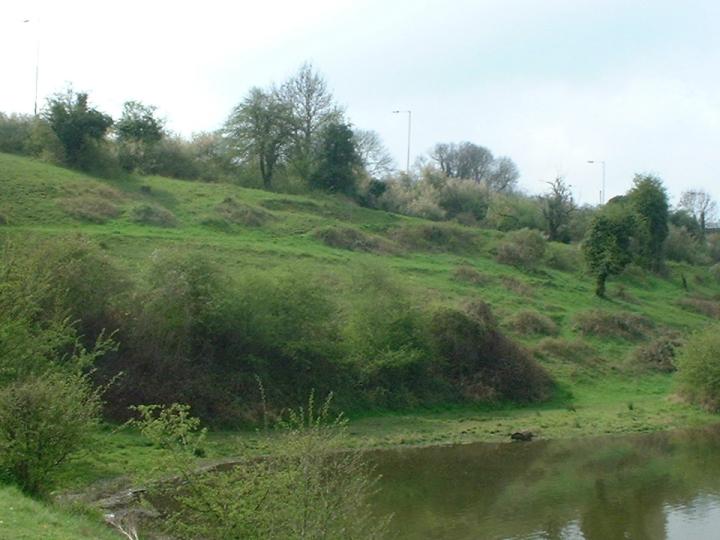
| Chadwell Bank from the Causeway |
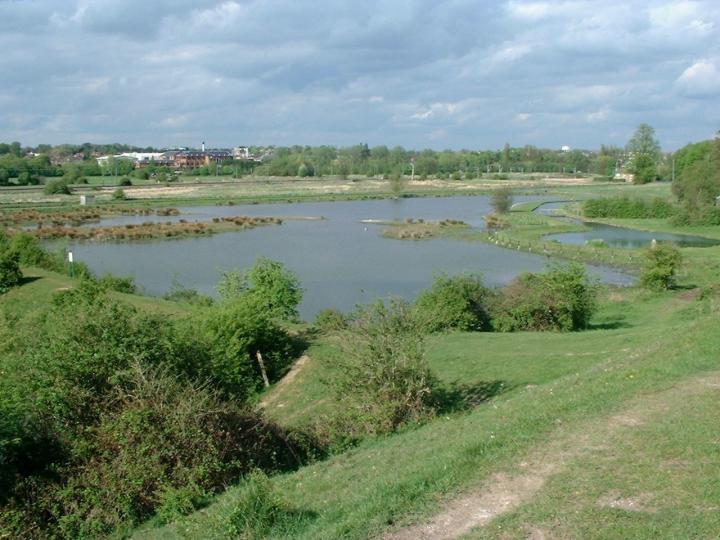
| East Pool from Chadwell Bank |
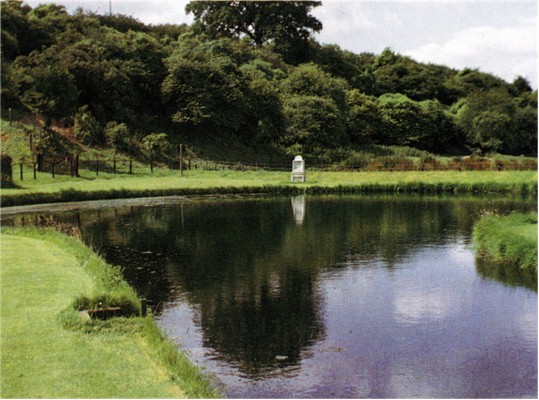
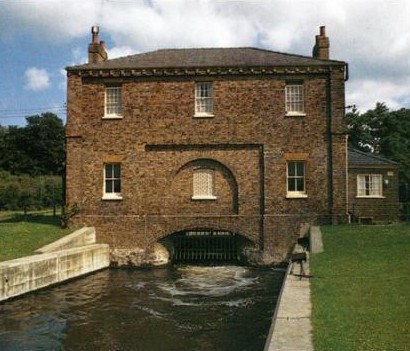
| Chadwell Bank, West Pool and East Pool Chadwell Bank is a key site at King's Meads. Being chalk grassland, it is important for plants such as Meadow Saxifrage, Meadow Cranesbill, Kidney Vetch, Pyramidal Orchid, Common Rock-rose and Salad Burnet. Chadwell Bank also provides commanding views across the East and West Pools, which are areas of floodwater, the depth of which depends on the local water table and the flow of water from Chadwell Spring. Chadwell Spring is the circular pond in front of the house to the east of Chadwell Bank and was the original source of the New River (for more information see History Of The New River). Although the pools are deceptively shallow (see cows walk across them and you will be convinced), they attract a wide variety of wildfowl including Mute Swan, Canada Goose, Grey Lag Goose, Little Grebe, Pochard, Tufted Duck, Ruddy Duck, Mallard, Shoveler, Gadwall, Teal, Wigeon and, on migration, Garganey. Since I began recording at King's Meads in April 2002, a total of 14 species of wader have been seen namely Oystercatcher, Little Ringed Plover, Ringed Plover, Lapwing, Dunlin, Ruff, Jack Snipe, Snipe, Black-tailed Godwit, Redshank, Greenshank, Green Sandpiper, Wood Sandpiper and Common Sandpiper. The pools are also good for dragonflies, with large breeding colonies of Common Blue Damselfly and Black-tailed Skimmer, and newly-formed colonies of Red-eyed and Small Red-eyed Damselfly which can be found in the south-east corner of the West Pool. |
| Little Mead, Park Mead, Stockade Mead and Hollow Mead All of these meads are grazed grassland, resulting in a relatively short sward. Therefore, the predominant bird species are Meadow Pipits and Sky Larks. The Sky Larks breed in these meads, but generally leave the site altogether during the winter months. The Meadow Pipits, on the other hand, breed on the meads during the summer months, but then gather into flocks of up to 50 birds during the winter months. It is therefore not too surprising that the occasional Merlin can be seen. During spring and autumn migration, keep a look out for Yellow Wagtails, which tend to feed on insects disturbed by the cattle hooves, and Whinchats perching on the multitude of fence posts. In the winter months, the Whinchats are replaced by up to 10 Stonechats, which are one of the speciality birds of King's Meads. King's Mead, Mill Mead, Lady's Mead and Broad Mead Although all these meads are also grazed, the vegetation tends to be of Carex, Juncus and Phalaris, resulting in a much longer sward. These meads are therefore home to breeding Reed Buntings and Meadow Pipits, and along the vegetation-lined ditches, breeding Sedge Warblers, Reed Warblers and Whitethroats. In the winter months, King's Mead often floods, providing a feeding area for up to 50 Snipe and 1 or 2 Jack Snipe. It is also during the winter that these areas provide good ground cover for roosting birds, notably up to 100 Fieldfare and a few Redwing which gather at dusk at the top of the bushes on Lady's Mead and up to 30 Meadow Pipits which roost on King's Mead and Broad Mead. As for the other meads, Stonechat are common winter residents although can be mobile and elusive. |
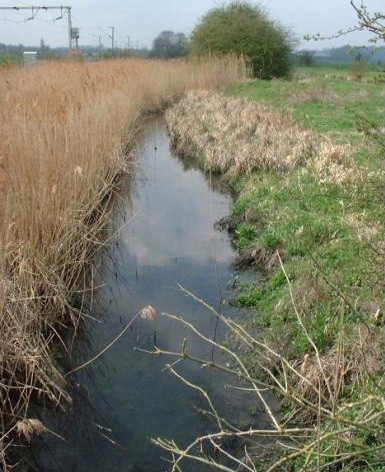
| Hertford Cut, Tansy Mead and The New River Hertford Cut is a drainage ditch that enters King's Meads from the western end of the site, between the playground and the small woodland area. It runs through Tansy Mead and then between the railway and the New River until, at the railway crossing by White House Sluice, it flows under the New River and into the Manifold Ditch system. Tansy Mead gets its name from the Tansy flower which, although not particularly common in Hertfordshire, is still found on the site. The strip of land between the railway and the New River, comprising Tansy Mead and Hertford Cut with its varied vegetation is one of the richest and most diverse habitats at King's Meads. The Phragmites reed-bed provides nesting sites for up to 6 pairs of Reed Warblers and the thick marginal vegetation attracts Sedge Warblers, Whitethroats and Reed Buntings. In the past, Hertford Cut has suffered from a number of pollution incidents but, at the moment, would appear to be in reasonable condition from a water quality point of view. During the summer months, the New River supports a vast colony of Common Blue Damselflies and, at the height of the breeding season, it is possible to count several hundred insects. Outside the summer months, the New River is probably one of the best sites at King's Meads to see a Kingfisher. |
 |
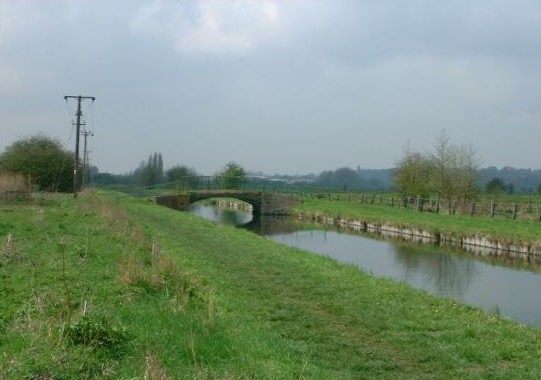 |
| Hertford Cut from one of the bridges |
| The New River |
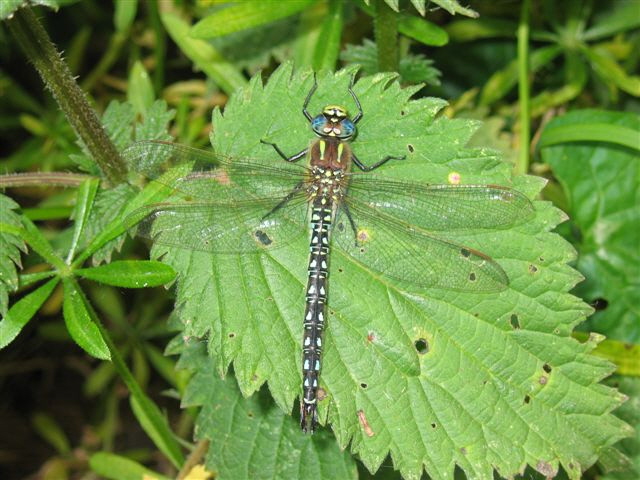
| Manifold Ditch No description of King's Meads could be complete without the famous Manifold Ditch. Manifold Ditch rises in Stockade Mead and meanders east along the northern edge of the reserve where it flows under the flyover. It then flows south-east across King's Mead where it splits into a number of ditches which rejoin at the eastern end of Mill Mead, before flowing into the River Lea at Ware Lock. The best stretch of Manifold ditch is the section west of the flyover which has benefited from some maintenance. The ditch has been cleared of some of the more invasive vegetation and a sluice installed to raise the water level. This has been most effective in creating some deep pools, which have been proven to be most attractive to dragonflies and a number of species can be seen here. The most exciting recent find must be the reappearance of the Hairy Dragonfly to King's Meads. After a long absence from Hertfordshire, the first Hairy Dragonfly to reappear was found in the Lea Valley in 1994. Since, then it has been spreading up the valley and had been recorded as far north as Amwell. The first Hairy Dragonfly for King's Meads was recorded in May 2001 and, in 2003, a singleton was seen on the 24th May with 3 on the 30th May. It is therefore hopeful that this attractive dragonfly will continue to colonise Manifold Ditch. The management work has also resulted in the reappearance of the Water Violet. |
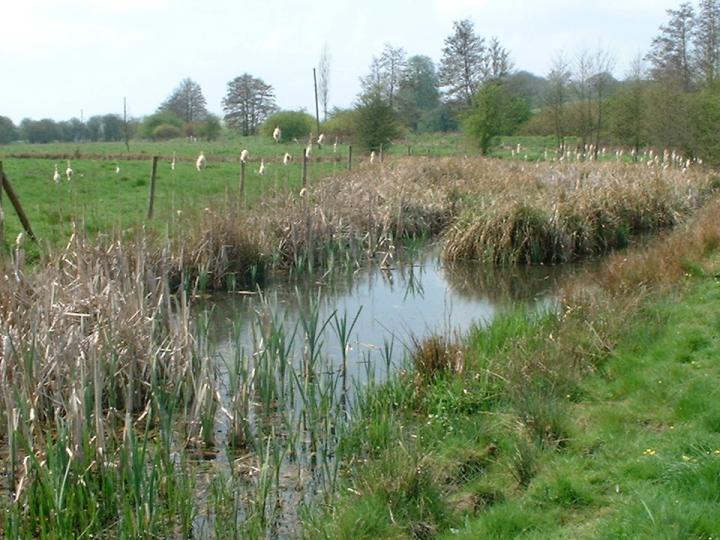 |
| Manifold Ditch west of the flyover |
| The Hairy Dragonfly |
 |