








|
Within a short time I was taking lessons and thus had a guiding hand in my training endeavors and that filly and I went on to show 4-H and Open in every disciple for years and some of my memories of that time are still among my fondest. You can read more about my early experiences and credentials. I later started to focus my horsemanship goals and began training with an eye toward riding on the Olympic Equestrian Team. For 7 years I rode and worked at re-training off-the-track Thoroughbreds, turning the suitable ones into Hunter Jumpers, and giving the others a life beyond the track. Unfortunately at the eve of the culmination of my Olympic dream, my horse died suddenly and unexpectedly and my plans were derailed. I imagine that in the long run my life has turned out much different than it would have had I made it to the Olympics but I cannot say I have any regrets. Currently I accept a limited number of horses for training, never having more than 3 in the barn at a time at this point. I feel this gives me the opportunity to spend the time needed with each horse and not falling into the habit of "cookie cutter", stamping them out, causing a forsaking of their individual personalities and needs. It also affords me the time for my lesson program. I ride rain or shine as long as the conditions are safe for the horses and unlike most training programs where "30 days" means 20-25 days of 45-60 min rides, I put in a true 30 days with them, working each day until we accomplish that day's goal. I believe people should get what they pay for. I also keep daily notes to mark the progress of each horse so tracking what has been happening is easier and their learning style can be passed accurately along to their owners. I employ a variety of different methods that I have added to my "bag of tricks" over the years and while I have a good foundation of knowledge, I am also constantly adding to that knowledge base so as to have more to draw from because if I have learned nothing else, it is that horses each have different learning styles as different as their personalities and no one method works for all. In general, I start my work with all incoming horses with groundwork, regardless of the previous training level. That ground work allows me to safely assess where my starting point should be with the horse and will let me find any hidden gaps in training that might bring trouble later. Groundwork consists of desensitizing, round pen work, longing, establishing voice commands and often hand signals, sometimes ground driving and generally takes about 2 weeks for horses just being started, often far less for horses in intermediate or finishing training. Once I begin riding, we stay in the 75' round pen at first, then move out into open spaces and depending on the client's needs, can even include the trail or hacking down the road. Starting a horse from scratch generally takes a good 45-60 days for what I consider a good start and after that amount of time your horse will stand for grooming, saddling, hoof picking, and mounting/dismounting, be able to travel at all three gaits, whoa, back up, move off your leg, be ready to start neck reining if not already started and do all these things quietly and calmly. At this point your horse should be ready to move into intermediate training for whatever specific discipline you choose. This is often the point where clients who just want a trail horse will take over and do the rest of the horse's training on the trail. Horses in intermediate training will be moving toward a specific discipline and so what each horse learns and how fast will be determined by the discipline chosen and the horse's ability. At this point I will also be able to help you decide whether the horse you have chosen is suitable for the discipline you are moving toward and I will clearly let you know if the horse is completely unsuitable so that you can decide if you would rather pursue a different discipline or seek out a better candidate for that discipline. If we do come to the conclusion that your horse is unsuitable for the discipline you are going to pursue, then your horse's marketability and value is increased by the solid start it now has and you will have the opportunity to have my help in marketing and selling your horse because I will be able to stand behind it's training.
Rates:
|
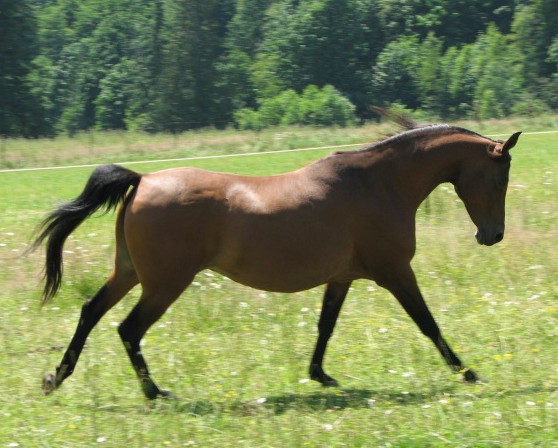 Training: Like many people who have ridden since childhood, the transition between being "along for the ride" and "training" the horse I was riding was somewhat blurred. The first horse I can honestly say I trained was a 2 yr old Appaloosa filly my father bought for me when I was 7 because I was outgrowing the family ponies. That filly came to us with little in the way of handling and I "started" her by riding bareback with a bosal.
Tel: 360-318-0838 or 360-223-3080 Contact Us
For information on having a website built, logo creation or other digital graphics work, please contact the webmistress,
Chris Davis
