Shirov,A (2751) - Short,N (2683) [C18]
Bosna SuperGM Sarajevo BIH (5), 21.05.2000
[Castro]
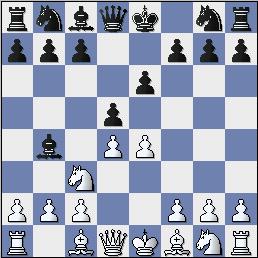
I think the most instructive aspect to this game is how Shirov creates an advantage--a better minor piece--and pushes the advantage through the endgame. Although games with the likes of Shirov and Short are instructive in general, I will concentrate on the latter part of the game. 1.e4 e6 2.d4 d5 3.Nc3 Bb4 Diagram
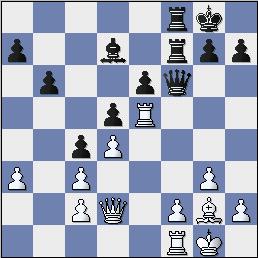
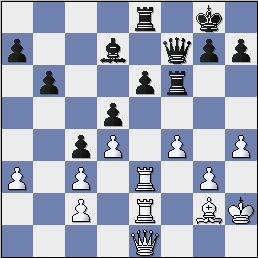
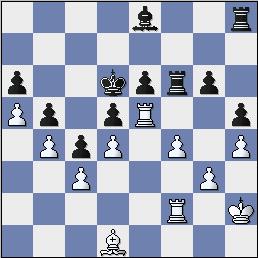
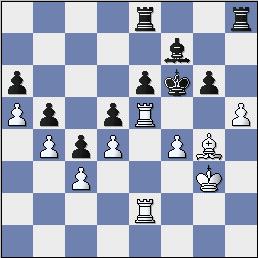
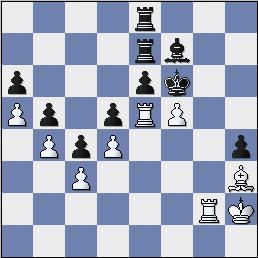
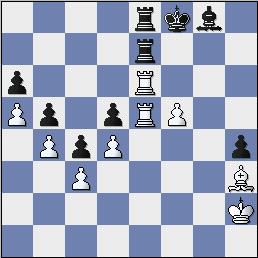
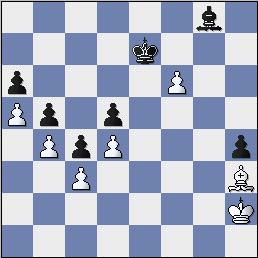
Initiating the Winawer Variation of the French, known as Black's most aggressive reply to 3.Nc3.4.e5 c5 5.a3 Bxc3+ 6.bxc3 Qc7 7.Qg4 Starting an attack on the kingside. 7...f5 8.exf6 Nxf6 9.Qg3 Qe7 10.Bf4 Nh5 11.Qg4 Nxf4 Normally, the bishop is considered stronger than the knight. However, because of White's pawns on c3 and d4, the dark-square bishop is "bad." 12.Qxf4 c4 13.Nf3 Nc6 14.g3 Qf6 15.Qe3 0-0 16.Bg2 Bd7 17.0-0 Rae8 18.Rae1 b6 19.Qd2 Moves like this seem strange to the beginner and intermediate player (it did to me at first). However, considering Black's rook on e8 and the fact the Black can push e6-e5, it is wise to remove the queen from the line of fire. Also, the queen then aims herself at d5, which would hang after ...e5 and exd5. 19...Re7 20.Ne5 Nxe5 21.Rxe5 Ref7 Diagram An imposing sight, with all three major Black pieces on the f-file. However, considering that the file is properly defended by White, there is not much to worry about for White. If we look at the other aspects of the position, we notice two things: Black's bad B vs. White's good B and White's doubled P's at c2 and c3.22.f4 Qh6 23.h4 Rf5 24.Re3 Qg6 25.Kh2 Protecting g3, so the e3 R can maneuver. 25...R5f6 26.Rfe1 Re8 27.R1e2 Qf7 28.Qe1 Diagram Now note this formation, known as "Alekhine's Gun." The configuration is more effective than Black's earlier battery because the White rook would be easier to sacrifice than the queen, which led the way earlier for Black.28...Kf8 29.Bh3 Adding more pressure to e6. 29...h5 30.Re5 Preventing the freeing ...e5. 30...g6 Black's pawn advances only eccentuate Black's real disadvantage, his bad B. 31.Qb1 With the kingside closed, White attacks on the queenside. Note Black's limited mobility. 31...Kg7 32.Qb4 Qf8 Trading queens because White's queen gets too much action on queenside. 33.a4 Qxb4 34.cxb4 Fixes White's pawn structure. 34...a6 35.c3! Black has very little chance to free his bishop. 35...Kf7 Protecting e6. [ 35...Bxa4? 36.Rxe6 Rfxe6 37.Rxe6 White goes into an ending with a good bishop or gives up the open file.] 36.Ra2 Ke7 37.Bg2 Kd6 38.Bf3 Ref8 Black's rooks have very little room to move. So best to put them on the only half-open file. 39.Bd1 Be8 40.Rf2 Rh8 41.a5 b5 Diagram 42.g4 Despite White's advantage, he has to break open the position in order to take advantage of it. 42...hxg4 43.Kg3 White's temporary sacrifice allows the king's entry. 43...Rff8 44.Kxg4 Bf7 45.Kg5 White an excellent position from the king. The monarch closes in the bishop by fixing the g6 pawn. 45...Ke7 46.Bf3 Rfg8 47.Rfe2 Rh5+ 48.Kg4 [ 48.Bxh5? gxh5+ 49.Kh6 Kf6 50.Kh7 and a draw by repetition.] 48...Kf6 49.Kg3 Rhh8 50.Bg4 Re8 51.h5 Diagram The idea behind this move is deep. White wants to eventually trade rooks and go into a winning endgame. He wants to open the position to do this. f5 is White's idea, attacking e6. However, with the pawn on g6, f5 is impossible. Hence h5. When I first saw this move, it seemed that White had made a mistake, but after Black makes a couple of "good looking" moves, his weaknesses are fully exposed.51...gxh5 52.Bh3 h4+ 53.Kh2 Re7 Preparing to double rooks to protect e6. 54.f5! Rhe8 55.Rg2! Diagram A hard move to understand at first, but after studying the position, it is clear that the rook prevents the king from escaping to the g-file. [ 55.Rf2 exf5 56.Rexf5+ Kg7 57.Rg2+ Kf8 and Black's king escapes.] 55...Bg8 Any other move loses more material. The f7 square is now available to the king. [ 55...Rf8 56.fxe6 Bg6 57.Rf2+ Kg7 58.Rxf8 Kxf8 59.Rxd5+-; 55...exf5 56.Rxf5++-] 56.Rg6+ Kf7 57.Rgxe6 Kf8 Diagram Remember what was mentioned earlier about White's advantage--his good bishop. When you have such an advantage, it is crucial to get rid of the "extra" factors. Since White's rooks and Black's rooks are relatively equal in strength in this position, White does well to get rid of them.58.Rxe7 Rxe7 59.Rxe7 Kxe7 60.f6+ Diagram White will take the queenside pawns next with Bc8. Lessons from the game: 1. When action is dead on one side of the board, you must seek counterplay in another part of the board. In this game, White's queenside attack with his queen forced Black to help him out because "fixing" White's pawn structure. 2. Always strive to make your minor piece stronger than your opponent's. A corollary to this: Strive to make your pieces, bad or good, as active as possible. Notice how helpless Black's bishop is at the end of the game. 3. Remember that it is sometimes necessary to temporarily sacrifice pawns (or pieces) to open up the position and deflect defenders from a key square. 1-0
Generated with ChessBase 8.0