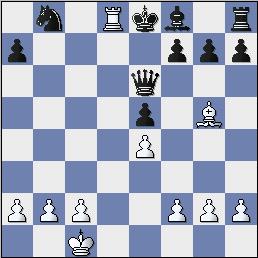
Morphy,P - Duke Karl Count Isouard [C41]
Paris it Paris, 1858
[Castro]
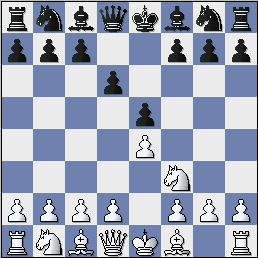
This is Morphy's famous "Night at the Opera" game. I love this game because it illustrates many tactical themes as well as the process of attack. Paul Morphy was known as a master of attack and I study his games when I need inspiration for my attacking game! 1.e4 e5 2.Nf3 d6 Diagram
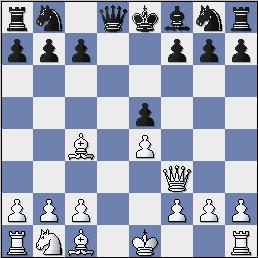
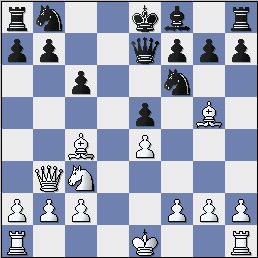
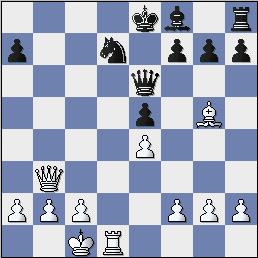
This is Philidor's Defense. Black tries to create a strongpoint at e5.3.d4 Attacking Black's center. 3...Bg4 Pinning the knight. This prevents the knight from taking on e5 after dxe5 dxe5 and now the knight can't take on e5 lest the checkmate on d1. 4.dxe5 Bxf3 [ Preventing 4...dxe5?! 5.Qxd8+ Kxd8 preventing the king from castling. In this opening, this is often an advantage because now the king is stuck in the center, open to attack. 6.Nxe5] 5.Qxf3 dxe5 6.Bc4 Diagram Threatening mate on f7.6...Nf6?! Blocking the mate. However, it allows White to take advantage of weaknesses in Black's structure. [ 6...Qd7 is necessary here.; or 6...Qe7 ] 7.Qb3 With a double attack on both b7 and f7. This is a common maneuver in king-pawn openings. Always look for weak points in the enemy's structure, and when there is more than one, try to attack both at the same time. Many times, the opponent won't be able to defend both in time. 7...Qe7 8.Nc3 As Grandmaster Larry Evans said in his comments to this game, "Development before Material!" I probably would have taken the pawn on b7, but Morphy, knowing he was much stronger than his opponent, wanted to demonstrate his attacking ability. 8...c6 Allowing the queen to protect the pawn at b7. However, Black is way behind in development. 9.Bg5 Diagram Pinning the knight. Notice that White's back rank is empty besides the king and rooks. Now White can castle either way. Black still needs to move a piece to get the king to safety. Unfortunately, Morphy probably won't give him the chance.9...b5 Attacking the bishop. 10.Nxb5! Sacrificing the piece. White doesn't want to give up his superior development (by moving the bishop off the strong diagonal, White would let Black use another move to get his pieces out). When attacking, you must open lines, even if you must give up a little material. 10...cxb5 11.Bxb5+ Nbd7 12.0-0-0! Attacking the knight, which is protected only by queen and king (note that the f6 knight is pinned. 12...Rd8 Adding another defender. 13.Rxd7! Brilliant! For me and many other beginners, moves like this are hard to make, because we don't see the end result. Studying games like this should give us courage in our own games! 13...Rxd7 14.Rd1 Attacking the pinned piece. 14...Qe6 A futile attempt to get some breathing room. Now the knight is free to protect the rook, because it is not pinned. 15.Bxd7+ Nxd7 Diagram Do you see Morphy's winning move?16.Qb8+!! Giving up yet another piece, however, it leads to immediate reward. 16...Nxb8 17.Rd8# Diagram White mates Black's king with his final two pieces. Note the helpless queen standing by. Also remember this pattern of checkmating the king with bishop and rook, it is fairly common. For me, this game illustrates the importance of development and how to attack someone who has neglected development. 1-0
Generated with ChessBase 8.0