What is the modern version of Kenpo Karate?
 Edmund K. Parker, a student of Professor Chow's, took kenpo karate and added American philosophy to it.
Ed Parker created American Kenpo Karate by using the Chow System as a starting
point and added scientific thought and evaluation and stressed the use of
American philosophies and practicality to the system. Mr. Parker's system
is renowned for its practicality in self defense, use of principles and concepts
of motion (kinesiology) and balanced skills (punching, kicking and grappling)
tailored to the individual. Mr. Parker is considered the father of
American martial arts and the founder of the American Kenpo System.
Edmund K. Parker, a student of Professor Chow's, took kenpo karate and added American philosophy to it.
Ed Parker created American Kenpo Karate by using the Chow System as a starting
point and added scientific thought and evaluation and stressed the use of
American philosophies and practicality to the system. Mr. Parker's system
is renowned for its practicality in self defense, use of principles and concepts
of motion (kinesiology) and balanced skills (punching, kicking and grappling)
tailored to the individual. Mr. Parker is considered the father of
American martial arts and the founder of the American Kenpo System.
Grandmaster Jim Mitchell has trained in the kenpo system for over 30 years including training directly with Mr. Parker for over 10 years. Mr. Mitchell has been at the forefront of continued refinements and material to the American Kenpo System. Mr. Mitchell has worked to reorganize and further develop the system to better suit the student's needs and demands of the modern world. His efforts have led to the formation of Mitchell Systems Kenpo Karate. This cutting edge system has taken the material developed by Mr. Parker and brought it forward into the 21st century. We are proud to offer this practical, exciting and dynamic art to the Salem area.
What are the modern components of Kenpo Karate?
Kenpo Karate is a scientific fighting system made up of modern laws of motion, physics and kinesiology combined with ancient proven fighting techniques. It is unique because the system is adaptable to fit the student both physically and mentally. The system is divided into four primary parts.
Basics
Basics are similar to the letters of the alphabet in English. Through the use of 26 letters, there are a near infinite number of combinations to express oneself. There are many basic including punches, kicks, strikes, blocks, parries, stances, foot maneuvers, etc that create a vocabulary of motion. The purpose of this vocabulary is to give the practitioner complete freedom to move as needed depending upon the threat.
Self Defense Techniques
Self defense techniques are specific responses to specific attacks designed for defense, counter attacks and to teach how principles and concepts of motion react with an opponent. The techniques help develop effective combinations of defense and offense and understanding of how different sequences create different opponent's reactions.
Forms (katas) and sets
Forms and sets act as an encyclopedia of basics and themes and allow the practitioner to work on material without a partner. They help to reinforce movements and allow for longer combinations to help create flow from one movement to another.
Sparring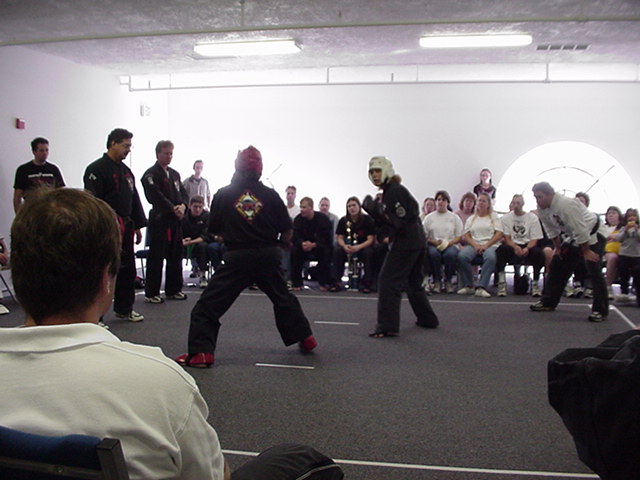
Sparring acts as the live conversation of a language between two people. It is not structured with the preset patterns of techniques and allows participants to develop more spontaneity. This format of free form use of basics and techniques with a competitive opponent encourages awareness, timing, creativity and quick thinking in a much less structured environment.
What makes Kenpo Karate different compared to other martial arts?
Tailored
Kenpo movements are designed to fit the student's body type and physical capabilities. Many strikes and techniques are designed to use the entire body in the strike and can be effective by people that are not as physically strong or gifted as others.
Balanced
Kenpo is well known for blindingly fast hand combinations but it also contains a large variety of kicks, stomps and low line destructive techniques. Kenpo also uses a large variety of jujitsu holds, breaks, traps and other grappling skills. The practitioner has a large variety of weapons and defenses to choose from and is encouraged to explore which methods are best for him.
Practical
Kenpo focuses equally on defense and offense. Kenpo is a superb defensive system using checks, angles, strikes, parries, and other methods to maintain maximum defensive position even while attacking. Exploration of different attacks, environments, conditions, etc is highly recommended.
Principles and Concepts
Because the philosophy is based on American culture and values, learning Kenpo does not require additional study of another culture or history. The principles and concepts are based in familiar scientific formats and are practical, easy to understand and can be applied to other aspects of life.
What do I need to do to prepare for prior to taking lessons?
Kenpo does not require prior conditioning or preparation. It does require an open mind and spirit eager to learn. Beginning classes include warm-up and basic conditioning time and the techniques themselves assist with physical conditioning. Later, a traditional style uniform (gi) can be purchased. Most training is conducted barefoot but there are special sessions available to train in everyday dress and footwear for practical experience.
Kenpo is a highly adaptive system of practical self defense, ancient traditions, and modern philosophies. The system can be tailored to fit the needs and desires of the practitioner including mental and physical goals. Kenpo offers opportunities to explore self defense, competition, personal challenges, teaching and weapons training. Although the system is powerful and well balanced, the most important aspect of Kenpo is the practitioner. The effectiveness of Kenpo is proportional to the amount of time and effort put forth by the practitioner. This dedication can lead to many personal rewards.
What is Kenpo Karate?
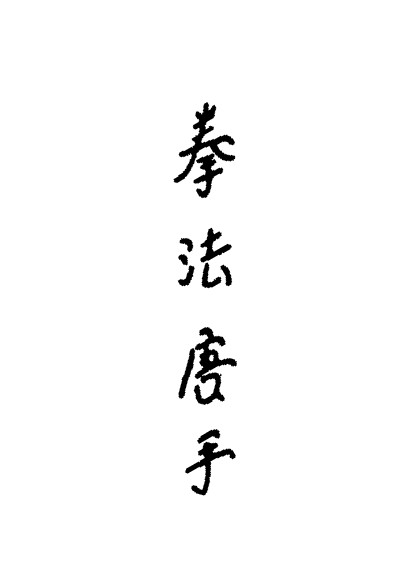
Karate is used as a generic name for a large number of different Japanese and Okinawan fighting styles. There are many different descriptive names added to karate to describe either its master or its philosophy or its particular fighting specialty. Regardless of how the style is described, its roots trace themselves back to Chinese fighting techniques. The word "karate" reflects this origin. "Kara" is an ancient term for China and "te" means hand. In the Okinawan language, "karate" means China hand or hands from China. This showed respect from where the movements and knowledge originated. After the Japanese people also began to incorporate the Chinese fighting styles, they changed the written character of "kara" from China to "empty". In Japanese, Karate means "empty hand".
Kenpo Karate is a name for a martial art style that traces its roots back hundreds of years ago in China, then spread to Okinawa and Japan and, finally, the United States. Kenpo or Kempo both mean "law of the fist" and various spellings have been used during the last 60 years. Today, Kenpo generally refers to the American version of the art and Kempo refers to the Japanese and Okinawa traditions. Kenpo Karate means "law of the fist and the empty hand". This name is very descriptive of the philosophy and characteristics of the Kenpo movements. Kenpo is known for its use of physical laws of motion to create practical combinations of blocks, punches, strikes, kicks, and also locks, holds and throws.
What is the History of Kenpo Karate?
Although fighting arts and styles have been around for thousands of years, modern martial arts historians general credit the founding of formal Asian styles to an obscure Indian monk in c. 527 A.D. This monk, Bodhidharma, came to China to spread his style of Buddhism. During his mediation sessions, many monks were physically unable to stay awake and Bodhidharma began to create exercises to strengthen their bodies. These exercises, called the "18 hands of Lo-Han", became the foundation for kung fu. The monastery then became the basis for the legendary Shaolin Temple.
Chinese monks traveled to the islands of Okinawa and Japan teaching Buddhism and "chuan fa" or Chinese kung fu. Both island cultures embraced these teachings and applied them to their own culture. The common people found many of the teachings very helpful in dealing with frequent lawlessness and banditry. Many weapons now associated with the martial arts were developed by combining empty hand techniques and common farm implements. Such items include: the staff, the tonfa (wooden tool for turning grinding stones), the sai (metal tool used to plant rice), and the eku-bo (wooden oar).
One particular Japanese style became known as Kosho-Ryu Kempo or "old pine tree style". This system was characterized by linear motion combined with jiujitsu style holds, locks, and takedowns. Many Japanese systems were only taught to family and extremely close friends. However, during World War II, the Kosho-Ryu Grandmaster, James Mitose, opened his system to outsiders. He felt honor bound to help his fellow Hawaiians be able to defend themselves to the best of their ability during the war. He opened the Official Self Defense Club and taught many practitioners who spread the martial arts throughout the United States.
One member of the club, William K.S. Chow was instrumental in improving Kenpo Karate and restoring a "crucial link" to its movements. According to his student, Edmund Parker, Professor Chow was from Chinese and Hawaiian heritage and his Chinese father taught him Chinese kung fu. He grew up in the extremely rough, multicultural mixing pot that was Honolulu and was a veteran of many street fights. Professor Chow understood the need for practical self defense. He combined all of the elements he had learned and became the first proponent of modern Kenpo Karate.
Professor Chow's impact on Kenpo Karate was enormous. He restored key concepts that had disappeared over time, brought an almost brutal practicality to the system, and trained many fantastic students who continued his legacy for questioning and improving the system. One such student took the material given and through years of study, dissection, application and teaching revolutionized the art of Kenpo and brought it into the 20th century. This accomplishment (among others) earned Ed Parker the title of "Father of American Karate".
Mr. Parker's legacy is immense. He was a pioneer of karate in America including having opened the first karate studio on the mainland, applied scientific principles to improve the movements and realities of self defense, and trained thousands of practitioners of kenpo. He sought out, questioned and tested revolutionary concepts and theories in his quest for sophisticated knowledge. The resulting system is American Kenpo Karate. Mr. Parker passed on in 1990 but left a rich heritage that is still carried on today by his senior students.
 Mr. Jim Mitchell is a first generation black belt and was a personal protégé of
Mr. Parker for over 10 years. He was the manager of the Pasadena
headquarter school from 1975-1978 and continued his training while managing
several studios in the San Diego area. Mr. Mitchell holds the rank of 10th
degree black belt and is the founder of Mitchell Family Systems. The
formation of Mitchell Family systems continues his quest of improving and
spreading the Kenpo system into the 21st century.
Mr. Jim Mitchell is a first generation black belt and was a personal protégé of
Mr. Parker for over 10 years. He was the manager of the Pasadena
headquarter school from 1975-1978 and continued his training while managing
several studios in the San Diego area. Mr. Mitchell holds the rank of 10th
degree black belt and is the founder of Mitchell Family Systems. The
formation of Mitchell Family systems continues his quest of improving and
spreading the Kenpo system into the 21st century.
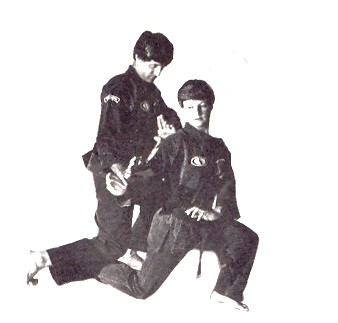
Mr. Mitchell demonstrating for Mr. Parker's book, Mental Stimulation