Melaka
Stadthuys
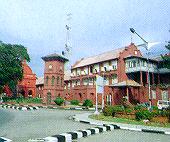 The Stadthuys, the official residence of the Dutch
Governors and their was built in 1650. Situated right in the middle of
Malacca town, it is a example of Dutch masonry and woodwork skills.
Preserved in its original structure, it now houses the Historical Museum
and Ethnography Museum. On display are traditional bridal costumes and
authentic relics from its glorious days. Because of its unique structure
and historical significance, it is a popular spot for photography, especially
the clock tower and the fountain in front of the building. The fountain
was dedicated to Queen Victoria by the people of Malaya in 1904.
The Stadthuys, the official residence of the Dutch
Governors and their was built in 1650. Situated right in the middle of
Malacca town, it is a example of Dutch masonry and woodwork skills.
Preserved in its original structure, it now houses the Historical Museum
and Ethnography Museum. On display are traditional bridal costumes and
authentic relics from its glorious days. Because of its unique structure
and historical significance, it is a popular spot for photography, especially
the clock tower and the fountain in front of the building. The fountain
was dedicated to Queen Victoria by the people of Malaya in 1904.
Christ Church
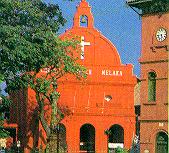 Built in 1753, the church's handmade pews and beams
were constructed without joints, reflecting fine Dutch architecture. The
brass Bible rest has an inscription of the first verse of St. John. The
tombstones on the church floor are written in Armenian Script with "Last
Supper" in glazed tiles.
Built in 1753, the church's handmade pews and beams
were constructed without joints, reflecting fine Dutch architecture. The
brass Bible rest has an inscription of the first verse of St. John. The
tombstones on the church floor are written in Armenian Script with "Last
Supper" in glazed tiles.
Malaysia Youth Museum
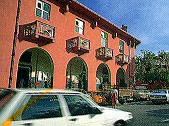 The museum is dedicated to the contribution made
by youths in the country's economic and social wellbeing of the country.
The noble efforts evident at regional, national and international levels
are displayed at the museum.
The museum is dedicated to the contribution made
by youths in the country's economic and social wellbeing of the country.
The noble efforts evident at regional, national and international levels
are displayed at the museum.
St.Francis Xavier's Church
The Gothic Church with twin towers built by Frenchman
Rev. Farve in 1849, is dedicated to St. Francis Xavier, known as the "Apostle
of the East". St. Francis Xavier is well remembered for spreading Catholicism
to South-East Asia during the 16th century.
St Paul's Church
Known as "Our Lady of The Hill" by the Portuguese,
the chapel was built by Duarte Coelho in 1521 and renamed "St. Paul's Church"
by the Dutch. Once made as a burial ground for their noble dead, the tombstones
have Latin and Portuguese inscriptions on them. St. Francis Xavier was
buried here in 1553 before his body was moved to Goa in India.
A Farmosa
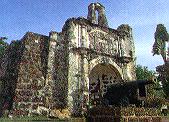 Once a strong fortress built in 1511 by the Portuguese
known as "A Famosa", it was damaged during the Dutch invasion. Repaired
by the Dutch in 1670, the embossed the "VOC" crest on it. In 1808, Sir
Stamford Raffles saved the fort from destruction and the gateway still
stands till today.
Once a strong fortress built in 1511 by the Portuguese
known as "A Famosa", it was damaged during the Dutch invasion. Repaired
by the Dutch in 1670, the embossed the "VOC" crest on it. In 1808, Sir
Stamford Raffles saved the fort from destruction and the gateway still
stands till today.
Dutch Graveyard
A war memorial dedicated to the British officers
and soldiers who died in the Naning War (1831-1983)
The People's Museum
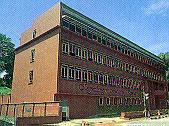 Exhibits include special interest issues relating
to Malaysia's economic and social progress spanning from the period Malacca
was known as 'Sleepy Hollow' right up to the phrase more apt to its dynamic
outlook, The 'Vibrant Malacca'. The exhibits are segmented
into tourism, agriculture, industry and other sectors.
Exhibits include special interest issues relating
to Malaysia's economic and social progress spanning from the period Malacca
was known as 'Sleepy Hollow' right up to the phrase more apt to its dynamic
outlook, The 'Vibrant Malacca'. The exhibits are segmented
into tourism, agriculture, industry and other sectors.
Proclamation of Independence Memorial
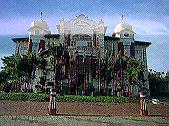 Build in 1912, the former club house of Malacca Club
now houses invaluable exhibits of the country's struggle leading to the
Independence. Exhibits are in the form of relics, manuscript, video
tapes, films and slides.
Build in 1912, the former club house of Malacca Club
now houses invaluable exhibits of the country's struggle leading to the
Independence. Exhibits are in the form of relics, manuscript, video
tapes, films and slides.
Hang Jebat's Mausoleum
The champion of justice who died a tragic death.
Hang Jebat was unceremoniously killed by Hang Tuah in a duel honour that
lasted 3 days and 3 nights. He ran amuck after suffering a fatal
wound from Hang Tuah' dagger, 'keris Taming sari', in the name of
justice to avenge the sultan's hasty punishment against Hang Tuah for a
crime he didn't commit. Hang Jebat was accused by Hang Tuah of 'durhaka'
(contumacy)
The duel between two of Malacca's most prominent
knights has left a permanent questions as to the moral behind Hang Jebat's
aberrant reaction against the authority and the conventions by which Hang
Tuah exercised his conduct as a loyal subject of the sultan.
Sri Poyyatha Vinyagar Moorthi Temple
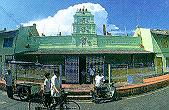 One of the first Hindu temples build in the country
at the turn of the century. It was build on the plot given by the
Dutch.
One of the first Hindu temples build in the country
at the turn of the century. It was build on the plot given by the
Dutch.
Kampung Kling's Mosque
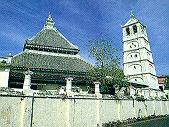 One of the oldest mosques in the country with Sumatran
architectural features. Instead of a conventional dome, a three tier
roof rising like a pyramid is in place. A minaret perculiar in shape
from a typical moorish style, is structured like a Pagoda, potraying a
mixture of East-West architectural influence.
One of the oldest mosques in the country with Sumatran
architectural features. Instead of a conventional dome, a three tier
roof rising like a pyramid is in place. A minaret perculiar in shape
from a typical moorish style, is structured like a Pagoda, potraying a
mixture of East-West architectural influence.
The Baba Nyonya Heritage
 'Straits Chinese' or the Baba and Nyonya are Chinese
of noble descendants who have adopted much of the Malay culture into theirs.
The public can now view the heirloom unique to this heritage at a private
museum run by the Babas and Nyonyas of Malacca
'Straits Chinese' or the Baba and Nyonya are Chinese
of noble descendants who have adopted much of the Malay culture into theirs.
The public can now view the heirloom unique to this heritage at a private
museum run by the Babas and Nyonyas of Malacca
Jonker Street
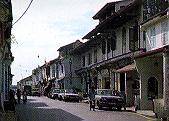 A definite haven for antique collectors and bargain
hunters. Authentic artifacts and relics, some dating as far back
as 300 years, can be found among a host of interesting collectibles, each
with its own history, and mystery. Jalan Hang Jebat, formerly known
as Jonker Street is known world wide among famous antique collectors as
on of the best places to hunt and bargain for antique.
A definite haven for antique collectors and bargain
hunters. Authentic artifacts and relics, some dating as far back
as 300 years, can be found among a host of interesting collectibles, each
with its own history, and mystery. Jalan Hang Jebat, formerly known
as Jonker Street is known world wide among famous antique collectors as
on of the best places to hunt and bargain for antique.
Bukit China
As the name implies, 'Chinese Hill' was the official
settlement of he Chinese entourage that arrived with Princess Hang Li Poh.
She was sent to Malacca by the Emperor to marry the sultan to mark the
advent of diplomatic relationship between Malacca and China.
The entourage stayed on this settlement until Portuguese occupation in
1511. Today, Bukit China is the largest Chinese cemetery outside
China with many of the tombs dating back Ming Dynasty.
Wooden Replica of Malacca Sultanate Palace
This wooden replica of the Malacca Sultanate's
Palace is situated at the foot of St. Paul's Hill. The architectural design
of the palace is based on the description in the Malay Annals or "Sejarah
Melayu" and is the only one of its kind in Malaysia. The palace now houses
the Malacca Cultural Museum.
The Baba Nyonya Heritage Museum
This is the first private museum managed by the
Straits-born Chinese known at the 'Peranakan' where artifacts of their
heritage are on display for the public. The homes which are turned into
museums have neo-classical European architecture characterised by Greco-Roman
columns. Floral and pictorial motifs grace parts of the front of the house
whilst the interior is adorned with intricately carved fittings finished
in gold leaf.
Antiques
Jalan Hang Jebat or formerly known as Jonker Street
is the place you should visit if you love antiques. Jalan Hang Jebat is
known throughout the world by some of the best antique collectors. Authentic
artifacts dating back nearly 300 years can be found in many shops here,
and can be purchased at very reasonable prices.
Hang Kasturi Mausoleum
Hang Kasturi is one of the five great warriors
during Malacca's glorious days who served during Sultan Mansor Shah's reign.
Today his grave can still be seen at Jalan Hang Jebat, formerly known as
Jonker Street.
Kampung Hulu Mosque
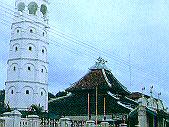 Built in 1728 by Dato' Shamsuddin, this mosque is
the oldest in Malaysia. The unique architectural style of this mosque can
only be found in Malacca.
Built in 1728 by Dato' Shamsuddin, this mosque is
the oldest in Malaysia. The unique architectural style of this mosque can
only be found in Malacca.
Cheng Hoon Teng Temple
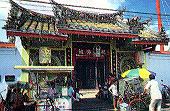 One of the oldest Chinese temples in the country,
built in 1646. Materials for the construction of the temple were all brought
in from China. The wooden carvings, lacquer work and mythological figurines
at the temple are sight to behold.
One of the oldest Chinese temples in the country,
built in 1646. Materials for the construction of the temple were all brought
in from China. The wooden carvings, lacquer work and mythological figurines
at the temple are sight to behold.
Kampung Kling Mosque
One of the oldest mosques in Malaysia, the Kampung
Kling Mosque has Sumatran architectural influence, featuring a three-tiered
roof rising like a pyramid and a beautifully-carved wooden ceiling. It
has an odd minaret structured like a pagoda, reflecting an East-West architectural
blend.
Dutch Fort
This Dutch Fort is located at Kuala Linggi 49
km from Malacca town on your way to Port Dickson. It was used as an outpost
to enforce tax collection during Dutch rule.
Malacca Zoo
Rated the best zoo among the southern states for
its wild and domestic animals in their natural surroundings and habitats.
Recreational facilities are provided for patrons.
Malacca Traditional House
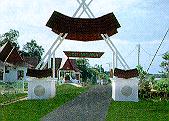 Situated 5 km south-east of the town of Merlimau,
this fine piece of Malacca's 19th Century architecture was built by a Chieftain.
Intricate wood carving forms the unique facade as well as the interior
of the house.
Situated 5 km south-east of the town of Merlimau,
this fine piece of Malacca's 19th Century architecture was built by a Chieftain.
Intricate wood carving forms the unique facade as well as the interior
of the house.
Hang Tuah's Mausoleum
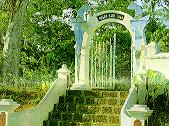 Hang Tuah was a fully decorated admiral of Malacca's
naval forces which successfully defended countless attacks against Malacca's
sovereignty by Siamese and Achinese fleets. His outstanding performance
and loyalty to serve the sultan made him a legend and earned him a permanent
place in the history of Malacca. Hang Tuah was buried in this mausoleum
in Tanjung Kling which is 15 km from town.
Hang Tuah was a fully decorated admiral of Malacca's
naval forces which successfully defended countless attacks against Malacca's
sovereignty by Siamese and Achinese fleets. His outstanding performance
and loyalty to serve the sultan made him a legend and earned him a permanent
place in the history of Malacca. Hang Tuah was buried in this mausoleum
in Tanjung Kling which is 15 km from town.
Hang Li Poh's Well
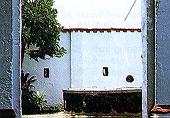 This well, found at the foot of Bukit China, dates
back to 1459 and was constructed by the followers of Princess Hang Li Poh.
The well was enclosed with stout walls by the Dutch in 1677 after they
conquered Malacca. The well itself, in days of old, was the main source
of water for much of the town and has never dried up even during droughts.
Today, the well has been converted into a wishing well and it is believed
that anyone who throws a coin into the well will return to Malacca.
This well, found at the foot of Bukit China, dates
back to 1459 and was constructed by the followers of Princess Hang Li Poh.
The well was enclosed with stout walls by the Dutch in 1677 after they
conquered Malacca. The well itself, in days of old, was the main source
of water for much of the town and has never dried up even during droughts.
Today, the well has been converted into a wishing well and it is believed
that anyone who throws a coin into the well will return to Malacca.
Transquerah Mosque
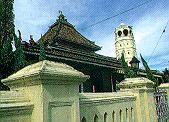 Architecturally, this mosque is very unique. Instead
of minarets, a pagoda has been built in its place. The mosque itself is
somewhat pyramid-shaped instead of dome-shaped as in Moorish type mosques.
Here then is evidence that Islam has had a place in Malacca for more than
600 years. Within the grounds of this mosque lies the tomb of Sultan Hussain
of Johor who signed the cessation of Singapore with Sir Stamford Raffles
in 1819.
Architecturally, this mosque is very unique. Instead
of minarets, a pagoda has been built in its place. The mosque itself is
somewhat pyramid-shaped instead of dome-shaped as in Moorish type mosques.
Here then is evidence that Islam has had a place in Malacca for more than
600 years. Within the grounds of this mosque lies the tomb of Sultan Hussain
of Johor who signed the cessation of Singapore with Sir Stamford Raffles
in 1819.
St Peter's Church
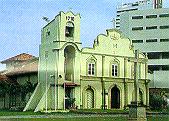 Built in 1710 by the Portuguese, this church comprises
an architectural mix between the Oriental and the Occidental. It is the
only church in Malaysia which contains the life-size alabaster statue of
The Dead Lord Before The Resurrection. The interior is unique as its Iberian
designed has several corinthian pillars supporting the curved ceiling above
the aisle.
Built in 1710 by the Portuguese, this church comprises
an architectural mix between the Oriental and the Occidental. It is the
only church in Malaysia which contains the life-size alabaster statue of
The Dead Lord Before The Resurrection. The interior is unique as its Iberian
designed has several corinthian pillars supporting the curved ceiling above
the aisle.
Previous