

http://motlc.wiesenthal.com/gallery/
pg01/pg9/pg01936.html
http://www.teacheroz.
com/WWIIpropaganda.htm
This unit will be a good precursor to the units on TV advertising, print advertising, and the Image of America.

|
|
|
|
|
|
|
|
|
|
|
|
|
|
|
|
|
|
|
|
|
| Propaganda | ||||||||||||||||||||
|
||||||||||||||||||||
|
||||||||||||||||||||
| I would like to work with the American History faculty to develop an interdisciplinary lesson unit for propaganda, with a focus on comparing WWII propaganda to modern rhetoric. For my part, I would locate a video that contains footage of speeches from WWII, both Axis and Allies. I would also locate a book with facsimile reproductions of pamphlets and other printed propaganda from that era. I would aim to present this material to the students after they have begun studying WWII in their history classes. I would talk to the history teachers for the ideal background context to present as "frontloading" material at the beginning of my unit. After discussing the circumstances of the war, we will focus primarily on Hitler's propaganda machine. We will discuss principles of rhetoric and propaganda and how to recognize these communication devices. Once the students have a good grasp on the subject, we will watch the video in class. The students will be responsible for taking notes on particular pieces of | ||||||||||||||||||||
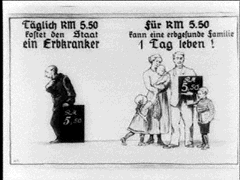
| Nazi propaganda against upkeep of the chronically ill - shows that the cost of maintaining one sick person per day is the same as maintaining an entire healthy family http://motlc.wiesenthal.com/gallery/ pg01/pg9/pg01936.html |
||||||||||||||||||||
| U.S. propaganda poster with caricature of bloodthirsty Japanese and German soldiers http://www.teacheroz. com/WWIIpropaganda.htm |
||||||||||||||||||||
| propaganda. After the video, students will split up into small groups to discuss the kinds of propaganda they saw. I will pass the propaganda book around during the discussion. For homework, I will give them a handout with a number of quotes from various major figures in WWII. They will choose one quote and freewrite at least half a page. When they return to class, they will again get into small groups and discuss what they have written. During both small-group sessions, I will circulate and answer any questions they have. With this solid background, I will then ask them to find three modern examples of propaganda. They will write a paragraph about each example explaining why they think it is propaganda (i.e., which criteria of propaganda it meets), who wrote/said it, what its purpose is, and their own thoughts about it. Some possible sources might be politicians (domestic and foreign), political lobbies, and commercial advertising. This unit will be a good precursor to the units on TV advertising, print advertising, and the Image of America. |
||||||||||||||||||||
|
||||||||||||||||||||
| Home | READ 5326 Home | |||||||||||||||||||