 |
 |
|
| Dog Antics Dog Training "Realistic Dog Training" with K-9 Kate |
| Philosophy Realistic dog training is about working with individual dog owners to determine there needs and find solutions. No one method or philosophy can work for everyone. However, her methods are based on the science of classical conditioning and positive reinforcement. As with most people, Kate�s information is a collection of barrowed information and real life experience. |
| Methods Dog training is quite similar to child rearing. It also has a lot in common with teaching your roommate to pick up after themselves, or your significant other to leave the toilet seat in the proper position. Dropping hints is the place that many people start. Dogs learn with those about as fast as most people do. Nagging is another preferred method. �Jack, stop that barking, right now, come here, come over here�Jack, Jaaack, Jaaack�I said�� I�ve never seen this work. Here�s the basic principle or reason MOST dogs do what they do. REWARDS and LEADERSHIP! Dogs follow the leader�s commands. The commander i.e. person who commands (not demands) respect. If he has no respect for you, you will not be able to teach him much and never know when he will listen. Respect is gained through the training process and raising process. The best training is done with rewards. It includes socialization to build in confidence. It is influenced significantly by genetics as well as experiences before the age of 16 week. Adolescence, (starting 6-8 months and going up to 3 years) is often a particularly difficult time for dogs and dog owners. This is the age that dogs are most frequently surrendered to shelters. It is the goal of �Realistic Dog Training� to help owners work through this time and find a well behaved family member on the other end. Finally, dogs need to be kept in tune so they do not develop bad habits or revert to old habits. That is why continuing your education is so critical. Try agility, Rally-Obedience, advanced classes, tracking, dog shows, and teaching new games like Frisbee. You can teach an old dog new tricks- sometimes with less difficulty than the youngsters. K-9 Kate |
| Certifications
There is no legal certification for dog trainers; meaning that anyone can call themselves a dog trainer or behaviorist. Many organizations provide certification. The Certification Council for Pet Dog Trainers (CCPDT) is the most internationaly known testing and certification program for professional pet dog trainers. The Animal Behavior College provides a very comprehensive program for new people to get started as a dog traner. Kate was certified at a PETsMART training school in Spokane WA. The program was developed by the top dog trainers and behaviorists; including Suzanne Hetts, Trish King, Mary Lee Nitschke, Pam Reid, Terry Ryan, and Pia Silvani. Kate is also a member of the Association of Pet Dog Trainers. This allows her to keep informed on the latest new techniques and equipment. Kate has assisted in the training of other dog trainers for PETsMART and the Animal Behavior College. She also has a huge library of reference material and can recommend a book or chapter on virtually any subject. |
| "Difficult times have helped me to understand better than before, how infinitely rich and beautiful life is in every way, and that so many things that one goes worrying about are of no importance whatsoever."
-Isak Dinesen |
| Don't Give up |
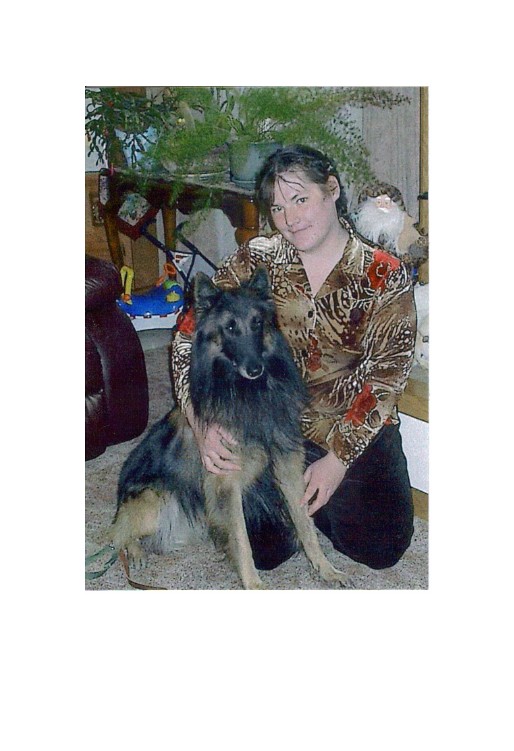
| I became a dog trainer while attempting to solve the problems I was having with one very special dog. It was so hard to find the kind of help I was looking for. Eventually, I became my own source of help and hopefully have helped many others. Charli is still teaching me new things everyday. -K |
| "God made the world round so we would never be able to see too far down the road." -Isak Dinesen |
| "Sometimes I wander if I would have attempted it, knowing how hard it was to be, and yet the hard things have made me who I am, so I am glad for them." -Kate |
 |
 |

|
   |
| Visit My Other Web Page WWW.DogAntics.net |
 |
 |
 |
![[History]](http://us.yimg.com/i/ligans/cb/smtdih.gif) |
 |
| As a member of the Association of Pet Dog Trainers it is my mission to promote positive-reward based training methods. See the APDT mission statement here. |
| Graduates Fall2008 |