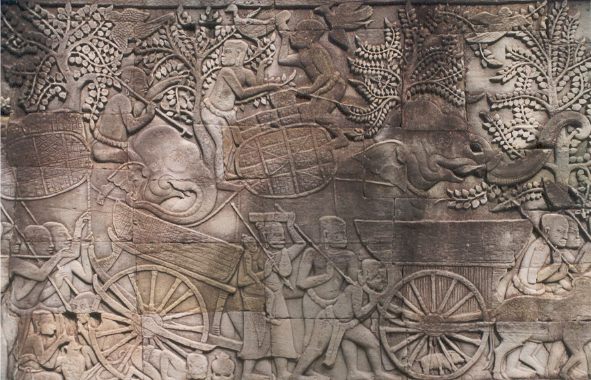
 The Bayon was
built nearly 100 years after Angkor Wat. The
architectural composition exudes grandness in every
respect. Its elements juxtapose each other to create
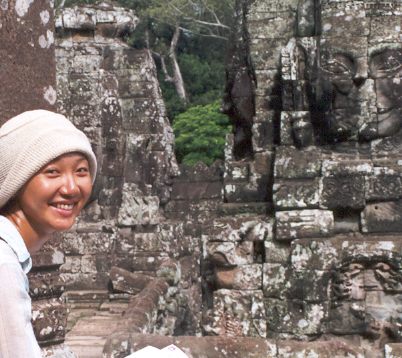
balance and harmony. Over 200 large faces carved on the
54 towers give this temple its majestic character.
"The faces with slightly curving lips, eyes placed
in shadow by the lowered lids utter not a word and yet
force you to guess much", wrote P Jennerat de
Beerski in 1920.
|
The Citadel of Angkor
|
The
Bayon
|
| Go To... |
|
|
|
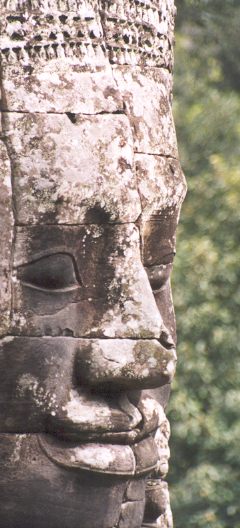
It is generally accepted that the four
faces on each of the towers are images of King
Jayarvarman VII and signify the omnipresence of the King.
|
 Paul or Hikaru (or both?)
 page
page