
February 2004
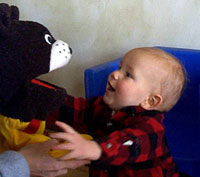


Some ideas to make reading this book more fun may include:
1. Pick a word each week for the child to try to find throughout the story.
2. Read the story like a play. Take turns reading as one of the characters in the story.
3. Re-enact the story as if putting on a play. Use stuffed animals to play any extra characters.
4. Make and use finger puppets related to the story.
5. Re-read the story and change the ending by making your own picture and script for the last page.
(Pati King-DeBaun, 2003)
These are just a few suggestions. You may think of many more ideas. If you would like to share them, please email us at [email protected] . Just remember, repetition can be a very productive strategy in the development of speech, language, integrative thinking and literacy skills. Have fun!
Build a Literate Foundation
Consider utilizing pictures "paired" with the printed word while discussing the activities that will occur during your therapy session. Also, use this strategy when introducing a new book. Have each child "make" their own copy of the book. Non-verbal students can use this method to re-read their own books by pointing to the pictures. It can help to support their current expressive language skills while building their receptive language and literacy skills..
When teaching the oral motor movements for a new speech sound, remember to always show the child the printed letter as your correlate it to its phonetic sound. This will help your students "to recognize their letters, and familiarize themselves with the distinctive features of each letter." (Pati King-DeBaun 2003)