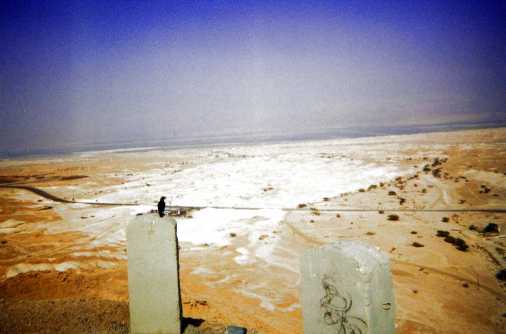
Let's start by looking at where the old cities may have been.
This is the site Ron thought to be Zoar. It is the site that has the clearest boundries, and by turning the colour up, it helps to show that it was a square shaped, small town. A dry creek bed is visible.

It is the least disturbed of the sites, sitting against the hills on the west side of the plain of siddim, where you can see the river valleys that used to supply the water for this city. I believe that those valleys and hills behind would be a good place to look for artifacts.
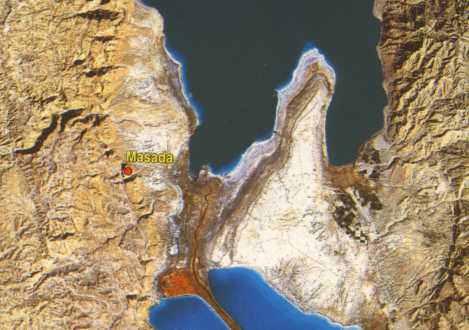
I have wondered if Masada was first used by people from Gomorrah. That would make a lot of sense, but I have no evidence to support the idea.
As with Sodom, Gomorrah had a river to supply water.
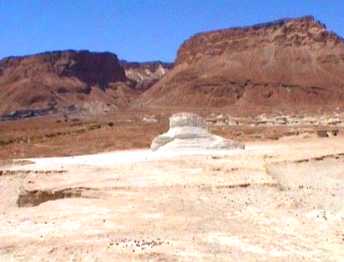
Here you can see where the river has cut right through the ash.
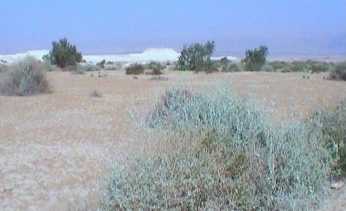
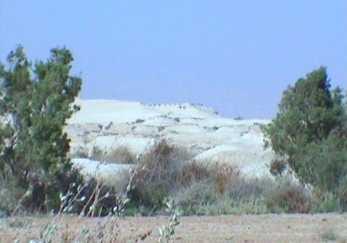
A stream runs through the middle of the ash.
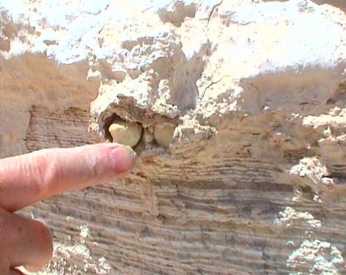
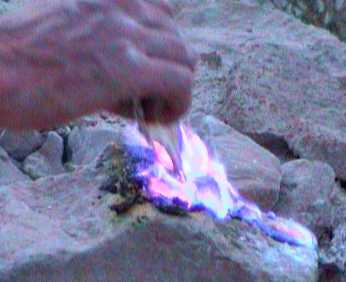
The sulphur is usually found in little balls about golfball size, although some bits may exceed 1Kg. We found that it burns very well, and very stinky! The sulphur is electrically non-conductive, whereas the ash conducted rather well, and that may help explain why the sulphur is still there.
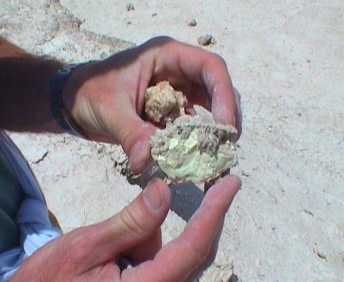
And this one is to show the difference between normal volcanic sulphur ( rhombic ) and divinely sprinkled ( monoclinic )
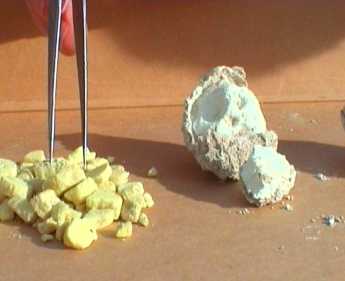
It is rare to find volcanic sulphur as pure as the sulphur at the burnt cities.
Analysis of the Dead Sea water shows no sulphur, so that is clearly not the source of the sulphur.