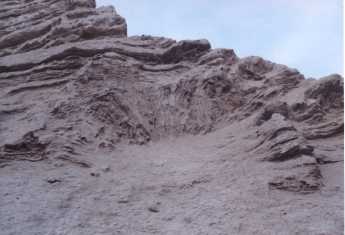
Of special interest was this picture showing the lines going to a point. This is more typical of a system involving an electric or magnetic field.
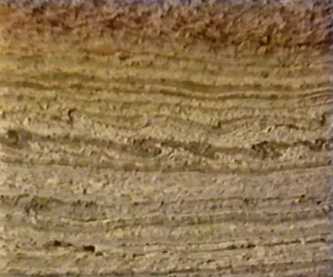
One thing which is a clue to this being ash, is the wave patterns visible over many layers, yet not affecting all layers. This type of pattern can be seen in gas fluidised systems, where all the layers are fluid at once. Similar patterns can be seen in the gas clouds of Jupiter. There must have been some type of electrical charge on the atoms to keep the layers so well seperated, yet able to fold over itself.
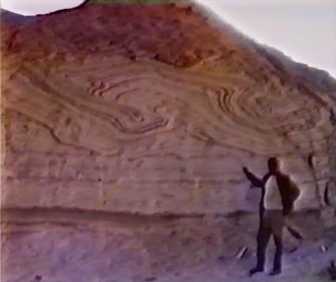 If the fire from heaven was something like the ionosphere discharging into the ground, then that could explain why the burning goes deep into the ground. That would heat the water in the ground to more than 2000 deg, and that would crack the molecule into hydrogen and oxygen, or at least create super heated steam, which would slowly escape out through the thick layers of ash above, mixing ash with unburnt limestone, sulphur and sand. A combination of the electrical charges of the ionised ash, perhaps the earths magnetic field, and gas slowly escaping from below may be a way of explaining the fine layers of ash with wave patterns in them. I think the bible says that the ground was left dry afterwards.
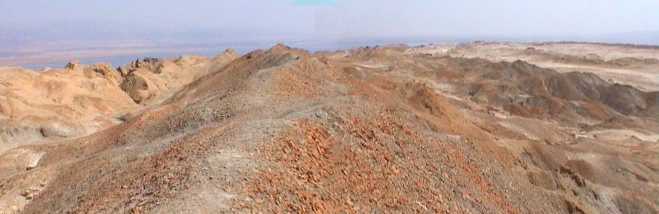
In this photo taken at the top of Mt Sodom, you can see a layer of fired clay all over the ground. It extends all the way along the west side of the mount. I saw rocks just outside of Zoar and Zeboim that had blackened tops, as if a blast of hot air blew over them.
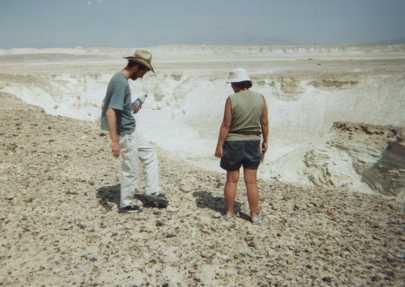
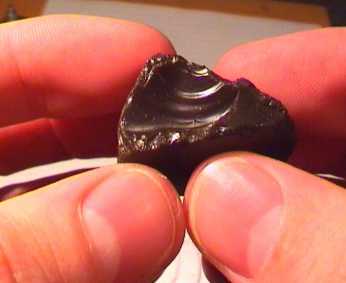
This location is halfway between Mt Sodom and the hills to the west. On the ground are lots of little dark vitreous pebbles, which proved to be obsidian on analysis. It takes a lot of heat to make obsidian, and you don't usually find obsidian in limestone country.
It looks the same as the rock on top of Jabel el lawz, and a rock I saw near the remains of an altar at Kadesh.
Psalm 144:5 Bow thy heavens, O Lord and come down: touch the mountains, and they shall smoke.
In high temperature furnaces, sulphur is neutralised by adding limestone. The resulting ash is calcium sulphate. The ash in the furnace seperates out into bottom ash, which consists of calcium sulphate, etc. and top or fly ash which is made of silicates. Many trace elements go away with the smoke. That is also the observed seperation at Sodom.
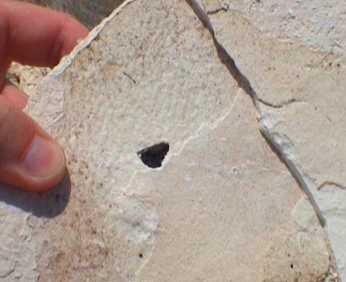
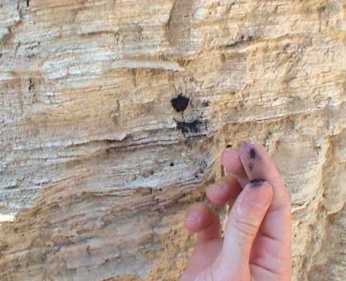
At admah some little bits of charcoal were found. This would be an unlikely find if these layers were from sediments. Doesn't charcoal float?
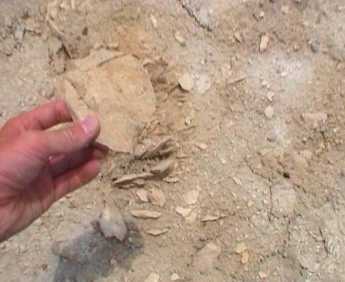
This clay was strange, as it was being exposed out of the layers of ash, with no other clay visible anywhere near it. As I picked up a piece, I wondered if it was an old pile of plates that had been damaged by heat.
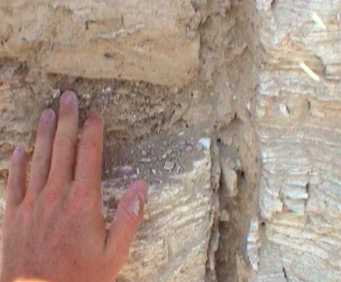
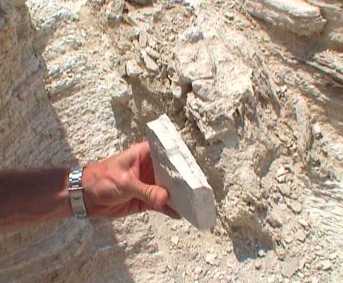
Also of interest was this rectangular shape of a different type of hard material sticking out of the soft ash wall.
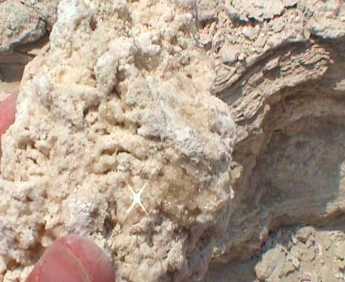
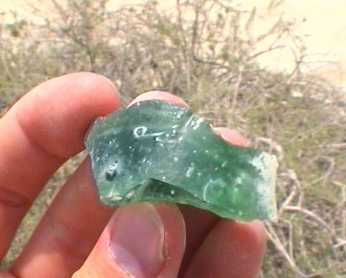
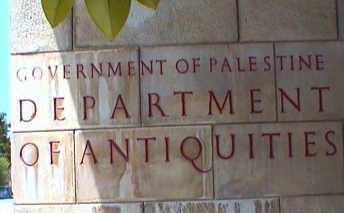
Glass can't usually tell you much, but I tried to make it talk and all I ended up with was a cut finger! When I was walking towards the Admah site, I passed a small pile of this green glass and just ignored it thinking it was beer bottles, but later on I picked up a piece and realised it was a little older than that, and it had been there for a significant length of time. I took this bit with me and went to the antiquities department to see if they could help. A man there gave me a book to look in and told me where to view their samples. The closest match for colour happened to be the oldest piece they had. The green shade comes from the iron cloride in the glass, from a time before people knew how to remove it. But that is only a rough guide of age, and puts it before 300 BC. The measurements of its curves, show it to be portions of Egyptian cubits, and the high level of visible impurities also indicates possible great age. I have doubts that it was from the time of Admah.
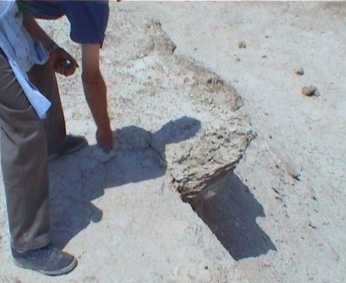
Where Ross is pointing is where the gound sunk beneath him in a big rectangular shape, like it was once a building block.
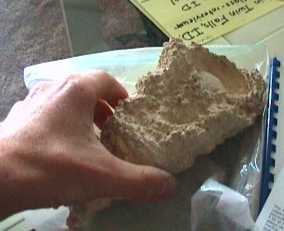
The object being held was found in the soft ash, and it was hard like ceramic. It was against that where we found one of the bits of charcoal.
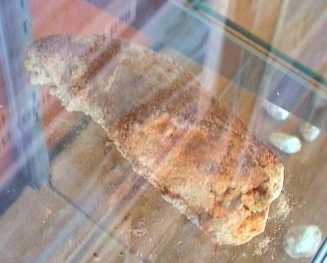
These are objects I got to see in Nashville. The left picture is a piece of burnt bone from Gomorrah, and the other thing is a cone shaped bit of sulphur, as if it melted into something, long ago.