
All About Whales
Like people, whales are mammals. That means that they breathe air and feed their babies milk. Whales live in the ocean, but because they breathe air they must come to the surface to breathe. Whales breathe through their blowholes.
The beluga whale is a fat white whale. It's name even means "white" in Russian. Beluga whales live in the Artcic seas, so they need their body fat to keep them warm in the cold water. Beluga whales have a padded forehead to help them break the ice on the surface of the water. If a whale can't break through the ice to get air, it will drown.
Beluga whales can whistle! Fishermen say that it sounds a little like a bird's whistle. Some people even call belugas the "canaries of the sea."
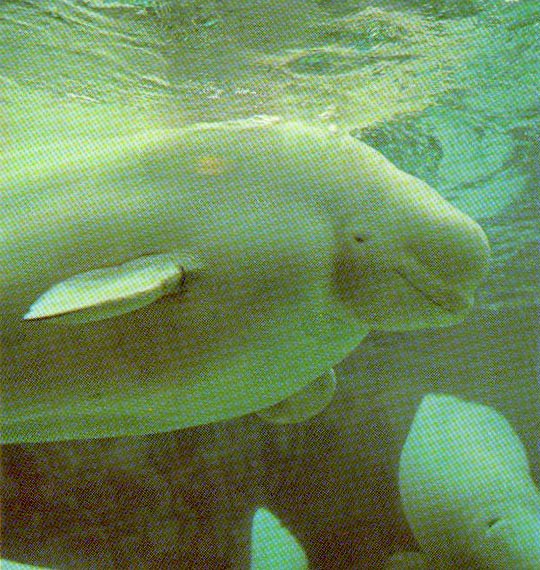
Beluga
Photo by Sergei Ousoff
The blue whale is the largest mammal alive today. It can grow to over 100 feet long! The blue whale is a baleen whale. That means that instead of teeth, the blue whale has plates of bone that hang down from its top jaw. These plates act like a strainer. The whale takes water into its mouth then forces it back out through the baleen. Tiny plants and animals called plankton and tiny shrimp called krill get stuck in the whale's mouth.
Blue whales spend most of their time in Arctic waters, but migrate in the winter. They move north from the Antarctic to warmer waters.
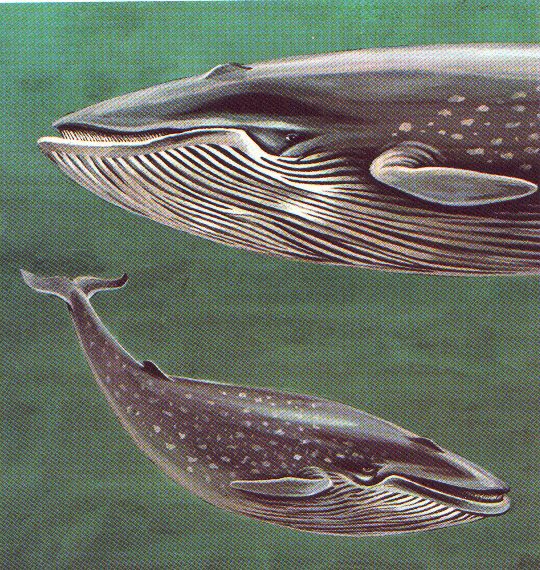
Blue whale and calf
Painting by Guy Plomion
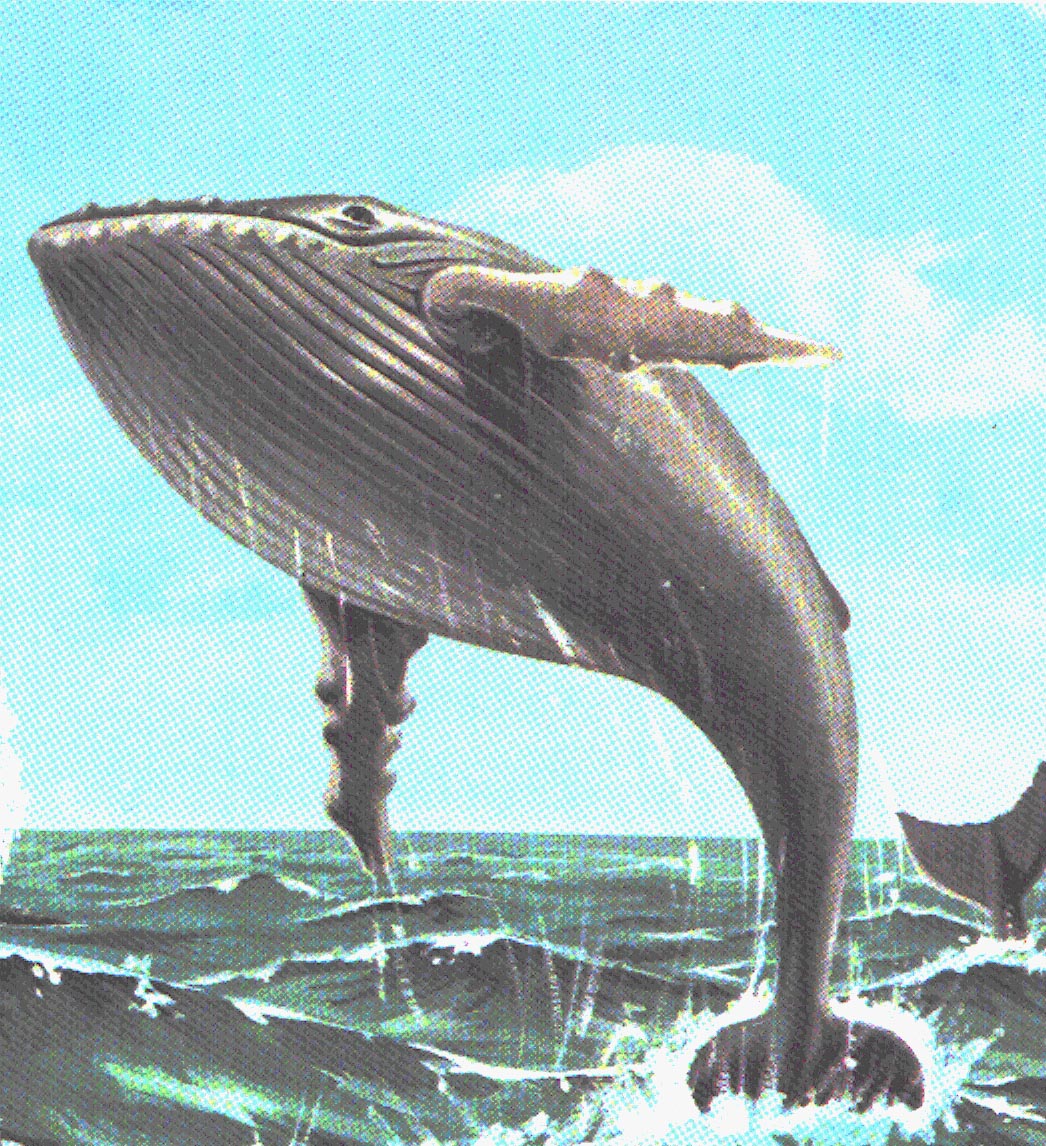
Humpback jumping from the water
Original painting by Guy Plomion
The humpback whale is also a baleen whale. It gets its name from the way it arches its back when it jumps into the air. Humpback whales seem to like jumping and splashing in the ocean. Humpback whales also sing!
The humpback whale also migrates in the winter. It spends its summer in glacial water near the north and south poles. Then it moves to warmer water for the winter. Humpback whales have their babies in the winter. The adults don't eat much in the winter, so they are very thin when they return to the poles in the spring.
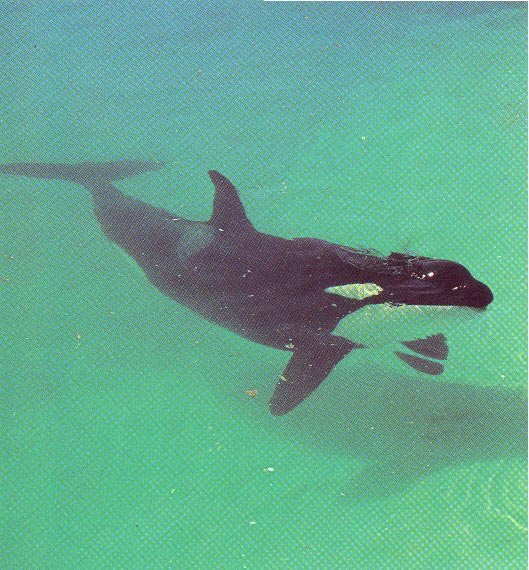
The killer whale is also known as the orca whale. It is smaller than the other whales, but it is a fierce predator. The killer whale eats many other mammals and fish that live in the sea.
Killer whales have 50 very sharp teeth in their mouths. Because they have teeth, they are called "toothed whales" instead of baleen whales.
Killer whales live in Arctic waters. They eat seals, sea otters, giant squid and even other whales. Killer whales hunt in groups, working together to round up their food.
Some killer whales have been trained to do tricks at sea parks. They are very smart and can swim fast and jump high, making them great entertainers.
Captive killer whale
Photo by E. Dulevant


