
Fascinating Fish
Anglerfish
The anglerfish has interesting features that help it hide and fool its prey. This fish looks like a crumpled brown bag. It is so oddly shaped that it looks like a bumpy rock when it sits on the ocean floor! The anglerfish blends in with its surroundings. It is camouflaged.
The anglerfish not only hides from its prey, but actually attracts it also! The anglerfish has a special fin that lookes like a worm. It dangles this fin in front of its mouth, and when other fish come to eat the "worm" . . . CHOMP! The anglerfish eats them!

Photo by J. L. S. Dubois - Jacana
Clown Fish
Clown fish live in coral reefs. They have a special relationship with the sea anemones that live there also. Sea anemones have a sting that is poisonous to other fish. The sea anemone stings small fish that swim too close and then eats them.
Unlike other fish, the clown fish is not hurt by the sea anemone's sting. The clown fish hides from predators in the sea anemone's tentacles. In this way the sea anemone protects the clown fish. In return, the clown fish helps attract other types of fish to be the sea anemone's dinner. Because the sea anemone and the clown fish help each other, they are said to have a symbiotic relationship.
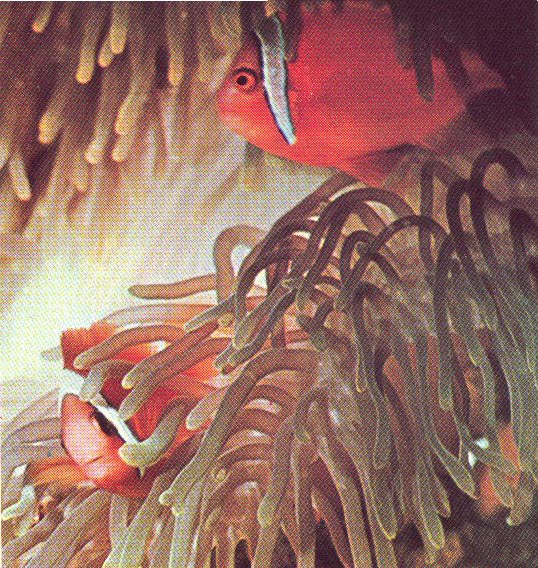
Photo by Grossa - Jacana
Sea Horse
Sea horses are not horses at all! They are actually small fish. Each sea horse grows to only about four inches long. The sea horse is different from other fish because its head is perpendicular to its body. That means that its head sits on its "shoulders" like ours do.
Sea horses have a curly tail a lot like a monkey's. They use their tails to anchor, or hold, themselves to seaweed or coral. The sea horse then uses its trumpet-shaped mouth to suck tiny sea creatures from the seaweed.
Another interesting thing about the sea horse is that the daddy is the one that gives birth to the babies. The mommy sea horse puts the eggs into the daddy's pouch. The eggs grow into tiny sea horse babies over the next month. When it is time for them to hatch, the daddy sea horse wiggles around until the babies pop out, one by one.
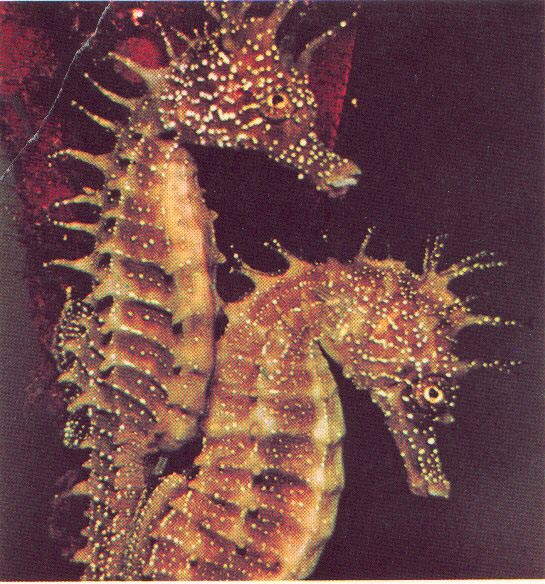
Photo by D.P. Wilson


