Welcome to Kanagarajadurai Home Page
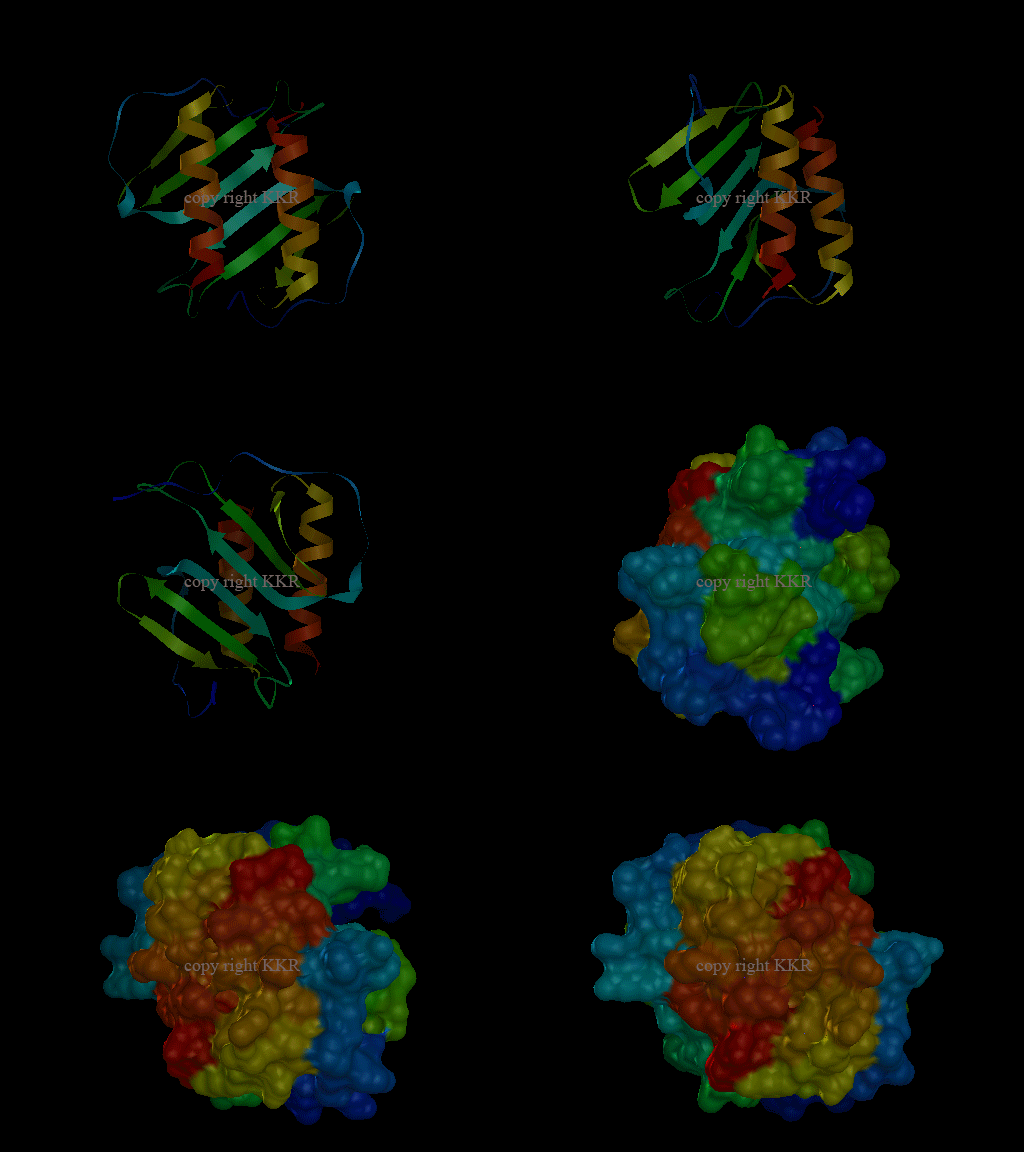
I am currently doing my research on Chemokines through computational
approaches
at National Centre for Biological Science (NCBS) , Bangalore, India.
Interleukin-8 like chemokines is a large superfamily, including
small chemotactic
cytokines (~8-12 kDa) which are called chemokines / intercrines. They
are
mostly basic and structurally related molecules. Chemokines are
characterized
by shared structural determinants including conserved cysteine residues
that
form disulfide bonds in the chemokine tertiary structure. The
chemokines were
initially subdivided into two branches that are characterized by the
motif
patterns involving two N-terminal cysteine residues: CXC and CC, subfamilies.
These prototypical chemokines map to human chromosomes 4 (CXC
subfamily) and 17
(CC subfamily). Although most of the
chemokines belong to one of these two classes, two additional branches,
CX3C
and XC, each containing a single member have been described in recent
years.
This C and CX3C
genes map to human chromosome 1 and 16 respectively. The CX3C
chemokine has a characteristic motif of three residues in between the
N-terminal two cysteines. XC chemokine, which is identified as
lymphotactin,
lacks both the first and third cysteine in the “4 cysteine motif” but
shares
homology at its carboxyl end with the CC chemokines.