keerthivasan
 keerthi_vasan
 +91 9884333638
Research Projects
White spot syndrome virus - the virus that skyrocketed my interest in viruses and kindled the curious person in me. The virus causes the White spot syndrome disease in shrimp. My dad being an aqua farmer and culturing shrimps, I was able to have a close first person encounter of the disease and as one who is personally affected by it. Coincidentally my college lab too is working on it on pathogenesis and diagnosis and so I jumped in and my project was to raise polyclonal antibodies against the whole virus in rabbit. During the course of this research I also looked up on literature about the disease and consulted with my dad and went for pond inspections and was able to correlate and postulate a basic mechanism for the pathogenesis and linking it to the calcium metabolism of the animal. I faced many frustrations during this research and learned that "patience is a virtue" but the overall results were successful and promising. I developed an immunomodulator that develops an immunity in the animal by strengthening the calcium metabolism especially during stress due to molting which is when the oppurtunistic pathogen attacks. By mechanisms unknown it strengthens the calcium metabolism and bringing down the stress. Common stresses are change in salinity, dissolved oxygen and pH. The shrimps treated with the immunomodulator not only show good resistance to the virus during the 70-day, 110-day periods which is when the epidemic risk is maximum and also a general immunity. This was confirmed by field level analysis at two aquaculture farms in the same geographic belt. Further analysis have to be made at the changes occurring at the molecular level. However the major bottleneck here is the unavailability of shrimp genome sequence which is stalling the progress in this field. I also performed whole cell dot blot assays to study virus binding to shrimp cells in the presence and absence of inhibitors to study possible inhibitors feasible for usage at field level.

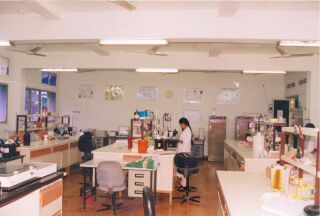
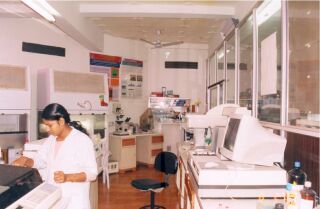
The SPIC Bioprocess Laboratory where I worked for my second year project on the White Spot Syndrome virus.
My next project during May-June 2004 was at Indian Institute of Technology, Delhi under Prof. B. Jayaram, a pioneer in DNA Drug interactions and protein folding dynamics. My project was to devise a scoring system to validate a protein structure. The loop region of proteins unlike the helix and sheet, is the most flexible and can occupy an infinite variety of possible conformations. this is also the region that is very important and where the active sites of proteins lie. My job was to compare the possible conformations from the database and derive a set of parameters as guiding the structure. These parameters were studied for known proteins and were observed to follow a pattern. The parameters are dihedral angles of adjacent aminoacid pairs, dihedral angles at interfaces of loop with the other secondary structures (helices and sheets) and side chain rotamer dihedral angles (the Chi angles). By using this known information and the hypothesis that this pattern should also be followed by an unknown protein for minimum energy native structure, the structural integrity of the protein can be evaluated. This project gave me an appreciation of protein structures and how computers and computing knowledge would be very helpful to a molecular biologists. Moreover I went to Delhi, the national capital, for the project and went for sight seeing to the Taj Mahal and everywhere and had great fun enjoying apart from working too!
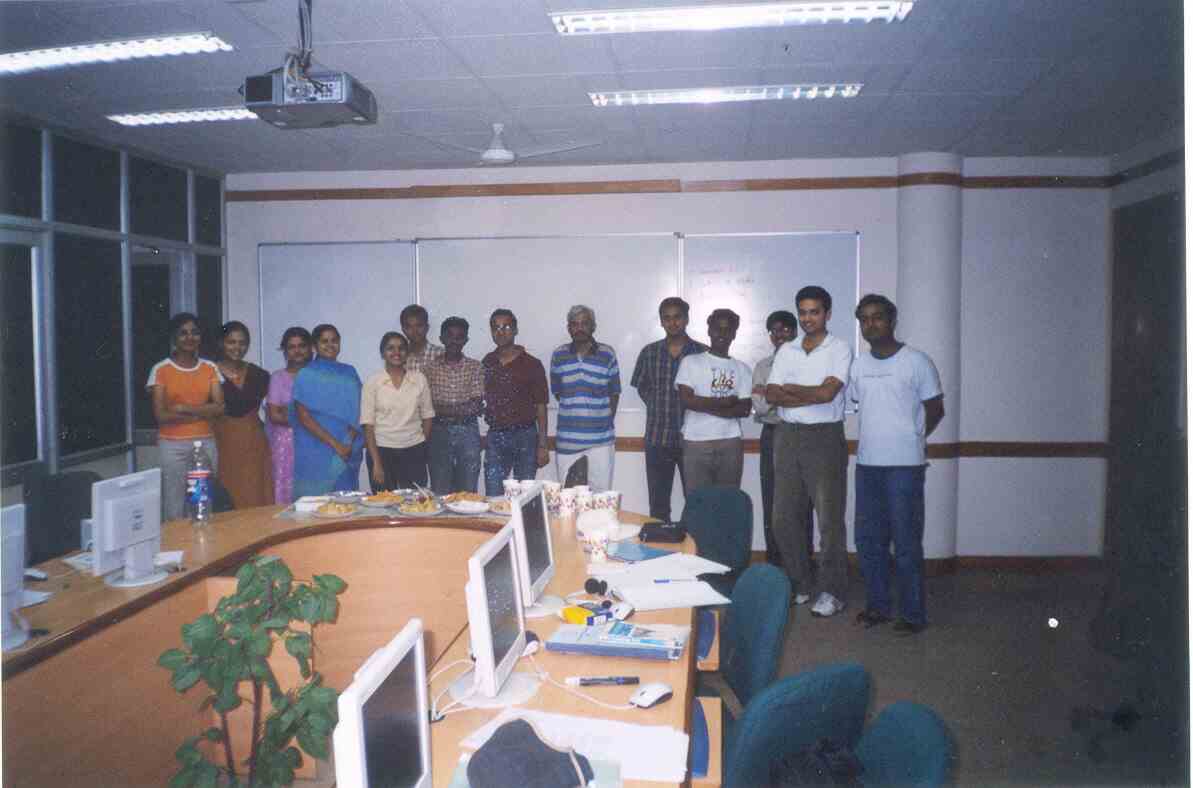
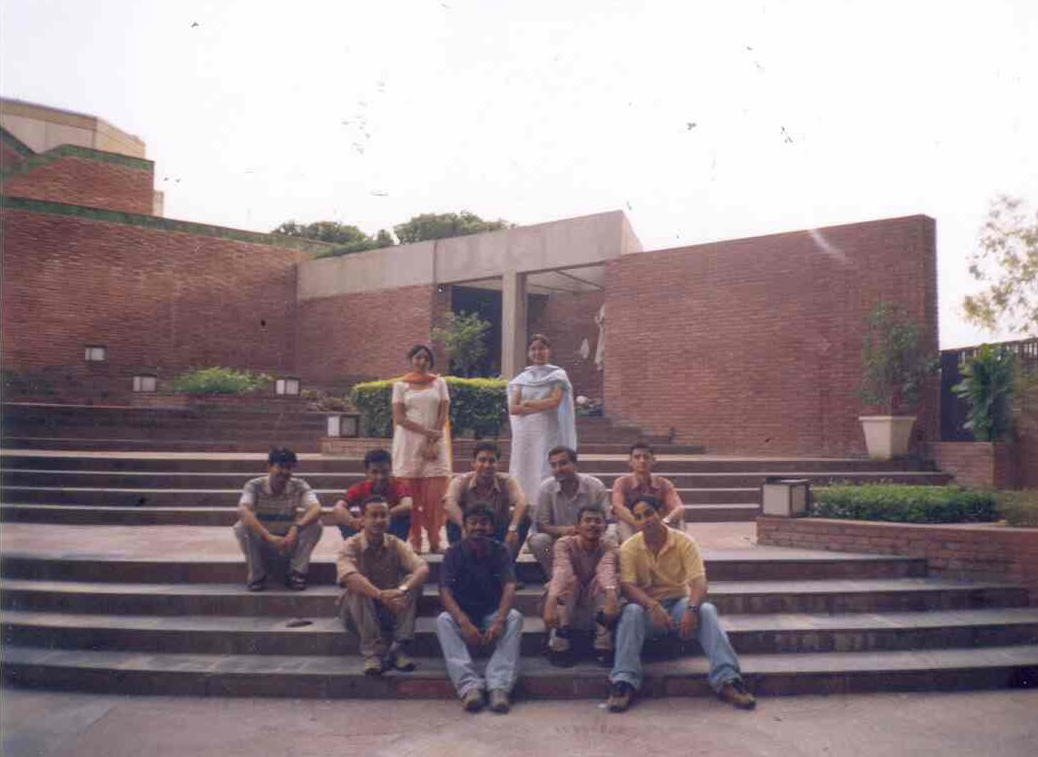
The Supercomputing facility lab at Delhi where I worked for my third year project. The second picture was taken when we went out to a place called the Habitat centre.
My final year project is on plant drug discovery - screening plant extracts for anticancer activity and isolation of potential lead candidates under Dr. Arun Balakrishnan, Director of Biotechnology department at the Centre for Biotechnology, Anna University. Right now I am working on three plants checking for anticancer activity using bioassay and in-vitro screening. These plants have been traditionally known to possess anti-cancer properties which we incorporate with modern bioassay based screening. The procedure involves extraction of plant compounds in solvent systems of increasing polarity. Then preliminary screening is done using Thymidine incorporation assay on cancer and normal cell lines to confirm anti-proliferative activity specifically on cancer cells. Apoptosis is confirmed by MTT assay, Annexin and Propidium iodide incorporation assays and FACS counting to rule out necrosis. Then the cell lysate is tested for upregulation/downregulation of apoptotic markers proteins to elucidate the mechanism of action. By successive fractionation of the crude plant extract, the pure compound responsible for anti-proliferative activity is isolated and structure elucidated.