WELCOME TO MARYLAND |
    
|
|
|
|
|

MARYLAND FLAG |
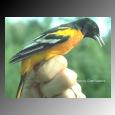
Baltimore Oriole |
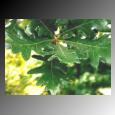
White Oak |
Black-Eyed Susan |
| The Maryland flag contains the family crests of the Calvert and Crossland families. Maryland was founded as an English colony in 1634 by Cecil Calvert, the second Lord Baltimore. The black and Gold designs belong to the Calvert family. The red and white design belongs to the Crossland family. This flag first was flown October 11, 1880, in Baltimore at a parade marking the 150th anniversary of the founding of Baltimore. It also was flown October 25, 1888, at Gettysburg Battlefield for ceremonies dedicating monuments to Maryland regiments of the Army of the Potomac. | The
Baltimore Oriole arrives from the south, perhaps from Mexico, or perhaps
from a more distant region, and enters Louisiana as soon as spring commences
there. It approaches the planter's house, and searches amongst the surrounding
trees for a suitable place in which to settle for the season. It prefers,
I believe, the trees that grow on the sides of a gentle declivity. The
choice of a twig being made, the male Oriole becomes extremely conspicuous.
He flies to the ground, searches for the longest and driest filaments
of the moss, which in that State is known by the name of Spanish beard,
and whenever he finds one fit for his purpose, ascends to the favourite
spot where the nest is to be, uttering all the while a continued chirrup,
which seems to imply that he knows no fear, but on the contrary fancies
himself the acknowledged king of the woods. This sort of chirruping
becomes louder, and is emitted in an angry tone, whenever an enemy approaches,
or the bird is accidentally surprised; the sight of a cat or a dog being
always likely to produce it. |
This
tree is one of the most beautiful of those indigenous to the United
States, and attains a height of seventy, eighty, or even a hundred feet.The
flowers are yellow and bright red, mixed with green, and upwards of
three inches in diameter. |
The
Black-Eyed Susan (Rudbeckia hirta) has been the official Maryland flower
since 1918 when it was designated the "Floral Emblem" of Maryland
by the General Assembly (Chapter 458, Acts of 1918; Code State Government
Article, sec. 13-305). Black-Eyed Susans are perennial daisies or coneflowers,
members of the sunflower family (Asteraceae). The flower heads measure
2 to 3 inches in diameter with yellow rays circling a dark-brown, spherical
center. Commonly found in fields and on roadsides, they bloom between
May and August, reaching 2 to 3 feet in height. They are native to the
United States, east of the Rocky Mountains.
Maryland Gardens |


If you have any questions or concerns email us at [email protected]
Last Updated
May 24, 2004

