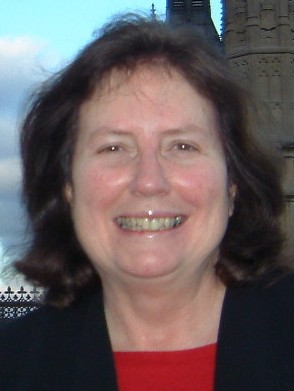
As Member of Parliament for Cardiff North, I'm inundated with constituents who want to hold the Government to account on its action plan for Africa. Promises were made by our Government on tackling the serious health problems Africa faces.
Top of the agenda are tuberculosis, malaria and HIV/AIDS. Poor health is both a cause and a consequence of poverty. Sick people cannot work or care for their children. Livelihoods are lost, progress is stalled and poverty entrenched.
In 1993, the World Health Organisation declared TB a global health emergency. In western Europe, we have long reduced TB to a minimal threat. When I was a social worker in Sully Hospital, long before I became an MP, TB was mostly an infection found amongst the homeless. Yet last year, Africa's health ministers threw their hands up and declared that their battle with TB was not one they could win alone.
Africa remains the only continent in the world where rates of TB are increasing. TB kills 2 million people each year here, 5,000 people a day - more than any other curable infectious disease in the world.
Curable is the key word. TB is curable. Lives can be saved with the right treatment.
Last week I found myself in Kibera, the largest slum in Africa in Kenya's capital Nairobi. I took part in the four-day visit with four MPs, organised and paid for by RESULTS UK, an international NGO.
Kiberia is home to 700,000 people, who live in houses fashioned out of spare pieces of corrugated iron and plastic sheeting. I saw open sewers running down the streets and children walking barefoot. I heard how families sleep together in one bed and that access to clean water is restricted to too few wells. I visited some of the few health clinics full to the brim with mothers and their gaunt and listless babies. It is in this environment I could see all around me that TB made its home.
I visited one woman who lived in a windowless shack with fifteen children and grandchildren to care for. She had TB and HIV. Her delight was that from across the world, attention was being drawn to her plight.
I was shocked to learn that, if left untreated, a person with active TB infects ten to fifteen people every year. I could see how the people of Kibera suffer from living so closely in such poor conditions. Worse still, Kenya's cure rate is falling - below 40%. Not enough people are diagnosed and there are not enough health workers to deliver the treatment. Worse yet I learnt, is that half of Kibera's HIV positive population will develop HIV. TB is the leading cause of death among people living with HIV.
So what of the promises the G8 made last year? Progress is being made. The Global Fund to Stop TB, supported by the G8 and Gordon Brown and Tony Blair in particular is delivering results on the ground. Blair and Brown committed greater UK aid for the developing world and for the fight against TB, malaria and HIV. I was greatly impressed by the use of the Fund's money in Rwanda.
With its green hills and valleys, Rwanda reminded me of Wales, and I was delighted to meet so many professionals there who had trained in Wales. The Government in Kigali is co-ordinating a countrywide campaign to identify and treat TB. They are purchasing drugs and training doctors and nurses with the money from the Global Fund, using it wisely. Rwanda is projected to control and reduce the burden of TB by the Millennium Development Goal deadline of 2015. A feat no less impressive given this tiny country's recent massive social upheaval.
I took some time to visit the Genocide Memorial in Kigali. Up to 1 million people died in 1994 while the world stood back and did nothing. Rwanda is now getting the world's attention and deserves much praise for its success in tackling TB. In Kenya, too, the Fund has provided the drugs. What is lacking is resources for the health sector. Yet poor countries are now benefiting from extra aid to their health sectors. Kenya must now urgently address the burden of TB.
The challenge for us all is to maintain our call for the end of poverty, to keep questioning our governments and supporting the efforts being made across Africa to fight TB. In Parliament I have established the All Party Group on TB. With public and political will, we will carry on the global call for action against poverty and we'll get the results. |