| a |
 |
| a |
| Contact Julie Constituency Office 17 Plasnewydd Whitchurch Cardiff CF14 1NR Tel: (029) 20 624166 Fax: (029) 20 623661 Westminster Office House of Commons London SW1A 0AA Tel: (020) 7219 6960 Fax: (020) 7219 0960 E-mail: [email protected] |
 |
 |
|
|
|
|
|
|
|
|
|
| a |
 |
 |
 |
 |
 |
 |
 |
| THE ROLE OF AN MP Members of Parliament can help with those matters for which Parliament, or central Government, has responsibility. Problems often arise with work carried out by central Government Departments and I will be able to help you with areas such as: -- tax problems involving the Inland Revenue and Customs and Excise; -- problems dealt with by the Department for Work and Pensions, such as benefits, pensions and national insurance; -- problems dealt with by the Home Office, such as immigration, asylum, prisons and policing; and -- foreign, defence and international development policy. Constituents often bring a problem to me because they do not know who else could help them, and I try my best to point them in the right direction. You can come to me about any problems, but I will have to pass some of them on to the Assembly, or to local councillors. You can find a list of councillors (by electoral ward) here. How I deal with problems Where a constituent's problem does involve central Government, I have a number of methods at my disposal. A letter from me to the relevant Department or official will often provide a solution. If not, I may decide to take matters a stage further by writing to the Minister involved, or even making an appointment to see the Minister personally. Many constituents' problems can be solved in this way, but not all problems have such an easy solution. The Minister may not be able to give you the answer you wanted, but if the decision has been made in the right way, there may be little that can be done. If, however, there has been unnecessary delay or if some essential procedure has been missed out, I may be able to take your case to the Parliamentary Ombudsman. The Ombudsman can only be approached via an MP - a constituent cannot appeal to him directly. All of these methods allow problems to be kept confidential. If I am not satisfied with the answers I have received I may feel that there is something to be gained by making the matter public by raising it on the Floor of the House of Commons. This can be done by putting an Oral Question to a Minister at one of the regular Question Time sessions. Of course, although these are regular, there is no guarantee that I will be called by the Speaker - there may simply not be enough time. I may also raise a problem by applying for a half-hour Adjournment Debate. These take place for half an hour at the end of every day's business in the House. There is usually strong competition among MPs to raise a matter on the Adjournment, and I must be successful in a ballot or have my subject chosen by the Speaker. At other times, it may be best to draw attention to the matter concerned by tabling an Early Day Motion (EDM). You can read more about these in this factsheet. EDMs are almost never debated, but are a tool for showing the strength of feeling across Parliament on certain issues. These methods can all produce results, and sometimes the publicity can be helpful in persuading a Minister to change his or her mind. If I become aware that the issue in question is a very common one, then I may try to gain the opportunity to introduce a Private Member's Bill to change the law in some respect. Only a very few such measures are successful, but once again, publicity is drawn to the matter and the Government may be persuaded to legislate in a similar fashion in the future if (as it usually does) the Private Member's Bill falls. Petitions If several constituents feel strongly about an issue, they may organise a petition to the House of Commons. These can only be presented by an MP and must be arranged in a particular format. You can get advice on this by contacting me or by writing to: The Clerk of Public Petitions Journal Office House of Commons London SW1A 0AA You can find out more about the petitioning process by reading this factsheet. Campaigns and lobbying I am regularly contacted by constituents lobbying me on a wide range of issues, from student fees to animal welfare to international affairs to fair trade and many more. I try to respond to this correspondence quickly, setting out my views on the subject. Anyone intending to organise a mass lobby of Parliament must contact the Serjeant At Arms Department well in advance on (020) 7219 3060. Tours of the Palace of Westminster; visits to the Strangers' Gallery I am always delighted when constituents come to visit the Commons and try very hard to make their visits as interesting and exciting as possible. Tours of the Palace take place every Monday and begin at 10:30am, lasting for around an hour. On Fridays, tours take place in the morning if the House is not sitting, or late afternoon if it is. One permit and one guide is required for every 20 people. We can arrange special tours for schools in the week, and my staff will arrange a tour for a small group of people. Sitting in the Strangers' (i.e. public) Gallery is one of the highlights of any visit to the Palace. Tickets for Wednesdays are very, very hard to get hold of due to the Parliamentary event which is Prime Minister's Questions. If constituents give me as much notice as they can for the date of their intended visit, that makes it all the easier for me to obtain tickets and give them the best day out they can have. It is an enormous honour to be a Member of Parliament, and every constituent can rest assured that whatever their problem, I will do my very best to help them in any way I can. |
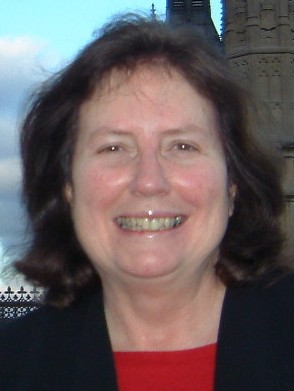
| In my capacity as Member of Parliament for Cardiff North, I represent (as of the 2005 General Election) 64,390 people. My role is to speak for all of the people in my constituency, not just those who voted for me. Whether or not you put a cross next to my name at the ballot box in May 2005, I am your MP and I am here to help you with all matters for which Parliament, or central Government, is responsible. This page contains information on what I can and cannot do for you as your MP. Many matters will be devolved to the Welsh Assembly, in which case I will either refer your inquiry to the Assembly Member for Cardiff North, Sue Essex, or take up the matter with the relevant Minister in Cardiff Bay. This information is mostly derived from the House of Commons Factsheet Members/Election Series (sheet #1). You can find a PDF version of that factsheet here. |
 |
| Role of an MP |