An Advertisement For All Ages!...Do you need Private Computer-Aided Instruction in all Subject Areas Customised To Meet Your Needs?...Please Call Jessie Moses (Professional Educator)at

Repositioning the Use of Distance Learning With United Nations Information.<br><blink><AMERICA IN "OPENING STAGES OF WAR ON IRAQ!"<br>
<br><br><a href="http://multiculturalism.aynrand.org/individualism.html"><center><b> AN EXCITING MULTICULTURAL EDUCATIONAL TOOL!</center></b></a>
<br>
<br>
<br><img src="http://www.geocities.com/biz/espanausalink/images/WhiteWiz.gif"</img>"I love my daddy!"</a>
<br>
<br><img src="http://www.geocities.com/biz/espanausalink/images/tweety.gif">
<br><a href="http://gsep.pepperdine.edu/"></a>NEWSGROUP ON LINE...CALIFORNIA!
<br><a href="http://moon.pepperdine.edu/"><b><blink>A PUBLIC NEWSGROUP!</blink>
<br>
<br>
<img src="http://www.geocities.com/biz/espanausalink/images/tweety.gif"><a
<br>
<img src="http://www.geocities.com/biz/espanausalink/images/tweety.gif"><a
<br>
<img src="http://www.geocities.com/biz/espanausalink/images/tweety.gif"><a
<br>
<img src="http://www.geocities.com/biz/espanausalink/images/tweety.gif"><a
<br>
<br>
<br>
Two West Bank Shootings During Cease-Fire. </a>
<br>
<br>
<br>
<br>
<img src="http://www.angelfire.com/biz/espanausalink/u.s.acelebrationfaces.jpg">
<br>
<center><u><b>909</u></b></center>
<br>
<br><br><br><br><ul></ul><font color=red><font></a>
<br>
<!-- ARCHIVE by GEOCITIES.WS -->
<HEAD><br><ul></ul><font color=red><font>
<BR>
<CENTER><SCRIPT language="javascript"><!--
var months = new Array('January', 'February', 'March', 'April', 'May', 'June', 'July', 'August', 'September', 'October', 'November', 'December');
var days = new Array('Sunday', 'Monday', 'Tuesday', 'Wednesday', 'Thursday', 'Friday', 'Saturday');
//--></SCRIPT><!--SELECTION--><!--/SELECTION-->
</TR>
</TABLE><TABLE cellSpacing=0 cellPadding=0 width=676 border=0>
<TBODY>
<TR><TD align=right height=20><B><FONT face=Arial color=#003c77 size=-1></FONT><FONT
face=Arial size=3>
<TD COLSPAN="3" ALIGN="RIGHT" BGCOLOR="red">
<B><FONT COLOR="#ffff00" SIZE="-2" FACE="Arial"><script language="javascript"><!--
var today=new Date();
thisday = days[today.getDay()];
thismonth= months[today.getMonth()];
thishour = (today.getHours()<13 ? today.getHours(): today.getHours() - 12);
thisminute = (today.getMinutes()<10 ? '0' + today.getMinutes() : today.getMinutes());
document.write(thisday + ' ' + thismonth + ' ' + today.getDate() + ', ' + (today.getYear()) + ', ' + thishour + ':' + thisminute + (today.getHours()<13 ? ' AM' : ' PM'));
//--></FONT></script></font></B>
</TD>
</TR>
</TABLE>
<br><img src="http://www.angelfire.com/biz/espanausalink/HLPGLOBE.gif"><br>
<br><img src="http://www.geocities.com/biz/espanausalink/HLPGLOBE.gif"><a<br><img src="http://www.geocities.com/biz/espanausalink/3soldiersoffloadplane.jpg">
<br><br><br><br><br><ul></ul><font color=red><font></a>
<img src="http://www.angelfire.com/biz/espanausalink/HLPGLOBE.gif">SAMPLE OBJECTIVE #1: Students will teach a unit on "Intellectual Property Rights-Copyright Laws and write an article on Education Compensation/Income Inequalities in Third World Countries.
<br><br><br><br><ul></ul><font color=yellow><font></a>
<br><img src="http://www.angelfire.com/biz/espanausalink/HLPGLOBE.gif"><br><img src="http://www.angelfire.com/biz/espanausalink/HLPGLOBE.gif">SAMPLE OBJECTIVE #2: Write a summary paragraph on MANAGERIAL PERSPECTIVES On WORLD WIDE WEB (WWW) OWNERSHIP RIGHTS Using two Search Engines on the Internet!
<p><br><br><br><br><br><ul></ul><font color=white><font></a>
<br>
<br><br>SAMPLE OBJECTIVE # 3-Students will create A 21st Century Military <u>International</u> Bilingual E-School On-Line...<br><img src="http://www.angelfire.com/biz/espanausalink/HLPGLOBE.gif"><br><br><br><br><br><ul></ul><font color=orange><font></a>
A MILITARY "FUNERAL/BIRTHDAY PARTY."
<br><br>
<br><B><center><FONT face=Arial color="green" size=4>About the
Webpage.<BR></FONT></B><FONT face=Arial size=3></center>
<TABLE WIDTH="680" BORDER="0" CELLSPACING="0" CELLPADDING="0"
HEIGHT="244">
<TR>
<TD WIDTH="35%" VALIGN="TOP" BGCOLOR="blue" HEIGHT="225" align="justify">
<FORM NAME="jump"><SELECT NAME="menu">
<OPTION SELECTED>SEARCH ENGINE.
<OPTION VALUE="http://www.angelfire.com/biz/espanausalink/copy_of_index.html">A TRINIDAD POLICE IN HOSPITAL>>>ASSASSINATION AND MOURNING.
<OPTION VALUE="http://www.angelfire.com/biz/espanausalink/index.html">OSAMA BIN LADEN. <OPTION VALUE="http://www.angelfire.com/biz/espanausalink/index.html">WEAPONS CACHE SEIZED BY POLICE AND MILITARY UNIFORM..
<OPTION VALUE="http://www.angelfire.com/biz/espanausalink/index.html">IRAQ WAR Starts on March 19, 2003.
<OPTION VALUE="http://www.angelfire.com/biz/espanausalink/index.html">PRESIDENT BUSH
<OPTION VALUE="http://www.angelfire.com/biz/espanausalink/index.html">WEAPONS OF MASS DESTRUCTION. <OPTION VALUE="http://www.angelfire.com/biz/espanausalink/index.html">LIBERIA CIVIL WAR.
<OPTION VALUE="http://www.angelfire.com/biz/espanausalink/index.html">TEACH AND LEARN WITH THE INTERNET...Moral and Values In Education.<OPTION VALUE="http://www.angelfire.com/biz/espanausalink/index.html">BIRTHDAY BOY!
</SELECT><input type="button"
onClick="location=document.jump.menu.options[document.jump.menu.selectedIndex].value;" value="GO"><p></P></form>
<P align=justify><B><FONT COLOR="blue" SIZE="-1" FACE="Arial">LOST FOSTER CHILDREN.<BR>
</FONT></B><FONT face=Arial size=-2><A
href="http://www.angelfire.com/biz/espanausalink/index.html">DEAD SOLDIERS IN IRAQ.</A> <B>
| </B> <A href="http://www.angelfire.com/biz/espanausalink/index.html">HYMNS.</A> <B>
| </B> <A
href="http://www.angelfire.com/biz/espanausalink/index.html">CHILDREN IN WAR!<br>
<HR align=left>
</FONT>
<P></P>
<P align=justify><B><FONT face=Arial color=orange size=-1>SEARCH AND RESCUE Services<BR></FONT></B>
<FONT
face=Arial size=-2><A
href="http://www.angelfire.com/biz/espanausalink/xmasimages.html">XMAS IS COMING!</A> <B> |
</B>
<A
href="http://www.angelfire.com/biz/espanausalink/index.html">WAR PICTURES.</A> <B> | </B>
<A
href="http://www.angelfire.com/biz/espanausalink/index.html"> <img src="http://www.angelfire.com/biz/espanausalink/HLPGLOBE.gif">Research LOST AND FOUND SOLDIERS.</A> <B> |
</B>
<A
href="http://www.geocities.com/jessiemoses/index.html"><img src="http://www.angelfire.com/biz/espanausalink/HLPGLOBE.gif">YOU ARE THERE AT GEOCITIES HOME PAGE!</A> <B> | </B>
<a href="http://www.angelfire.com/biz/espanausalink/index.html">A SEARCH FOR A SECRET MILITARY POLICE !</A>
<B>
<HR align=left>
</B>
</FONT>
<P></P>
<br><BR><img src="http://www.angelfire.com/biz/espanausalink/yellowredflagofspain.jpg"></img>
<A
href="http://www.geocities.com/jessiemoses/index1441.html">HOMEPAGE...General Information About Iraq War And Bibliography.</A> |
<A href="http://www.geocities.com/jessiemoses/index3.html">U.S.A Flag Raising Ceremony</A> | <A
href="http://www.geocities.com/jessiemoses/index14411.html">Birthday Music.</A> | <A
href="http://www.angelfire.com/biz/espanausalink/xmasimages.html"><img src="http://www.geocities.com/biz/espanausalink/images/253.jpg"><a
<br><a href="http://www.angelfire.com/biz/espanausalink/xmasimages.html">
<img src="http://www.angelfire.com/biz/espanausalink/HLPGLOBE.gif">Photos of War, Children and WomanPower.</A> | <A
href="http://www.angelfire.com/biz/espanausalink/cgi-bin/warterrorism.html">
</a> | <A
href="http://www.msnbc.com/c/0/173/929/ssMain.asp"><img src="http://www.angelfire.com/biz/espanausalink/HLPGLOBE.gif">Frequently Asked Questions About Blackouts in New York.</A> | <A
href="http://www.angelfire.com/biz/espanausalink/BROOKLYNTABERNACLE.JPG">MEMORIAL SERVICES.</A>| <A
href="miniversioncitation.html">Who Killed Paco and Francisco Garcia Amil?... READ "MURDER BY SUMMARY SHE WROTE!" by Jessie Moses.</A> | <A href="http://www.angelfire.com/biz/espanausalink/cgi-bin/warterrorism.html"><img src="http://www.angelfire.com/biz/espanausalink/HLPGLOBE.gif">A Roadmap To Human Rights.</A> | <A
href="http://www.angelfire.com/biz/espanausalink/6yearboycriesusmarine.jpg"><img src="http://www.angelfire.com/biz/espanausalink/HLPGLOBE.gif">Children's Voices in War...NINOS ENCONTRANDO NINOS Y PADRES!</A>|
<HR align=left>
</FONT>
<P></P></TD>
<TD WIDTH="33%" VALIGN="TOP" BGCOLOR="black">
<br>
<br><a href="http://www.angelfire.com/biz/espanausalink/Familycourtbudgetsabotageairline.htm"></a><b>WELCOME TO THIS ON LINE SCHOOL IN CYBERSPACE...LEARN AS MUCH AS YOU CAN TO MEET YOUR OWN OBJECTIVES!...A NON-PROFIT PROJECT ON "Mathematical Formulas" FOR THE "BUDGET SABOTAGE" EXCEL SPREADSHEET...CLICK THIS LINK!</a>
<br><br><center>by JESSIE MOSES Copyright (C)</center>
<h5> [Jessie Moses].
<br> <center>All rights reserved.</center><br>
<br><ul></ul><font color=red><font>
<br><center>The Global War Against Crime on The Web!</center>
<br>
Type "Solidarity" in the text box below!<br><br><br><ul></ul><font color=red><font></a>
<br><br>FINAL SAMPLE OBJECTIVE.-Students will Define woman power and create a database of important<u> women</u> in Science who contributed to international anti-kidnapping Laws.</a><br><img src="http://www.angelfire.com/biz/espanausalink/HLPGLOBE.gif"><br><br><br><br><br><ul></ul><font color=orange><font></a>
<br><br>
<br><B><center><FONT face=Arial color="green" size=4>About the
Webpage.<BR></FONT></B><FONT face=Arial size=4></center>
<br>E-Mail jessiemoses@37.com
or <center>jessiemoses@yahoo.com</center>
<br>
<br>Geneva Convention
<br>floods
<br>Armageddon
<br><textarea name="NAME" cols=40 rows=8></textarea>
<br>combat-ready, sick, Pilot , Tornado, ,air-to-air combat, ground-attack , military support or humanitarian aid missions, helicopter, Pilot, search-and-rescue missions, troops , equipment, human capital, children, hospital-ship, healthcare,war-ship, passport, causation, guerrilla or insurgency warfare.
<br>
<br>
• Encarta: Detailed Iraq map
•
<br><img src="http://www.geocities.com/biz/espanausalink/images/yellowredflagofspain.jpg">
<br><br><a href="http://www.geocities.com/jessiemoses/index.html"<b>NIN-OS ENCONTRANDO NIN-OS Y PADRES!(ENGLISH VERSION AND SPANISH VERSIONS 2)</a>
<br><br>
<br><br><img src="http://www.geocities.com/biz/espanausalink/images/TitleBan.gif"</img>
<br><img src="http://www.geocities.com/biz/espanausalink/ship.jpg"></img>
<br><br><br><img src="http://www.angelfire.com/biz/espanausalink/airplane.jpg">
<br><br><br><img src="http://www.geocities.com/biz/espanausalink/injuredgirl.jpg"></img>
<br><br><br>
<br><br>
<br><br><br><img src="http://www.geocities.com/biz/espanausalink/childrenofiraq.jpg"></img>
<html>
<!-- ARCHIVE by GEOCITIES.WS -->
<head>
<meta http-equiv="Content-Type" content="text/html; charset=windows-1252">
<meta name="GENERATOR" content="Microsoft FrontPage 4.0">
<meta name="ProgId" content="FrontPage.Editor.Document">
<title>New Page 3
Nigerian Woman Escapes Stoning Sentence
1 hour, 30 minutes ago
By TODD PITMAN, Associated Press Writer
KATSINA, Nigeria - An Islamic appeals court Thursday overturned the conviction of a Nigerian woman sentenced to death by stoning for committing adultery, a case that sharpened the divide between Muslims and Christians in Africa's most-populous country.
AFP
Slideshow: Nigerian Woman Escapes Stoning Sentence
Amina Lawal would have been the first woman stoned to death since 12 northern states began adopting strict Islamic law, or Shariah, in 1999. Four of five judges on the court voted to throw out the case, citing procedural errors in her trial.
Wrapped in a light orange veil, her eyes downcast, Lawal cradled her nearly 2-year-old daughter as the court announced its decision. Police and lawyers hustled her away afterward.
"It's a victory for law.
8 reasons your business needs a server
SmallTech / Monte Enbysk
The words "server" and "network" used to conjure images of big computer rooms tucked inside the bowels of corporations, and managed by tech specialists in windowless offices.
--------------------------------------------------------------------------------
Thankfully, times have changed. Today, server-based networks can be found in some 20% of the U.S. small businesses with more than one PC, a percentage that continues to grow, analysts say. What's more, servers and networks have even moved down into the small office/home office (SOHO) arena, as users — even those with only a few PCs — see the efficiencies and better productivity of a shared network, analysts say.
And who are the people who manage these server networks? If you run your own business, it might very well be you. Or maybe it's your office manager, marketing specialist or finance officer — everyday businesspeople with enough tech smarts to run a successful business.
"I see more and more small businesses running servers, even one-person offices," says Laura DiDio, small-business analyst for The Yankee Group, a Boston-based tech research firm. "They allow you to get more bang for your technology buck."
A look at two home-office users
Below, I outline the reasons your small business needs a server (servers are computers that provide services, commands and centralized management to workstation computers, called "clients"). But first, see why some users have server-based networks in their home offices.
DiDio herself is one such user. She works out of her suburban home part of the time, and needs to make the most of what she spends on technology. "I've got two laptop PCs at home, two separate broadband connections, three phone lines, and a server" powered by Microsoft Small Business Server 2000, she says. (bCentral is owned by Microsoft.)
The server, she says, is what makes her system thrive. It allows DiDio to centralize and protect her PC data, monitor files, make backups easy, and work efficiently with customers — so much so that customers get the same strong service whether she's at her home office or her Boston company office.
"Having a server allows me to move more quickly, install whatever [applications] I need, and project a professional image," she says.
Harry Brelsford, a technology reseller and author in Bainbridge Island, Wash., is another believer. He runs three client PCs and a server from his home office, where he consults to some 20 businesses on technology and also writes technology books (he's done 10 so far).
"Having a server and a network has brought me a lot of efficiencies," Brelsford says. "If I need a file, I know right where to go to get it. You also have a lot more confidence in the stability of your system, no matter what you put it through. You simply can do your job better — you won't be held back," he says, by inadequate storage, disorganized files, low processing power, or lost data.
Both DiDio and Brelsford say servers from Dell and HP that run U.S. $1,000 and under, combined with Microsoft's new Windows Small Business Server 2003 software ($599 for the Standard Edition), make for an attractive package that cost-conscious business managers. The Standard Edition also includes Microsoft Exchange Server 2003.
Ray Boggs, vice president of small-business and home-office research for IDC, the Framingham, Mass., tech research firm, agrees. He says that while all small businesses can benefit from the move to client/server technology, those with five to 15 or more PCs have the most to gain, due to the deals to be had and the new hardware and software catering to this market.
"Server prices are going down and the functionality keeps improving," Boggs says.
Eight reasons you need one
Based on these analysts' feedback and others', here are eight reasons to buy a server for your small business, rather than doing without or relying on peer-to-peer networking.
You can create order from chaos. By centralizing data on a server, you can better manage business-critical information. Sharing files and other data across PCs becomes much easier, as does migrating data from one PC to another. And as DiDio points out, older PCs can get new life if their files and data are off-loaded onto a server. "A lot of people are buying servers and opting not to dump their old PCs and laptops," she says.
You can protect your data by making backups easier. Two features of Windows Small Business Server 2003, for example, enable users to better protect their data assets by simplifying backups and the restoration of critical data. The features are the Backup Configuration Wizard and Volume Shadow Copy.
You can collaborate better as a business. Not only is data sharing easier with a server-based network, but Windows Small Business Server 2003 comes with Windows SharePoint Services, which is software that enables your employees and other team members to collaborate via the Web. With SharePoint, you get a company intranet portal with a user-friendly interface to organize and share information. It comes pre-populated with help documents and resources. A server also is a must if you want to run line-of-business applications, such as accounting solutions from Microsoft Business Solutions, on multiple PCs.
You can accommodate a mobile work force. Servers enable authorized out-of-office workers to have remote access to your network, enabling data sharing among those who travel, telecommute or work in off-site locations. Through Remote Web Workplace, users of Windows Small Business Server 2003 can get access to server data via the Internet. Out-of-office workers also can connect to the company intranet via SharePoint.
You can share high-speed broadband access. "A real catalyst to server sales among small businesses is in providing high-speed Internet access across a network," says IDC's Boggs. "If I'm running a business now that has three or more dial-up accounts, it's time to get a server and go broadband." The return on investment will come quickly in the form of higher productivity, he says.
You can set up new computers, add users and deploy new applications more quickly and easily. Expect to grow? By managing your data from a central location, you can better coordinate the addition of new PCs, software licenses and software applications. You can also better manage firewalls and monitor threats to your data, and more easily deploy virus protection and intrusion detection.
You can get more processing power. A server can supercharge your network, storing large chunks of data, freeing up memory and enabling individual PCs to perform better. Small business today need that additional processing power to run Web services, manage Web sites, do e-mail newsletters, and use more sophisticated tools and applications, DiDio says. (Boggs says he foresees more and more households buying servers to accommodate students using their PCs as educational labs and teenagers who buy online games and other sophisticated applications.)
You can look more professional — and connect better with your customers. Server software such as Windows Small Business Server 2003 enables you to consolidate your e-mail accounts (AOL, Yahoo!, Hotmail, etc.) into a single, company-hosted e-mail account, enhancing your image to customers and partners. "You could have several aliases from one root e-mail address," Brelsford says. "A server can make a lot of businesses look bigger than they are." Adds DiDio, "It not only gives you more bang for your buck; it makes you look more professional to those you want to do business with."
How you know it's time to buy a server
You have two or more dial-up accounts in your business (hey, it's time to share broadband access).
You need to centralize and organize your data (you can't always find what you need when you need it).
You need to share hardware such as printers and fax machines for two or more PCs (peer-to-peer networks mean lots of cords and wires to trip over).
You need to simplify backups to keep your data more secure.
You have employees who travel, frequently telecommute, or work off-site, and want to connect to a network.
You could benefit from an intranet (your employees who travel and telecommute don't always remember to tell you).
You have high storage needs (and your loaded-down PCs wince and groan when you add more data).
You'd like to run accounting software or other line-of-business application on more than one PC.
Your company's growing and plans to add new computers and employees (congrats!).
You mean business: You want to look professional (and bigger than you are).
Your PCs are old, old, old, and you want to get rid of them. A server makes migration easier.
Your PCs are old, old, old, and you want to keep them. A server takes a load off the PCs.
Special Reports
Servers serve the needs of small businesses
--------------------------------------------------------------------------------
Related Articles
Could a private Web site help your small business?
Are you still not backing up your data?
What a small business needs in a network
8 reasons your business needs a server
The words "server" and "network" used to conjure images of big computer rooms tucked inside the bowels of corporations, and managed by tech specialists in windowless offices.
--------------------------------------------------------------------------------
Thankfully, times have changed. Today, server-based networks can be found in some 20% of the U.S. small businesses with more than one PC, a percentage that continues to grow, analysts say. What's more, servers and networks have even moved down into the small office/home office (SOHO) arena, as users — even those with only a few PCs — see the efficiencies and better productivity of a shared network, analysts say.
And who are the people who manage these server networks? If you run your own business, it might very well be you. Or maybe it's your office manager, marketing specialist or finance officer — everyday businesspeople with enough tech smarts to run a successful business.
"I see more and more small businesses running servers, even one-person offices," says Laura DiDio, small-business analyst for The Yankee Group, a Boston-based tech research firm. "They allow you to get more bang for your technology buck."
A look at two home-office users
Below, I outline the reasons your small business needs a server (servers are computers that provide services, commands and centralized management to workstation computers, called "clients"). But first, see why some users have server-based networks in their home offices.
DiDio herself is one such user. She works out of her suburban home part of the time, and needs to make the most of what she spends on technology. "I've got two laptop PCs at home, two separate broadband connections, three phone lines, and a server" powered by Microsoft Small Business Server 2000, she says. (bCentral is owned by Microsoft.)
The server, she says, is what makes her system thrive. It allows DiDio to centralize and protect her PC data, monitor files, make backups easy, and work efficiently with customers — so much so that customers get the same strong service whether she's at her home office or her Boston company office.
"Having a server allows me to move more quickly, install whatever [applications] I need, and project a professional image," she says.
Harry Brelsford, a technology reseller and author in Bainbridge Island, Wash., is another believer. He runs three client PCs and a server from his home office, where he consults to some 20 businesses on technology and also writes technology books (he's done 10 so far).
"Having a server and a network has brought me a lot of efficiencies," Brelsford says. "If I need a file, I know right where to go to get it. You also have a lot more confidence in the stability of your system, no matter what you put it through. You simply can do your job better — you won't be held back," he says, by inadequate storage, disorganized files, low processing power, or lost data.
Both DiDio and Brelsford say servers from Dell and HP that run U.S. $1,000 and under, combined with Microsoft's new Windows Small Business Server 2003 software ($599 for the Standard Edition), make for an attractive package that cost-conscious business managers. The Standard Edition also includes Microsoft Exchange Server 2003.
Ray Boggs, vice president of small-business and home-office research for IDC, the Framingham, Mass., tech research firm, agrees. He says that while all small businesses can benefit from the move to client/server technology, those with five to 15 or more PCs have the most to gain, due to the deals to be had and the new hardware and software catering to this market.
"Server prices are going down and the functionality keeps improving," Boggs says.
Eight reasons you need one
Based on these analysts' feedback and others', here are eight reasons to buy a server for your small business, rather than doing without or relying on peer-to-peer networking.
You can create order from chaos. By centralizing data on a server, you can better manage business-critical information. Sharing files and other data across PCs becomes much easier, as does migrating data from one PC to another. And as DiDio points out, older PCs can get new life if their files and data are off-loaded onto a server. "A lot of people are buying servers and opting not to dump their old PCs and laptops," she says.
You can protect your data by making backups easier. Two features of Windows Small Business Server 2003, for example, enable users to better protect their data assets by simplifying backups and the restoration of critical data. The features are the Backup Configuration Wizard and Volume Shadow Copy.
You can collaborate better as a business. Not only is data sharing easier with a server-based network, but Windows Small Business Server 2003 comes with Windows SharePoint Services, which is software that enables your employees and other team members to collaborate via the Web. With SharePoint, you get a company intranet portal with a user-friendly interface to organize and share information. It comes pre-populated with help documents and resources. A server also is a must if you want to run line-of-business applications, such as accounting solutions from Microsoft Business Solutions, on multiple PCs.
You can accommodate a mobile work force. Servers enable authorized out-of-office workers to have remote access to your network, enabling data sharing among those who travel, telecommute or work in off-site locations. Through Remote Web Workplace, users of Windows Small Business Server 2003 can get access to server data via the Internet. Out-of-office workers also can connect to the company intranet via SharePoint.
You can share high-speed broadband access. "A real catalyst to server sales among small businesses is in providing high-speed Internet access across a network," says IDC's Boggs. "If I'm running a business now that has three or more dial-up accounts, it's time to get a server and go broadband." The return on investment will come quickly in the form of higher productivity, he says.
You can set up new computers, add users and deploy new applications more quickly and easily. Expect to grow? By managing your data from a central location, you can better coordinate the addition of new PCs, software licenses and software applications. You can also better manage firewalls and monitor threats to your data, and more easily deploy virus protection and intrusion detection.
You can get more processing power. A server can supercharge your network, storing large chunks of data, freeing up memory and enabling individual PCs to perform better. Small business today need that additional processing power to run Web services, manage Web sites, do e-mail newsletters, and use more sophisticated tools and applications, DiDio says. (Boggs says he foresees more and more households buying servers to accommodate students using their PCs as educational labs and teenagers who buy online games and other sophisticated applications.)
You can look more professional — and connect better with your customers. Server software such as Windows Small Business Server 2003 enables you to consolidate your e-mail accounts (AOL, Yahoo!, Hotmail, etc.) into a single, company-hosted e-mail account, enhancing your image to customers and partners. "You could have several aliases from one root e-mail address," Brelsford says. "A server can make a lot of businesses look bigger than they are." Adds DiDio, "It not only gives you more bang for your buck; it makes you look more professional to those you want to do business with."
--------------------------------------------------------------------------------
How you know it's time to buy a server
You have two or more dial-up accounts in your business (hey, it's time to share broadband access).
You need to centralize and organize your data (you can't always find what you need when you need it).
You need to share hardware such as printers and fax machines for two or more PCs (peer-to-peer networks mean lots of cords and wires to trip over).
You need to simplify backups to keep your data more secure.
You have employees who travel, frequently telecommute, or work off-site, and want to connect to a network.
You could benefit from an intranet (your employees who travel and telecommute don't always remember to tell you).
You have high storage needs (and your loaded-down PCs wince and groan when you add more data).
You'd like to run accounting software or other line-of-business application on more than one PC.
Your company's growing and plans to add new computers and employees (congrats!).
You mean business: You want to look professional (and bigger than you are).
Your PCs are old, old, old, and you want to get rid of them. A server makes migration easier.
Your PCs are old, old, old, and you want to keep them. A server takes a load off the PCs.
Bush Nominates Roberts for Chief Justice By JENNIFER LOVEN,
WASHINGTON - President Bush on Monday nominated John Roberts to succeed William H. Rehnquist as chief justice, and called on the Senate to confirm him before the Supreme Court opens its fall term on Oct. 3.
The swift move would promote to the Supreme Court's top job a newcomer who currently is being considered as one of eight associate justices.
"I am honored and humbled by the confidence the president has shown in me," Roberts said, standing alongside Bush in the Oval Office. "I am very much aware that if I am confirmed I would succeed a man I deeply respect and admire, a man who has been very kind to me for 25 years."
"He's a man of integrity and fairness and throughout his life he's inspired the respect and loyalty of others," Bush said. "John Roberts built a record of excellence and achievement and reputation for goodwill and decency toward others. in his extraordinary career."
The selection of Roberts, who has drawn little criticism, helps Bush avoid new political problems when he already is under fire for the government's sluggish response to Hurricane Katrina and his approval ratings in the polls are at the lowest point of his presidency.
The president met with Roberts in the private residence of the White House for about 35 to 40 minutes on Sunday evening, then officially offered him the job at 7:15 a.m. Monday when Roberts arrived at the Oval Office.
"This had been something that had been in the president's thinking for some time — in case the chief justice retired or that there otherwise was a vacancy," White House press secretary Scott McClellan said. "The president when he met with him, knew he was a natural born leader. The president knew Judge Roberts had the qualities to lead the court."
McClellan said the White House is confident that Roberts can be confirmed by the Senate by Oct. 3.
Getting a new chief justice of Bush's choosing in place quickly also avoids the scenario of having liberal Justice John Paul Stevens making the decisions about whom to assign cases to and making other decisions that could influence court deliberations. As the court's senior justice, Stevens would take over Rehnquist's administrative duties until a new chief is confirmed.
"The passing of Chief Justice William Rehnquist leaves the center chair empty, just four weeks left before the Supreme Court reconvenes," Bush said. "It's in the interest of the court and the country to have a chief justice on the bench on the first full day of the fall term."
Bush said Roberts has been closely scrutinized since he was nominated as an associate justice and that Americans "like what they see. He is a gentleman. He is a man of integrity and fairness." He said Roberts has unusual experience, having argued 39 cases as a lawyer before the Supreme Court. Bush also said Roberts was a natural leader.
The move was engineered to have all nine seats on the high court filled when the court opens its fall term.
Bush already had nominated Roberts to fill the seat of retiring Supreme Court Justice Sandra Day O'Connor. It requires just take a little paper shuffling to change the nomination for Rehnquist's seat. Bush still must fill O'Connor's seat but she has promised to stay on the court until a successor is named.
Liberal groups have expressed opposition to Roberts because of his conservative writings as an attorney for the Reagan administration and his rulings as an appeals court judge. However, it does not appear that his opponents have enough votes to block Roberts' confirmation.
That alone might have been impetus for Bush to rename Roberts for chief justice. Bush, with low standing in the polls, might not have the political capital he would need to win a Senate battle over a conservative ideologue who would draw intense opposition.
Rehnquist, 80 at his death, served on the Supreme Court for 33 years and was its leader for 19 years.
Rehnquist, a World War II Army Air Corps veteran, will be buried in a private ceremony at Arlington National Cemetery alongside his wife, who died in 1991, following a funeral that morning at St. Matthew's Cathedral in Washington. He died Saturday at his home.
His body will lie in repose in the marble Great Hall of the Supreme Court building on Tuesday and on Wednesday morning with the public invited to pay its respects.
Five members of the court have lain in repose there: Chief Justices Earl Warren and Warren Burger, and Justices Thurgood Marshall, William Brennan and Harry Blackmun.

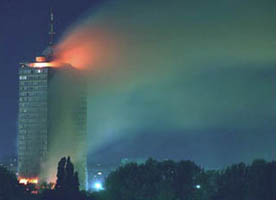



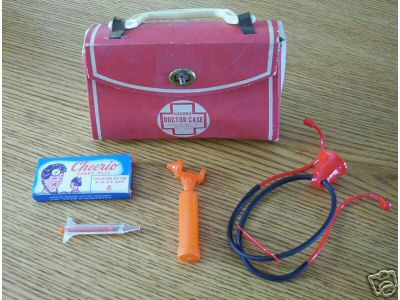
 A pair of Vision 20-20 eyeglasses is needed to view the 3D photos!E-Mail the Doctor.





 "I love my daddy!"



 SAMPLE OBJECTIVE #1: Students will teach a unit on "Intellectual Property Rights-Copyright Laws and write an article on Education Compensation and/or Income Inequalities in Third World Countries.
 SAMPLE OBJECTIVE #2: Write a summary paragraph on the WORLD WIDE WEB (WWW) OWNERSHIP RIGHTS Using two Search Engines for research of the Internet!


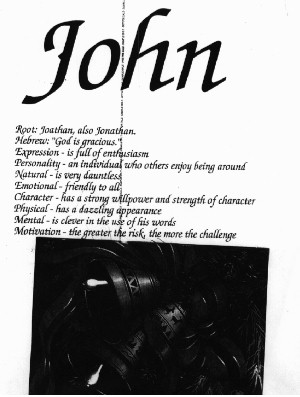 XMAS IS COMING!
 YOU ARE THERE AT GEOCITIES HOME PAGE!...


 Look at two dead sons of saddam!


