
PROJECT MANAGEMENT
CC603
1.0 INTRODUCTION
1.1 Concept of project management
1.1.1 Concept of management.
1.1.2 Characteristics of management.
1.1.3 Define project and identify characteristics of projects
1.1.4 Concept of project management.
1.1.5 Objectives of Project Management and the importance
of Project Management
1.1.6 Project Manager in project managemet
a. Who is project manager ?
b. Roles and responsibilities of project manager ?
c. Soft skills needed by project manager
1.1.7 Differentiate the implementation of project management in various
methods of construction projects
a. Traditional method
b. Design and build method
c. Turnkey method
2.0 PROJECT LIFE CYCLE
2.1 Project Life Cycle and its phases
2.1.1 Diagram of project life cycle
2.1.2 Characteristics of project life cycle
2.1.3 Explain the phases of project life cycle
a. Initiation and the basic processes
i. Project document
ii. Project feasibility document
iii. Project concept document
iv.. Project charter
b. Planning and basic processes
i. Defining scope
ii. Work breakdown structure
iii. Role assignment and scheduling
iv. Fund allocations
v. Risk Management
vi. Procurement planning
c. Implementation activities and basic processes
i. Execution of project plan
ii. Handle changes
iii. Project control
d. Close-up activities and benefits of efficient project
closure
3.0 PROJECT CONTROL AND MONITORING
3.1 Bar Chart and Gantt chart
3.1.1 Usage of the bar chart and Gantt chart.
3.1.2 Characteristics of bar chart and Gantt chart
3.2 Critical Path Method (CPM)
3.2.2 Principle of CPM
3.2.3 Understand the terms used in CPM
a. activity
b. arrow
c. ‘dummy’
d. duration
e. event
f. early to start (ES)
g. early to finish (EF)
h. finish to start (FS)
i. finish to finish (FF)
k. critical path.
3.2.4 Construct etwork diagram and determine project
duration and identify critical path using Arrow Method
3.3 Advantages and disadvantages of Gantt Chart and CPM
3.3.1 Advantages and disadvantages of Gantt Chart
3.3.2 The advantages and disadvantages of CPM
3.4 Concept of controlling
3.4.1 Define project control
3.4.2 Identify project control system
a. Quality Management System and its perspectives
i. Product Quality
ii. Service Quality
iii. Process Quality
b. Quality Management Process and its concepts
i. Quality Planning
ii. Quality Assurance
iv. Quality Control
3.5 Understand the concept of monitoring
3.5.1 Identify the elements of project monitoring
a. selection of control measures
b. observation of activities
c. collection of control data
d. comparison of control data with planning information
4.0 PROJECT ORGANISATION AND SUPERINTENDENCE
4.1 Compare and contrast different organizational structures and their impact on projects
4.1.1 The relevance of organizational structure and the main characteristics of
a. functional structure
b. product structure
c. matrix structure
4.2 Project supervision and superintendence
4.2.1 Differentiate project supervision and project superintendence
4.2.2 The duties of a technician and assistant engineer
a Discuss and distinguish between the duties of a technician and assistant engineer.
b Relation the duty of a technician with an assistant engineer.
5.0 PROJECT PLANNING AND SCHEDULING
5.1 Concept of project planning and scheduling
5.1.1 Define the concept of project planning.
5.1.2 Define the concept of project scheduling.
5.1.3 The importance of project planning and scheduling
5.1.4 The relationship between project planning and project scheduling
5.1.5 Adopt computer application in project planning and scheduling:
a. Understand Microsoft Project or other database software
b. Interpret a simple project by using Microsoft Project and
other database software:
c. construct event
d. accomplish activity and duration
e. construct to shorten the project duration
f. prepare the CPM for project samples given
g. prepare a progress report.
.
NOTA-NOTA
Kuliah 1 & 2 ( 21/6/2014 dan 28/6/2014)
Kuliah 3- Projek Management Book Of knowledge (PMBOK) -5/7/2014
Kuliah 4 - PMBOK- 9 element of project management
Kuliah 4 - Time Study -16/7/2014
Kuliah 5-Gantt Chart 13/8/2014
Kuliah 6 - Komunikasi 6/9/2014
Soalan Peperiksaan CC603 Semester Lepas
Buku teks tambahan
Tugasan 2
Berdasarkan Jadual Cash flow dibawah,
Dapatkan;
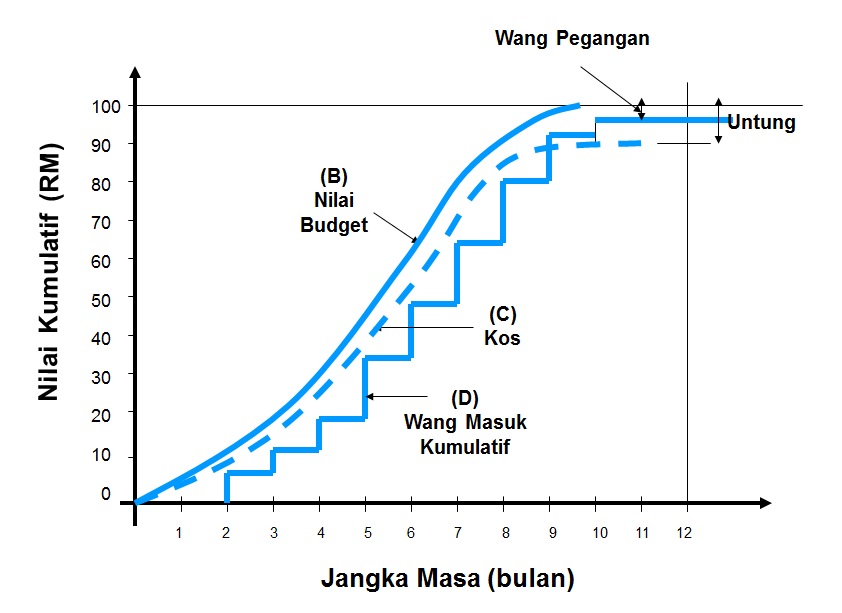
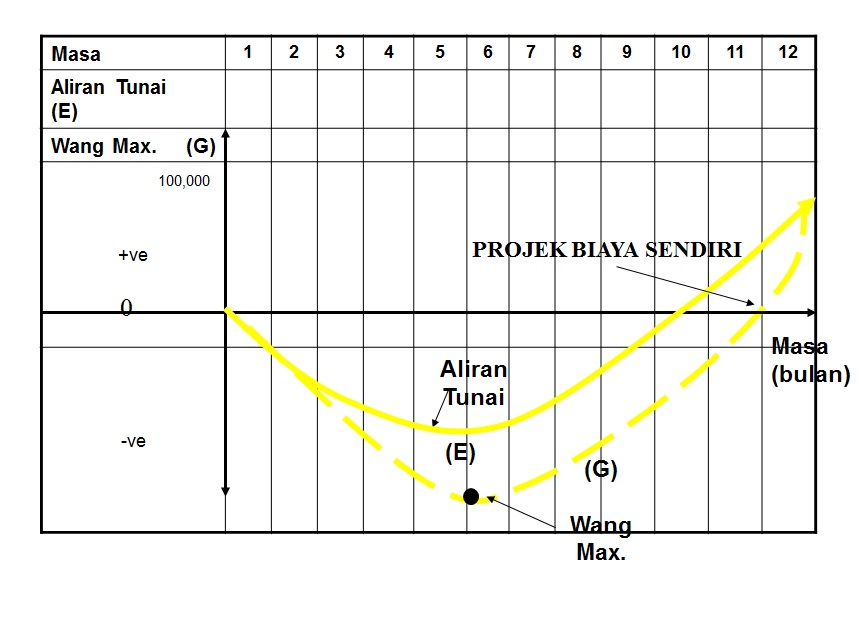
i. Cashflow Chart
ii. S Curve ( Pendapatan dan Perbelanjaan)
Ikut Contoh Berikut. Dapatkan Nota disini
TUGASAN AKHIR ( NO. 3)