
In late October 2001, I took a well deserved vacation to Mexico's Yucatán Peninsula - the land of the Maya...
During my trip I visited Valladolid, Chichén Itzá, Mérida, Uxmál, Kabah, Campeche, Edzná and Cancún.
Valladolid is a colonial town located approximately 1 1/2 hours west of Cancun. While there are no sights of the "stop the car!" variety, the lodgings and food are relatively inexpensive and the pace is more relaxing than Cancún. Valladolid also makes an excellent jumping off point for Chichen Itza (about 45 minutes away).
Unlike even Ciudad Cancún, Valladolid is a town that has a heart. The Plaza Mayor is a popular place to go to see and be seen after sunset.
Chichén Itzá will, in the words of a poular guidebook to the region, awe even the most jaded visitor. Chichén has been extensively restored and rebuilt, although some structures, like the Temple of the Warriors, have only been partially rebuilt so that walking around the structures gives a sense of how they looked when in use - and when uncovered by the archaeological teams that began the restoration work.
Chichén Itzá remained an important ceremonial city for many centuries. Many of the structures at the site have a hybrid Maya-Toltec architectural style. The influence of the Toltecs or Tula peoples is most strongly seen in the presence of chacmools (ceremonial altars carved in the form of reclining figures holding bowls over their bellies) which are believed to have held the hearts removed from the humans sacrificed here.
The most famous and striking structure is also the first one seen by visitors - El Castillo. El Castillo is a pyramid built in a hybrid style. The number of small and large steps correspond to the components of the calendar system in widespread use throughout Mesoamerica. The most striking feature of the pyramid is that (reportedly, I was there at the wrong time of year) shadows cast by the sun on the vernal and autumnal equinoxes along the main staircase give the illusion of a snake slithering up or down the pyramid.
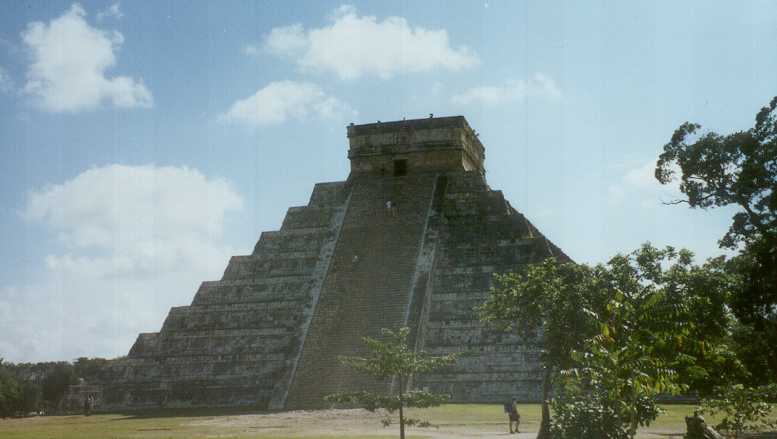
The Castillo, like most pyramids in the region, is extremely steep (I estimated that most of the structures I climbed had average slopes of 45 degrees) and the treads of the steps are not especially deep. Some treads, due to wear, are actually sloped slightly outward, making them very disconcerting to climb. Most people go up slowly and come down even slower. Despite the warnings, it is said that at least 1 tourist kills themself each year falling from the steps of a pyramid (it would be pretty much impossible to stop falling once you got going).
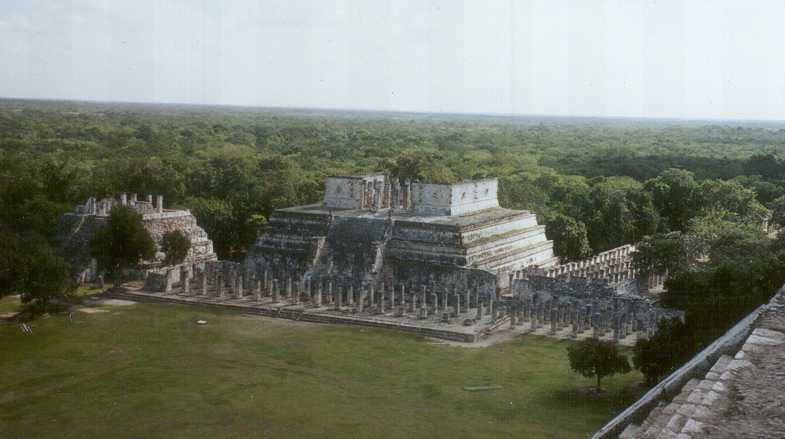
The Temple of the Warriors is surrounded on two sides by many circular and square columns (sometimes called the Thousand Columns). The square columns are carved and like the other structures, were presumably painted in bright colours as well. On top of the Temple are two large square columns with a serpent's head at the base and a capital shaped like an "L" carved in the form of a serpent's tail. The tail pieces originally supported a massive wooden lintel. Between the columns is a chacmool. The latest victim was an impatient archaeologist who climbed up to the top of the Temple during a rainstorm to see the chacmool. Shortly after arriving at the top, he was struck and killed by lightning.
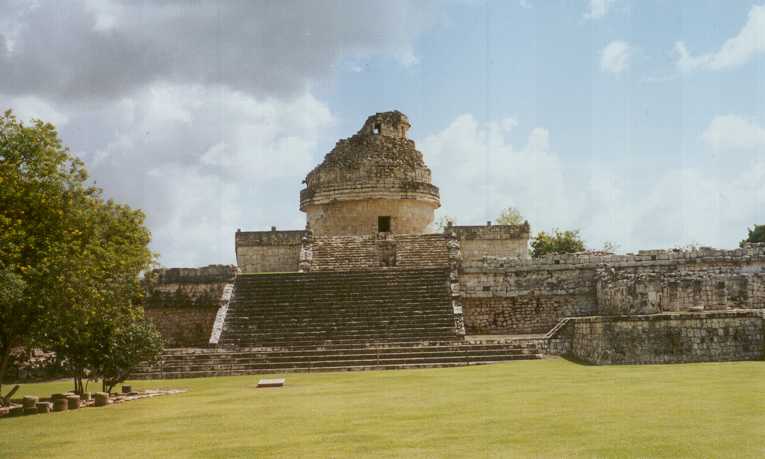
Other striking structures include the Observatory (sometimes known as El Caracol "the snail" due to the circular tower and stairway)
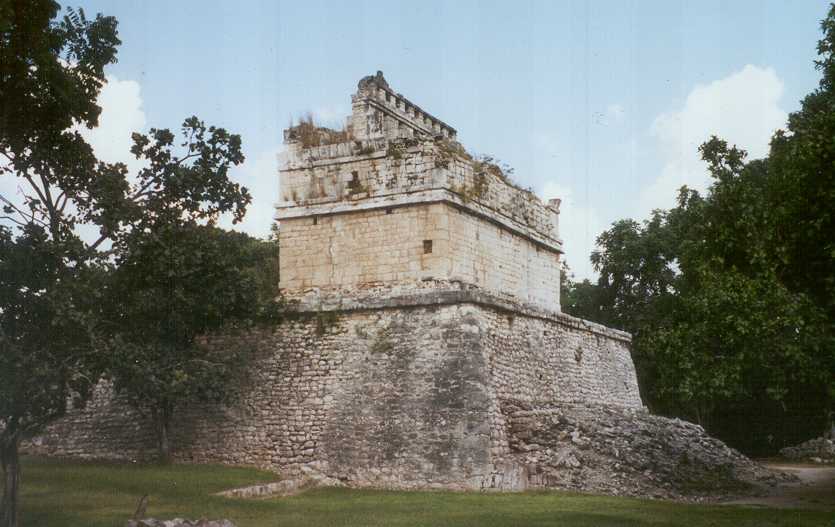
and this structure (whose proper name I don't recall just yet!)
Mérida was founded on the site of the ancient Maya city of Tihó. There is nothing left of the Mayan buildings as they were torn down and used to build the new colonial structures by the Spanish. As a result of the wealth brought by the henequen or sisal trade, the Paseo de Montejo has some of the most impressive Spanish architecture in the Yucatán. In particular, the mansion housing the Museum of Regional Anthropology has been maintained in very good condition.
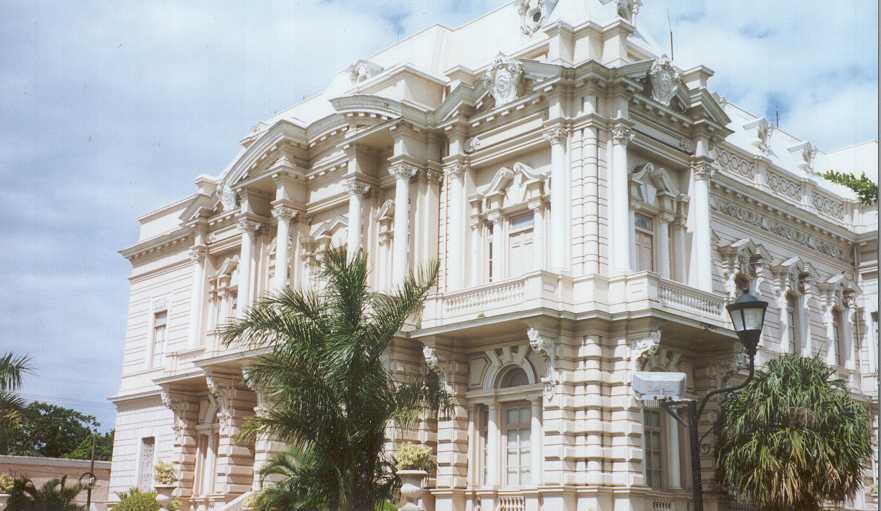
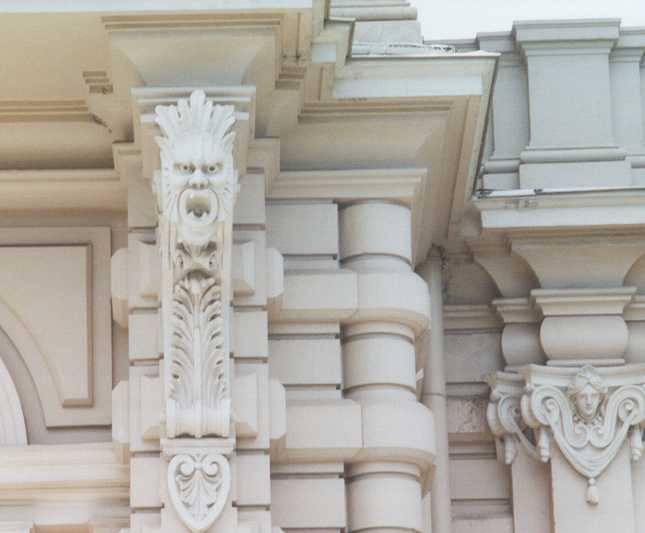
(to come)
Campeche is a wonderful stop overlooked by many visitors to the area. In addition to the historical center of the former walled city, Campeche is a good "base camp" for visitors wanting to do a day trip to Edzná (see below).
The old part of town consists of brightly painted facades which are a pleasant relief after miles (or kilometers) of jungle view along the highway from Mérida. Campeche has been designated a UNESCO World Heritage Site due in large part to the wonderful state of preservation of long stretches of the old walls and bulwarks used to protect the city from attack by pirates. The section of wall connecting the Sea Gate (Puerto del Mar) was reconstructed and is not original, but gives a pleasant view of the town and seawall.
Many of the bulwarks remain and each has a unique use. I especially enjoyed the tropical garden, city museum and museum of Maya sculpture and stele.
The seawall is a recent addition, but is a refreshing walk in the evening - especially when the breeze coming off the Gulf of Mexico is strong. Several cannon "guard" the city at a few points along the seawall.
A culinary specialty of Campeche is "Pan de Cazon" - which is dogfish shark served between fresh fried corn tortillas all covered with a savory tomato or tomatillo and pepper sauce. The Hotel del Marqués in Valladolid also serves a good Pan de Cazon.
Edzná was probably my favorite ruin that I visited during my trip. Other sites may have more impressive structures, but this site had such a strong feeling of balance and proportion about it that made me very comfortable - except for the mosquitos (and me without any repellant!).
Edzná is home to the famous "Five-Floor Temple" pyramid, which is unusual among Mayan temples for having accessible rooms at so many levels of the structure. The steps near the base of the temple also have glyphs carved on them. Unfortunately, many of the glyphs have been weathered beyond recognition.
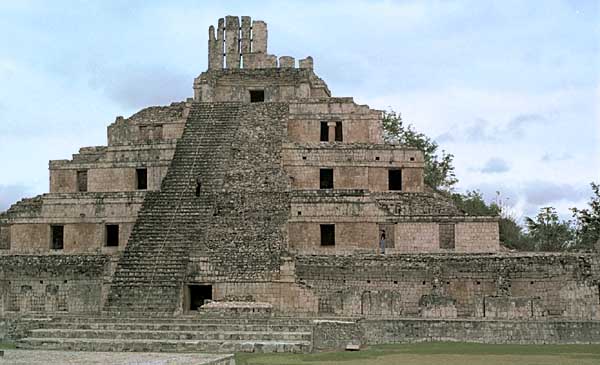
There are several plazas in the city and two large stucco masks in good states of preservation, as well, to tempt the rare visitor to this site. Public transportation to the site is not good, so be prepared to spend only a few hours walking around unless you have your own vehicle or have arranged another ride.
Cancún has the high-end resorts with the high-end prices. If you're interested in the sand, surf, sun thing - you're in the right place. If not, get away as quickly as possible and return at the last possible instant. At the night spots in the Zona Hotelera, the prices are high and the quality is mediocre. Seriously, I was charged about 35 pesos for a Dos Equis beer in the Zona (at Senor Frog's) - about twice the 17 pesos I happily paid elsewhere on the Peninsula for a locally-brewed Montejo or Leon Negra.