



EDIBLE OIL
New methods of production, transportation and refining, mean that oils are available to suit any and every need. To help you choose the right oil for your intended use, we list below most of the major, and many of the speciality, oils available.
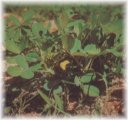 PEANUT (GROUNDNUT) OIL
Groundnuts (peanuts) for oil production are grown primarily in West Africa, South America, and China. Because there are relatively limited supplies, and a constant high demand, Peanut Oil usually commands a considerable price premium over most other cooking or frying oils.

RAPESEED OIL
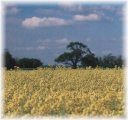 A good all-round oil for most cooking and frying applications. Relatively high levels of mono-unsaturates make this a good robust oil which will tolerate high temperatures. When sold as a frying oil, will often contain an anti-foaming agent such as methyl-polysiloxane. Although usually sold as a liquid, Rapeseed Oil can be hardened by the process of hydrogenation, and is increasingly available in semi-solid or even fully-solid form.
The Rape plant (Brassica Campestris) grows in more northern latitudes than any other major oil- producing plant. Rapeseed for oil production typically comes from the U.K. and Europe, as well as from Canada (Canola).
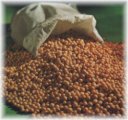
SOYABEAN OIL
The world's largest source of vegetable oil. Grown extensively in the U.S.A., as well as South America and China. Soya Oil contains higher levels of polyunsaturates (which break down on being heated) than, say Rapeseed Oil or Palm Oil. For this reason, Soya Oil is not usually considered as first choice as a frying oil. It has a tendency to "gum", leaving sticky deposits on cooking and frying implements. It is however, particularly attractive as a food ingredient and in the production of margarines and spreads.
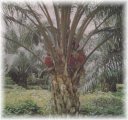
PALM OIL
Produced from the Oil Palm, grown in tropical climates, principally Malaysia, Indonesia and West Africa. The Oil Palm takes about 5 years from planting to first fruiting so production of the oil cannot be rapidly increased in line with demand. However, once established, the trees crop continuously throughout the year, although there are certain months when production is relatively higher than others, and there is a tendency for the trees to become stressed if over-cropped, which sometimes leads to a good year being followed by a poor year.
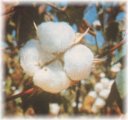 COTTONSEED OIL
A liquid oil derived from the seed of the cotton plant and grown primarily in China, Russia, the USA, India and Brazil. Although the plant is grown in substantial quantities, the seed itself yields only about 20% oil, and the majority of this is consumed in the countries of origin, with comparatively little international trade.
OLIVE OIL
 The traditional product of the Mediterranean and the basic ingredient of classic French and other cuisines. With its high levels of monounsaturates, Olive Oil is perceived as a particularly healthy oil, and for this reason, and because of the enormous growth in the market for quality foods it has become extremely popular.
Olive trees are extremely slow-growing and the area of production is still limited to the Mediterranean countries. The increasing demand for the different types of Olive Oil, and the traditionally regional and specialised nature of its production, means that Olive Oil will continue to command a high price premium over all the commonly-used edible oils.
SUNFLOWER SEED OIL
 High in polyunsaturates, so more suited for use in the preparation of dressings and in the production of margarines and spreads than as a cooking or frying oil. Sources: Russia, Ukraine, Europe, Argentina, USA. Of those oils in common daily use, Sunflower has the highest level of polyunsaturates and which are effectively all of the more stable, linoleic variety. The actual level can vary from below 60% to over 70%, with the highest levels being found in crops grown in areas experiencing the largest variation between day and night-time temperatures.
CORN OR MAIZE OIL
A liquid oil extracted from the germ (seed) of maize. The crop is widely grown and some local production is available in many countries, including the UK and Europe. However, the only source of real international importance is the USA.
THE LAURIC OILS
PALM KERNEL OIL
The kernel of the palm fruit is extracted in the production of Palm Oil. This kernel itself yields some 45% oil which is white in colour and has possesses totally different properties from those found in Palm Oil.
Palm Kernel Oil is highly saturated, although it melts at a lower temperature than Palm Oil. Either in its refined form or after hydrogenation it has wide applications in the chocolate, confectionery, ice cream and similar industries, as well as technical uses.
 COCONUT OIL
The coconut palm is grown in many tropical areas, with the Philippines and Indonesia being the most important regions in terms of international trade. The white flesh of the coconut has an oil yield of up to 65%, making it the highest yielding of traditional oil-bearing materials.
MARINE OILS
FISH OIL
Produced from the flesh of fish with an oil content between 0.5% and 15%, depending on fish species and point of fish's life cycle oil is extracted. The major producers are the USA (Menhaden), Japan (Sardines/Mackerel), Norway (Capelin), Iceland (Capelin), Peru (Anchovy), Chile (Sardine) and Denmark (Capelin/Tobis).
In its crude state Fish Oil is totally liquid but contains certain fatty acids that are so highly unsaturated and therefore unstable that they can give rise to flavour reversion problems "within hours", even after traditional refining. Consequently, the vast majority of Fish Oil is hydrogenated. The most common uses of Fish Oil are in the production of economy retail margarines and economy bakery magarines and fats, as well being used as a shallow-frying medium.
ANIMAL FATS
LARD
Pigs which have been subjected to ante and post mortem veterinary inspection and certified free from disease are slaughtered for meat production, in the course of which much of the fat is removed. Predominant sources are the kidney and back fats which are passed through a rendering process to produce what we know as Lard.
First quality, freshly rendered material with low acidity, good colour and a mild, traditional flavour is commonly referred to as "packers" lard, which can be simply cleaned/filtered and used directly for packing. Other qualities, which are too high in acidity or otherwise fail to meet the tighter analytical specifications, are subjected to full refining treatment prior to edible use.
TALLOW
Tallow is produced in the same way as Lard. Whilst the word can cover material derived from various animals, the name is more commonly reserved for the fat obtained from cattle and referred to as Beef Tallow. It has a firmer consistency than Lard and melts at higher temperatures.
SPECIALITY OILS
The sources of, and uses for, different oils are many and various.
In addition, modern refining and processing techniques allow different oils to be blended together for particular uses, or , increasingly, individual oils to be tailored to give specific desired characteristics, be it taste, durability, temperature profile etc.
SESAME
ALMOND
GRAPESEED
HAZELNUT
SAFFLOWER
WALNUT
Purchase commodities from us at way below market price by paying with standby L/C or Prime bank guarantee.Please tell us total quantity, target price and total broker commissions needed.You can make large profits with our INTERNATIONAL FARM COOP GROUP! In all cases a LOI and BCL is needed prior to a firm price being issued.In order to proceed, a signed and stamped
LETTER OF INTENT from the End Buyer must be faxed or emailed to us.
