
Roving-Gambler.tk - Bob Dylan fansite
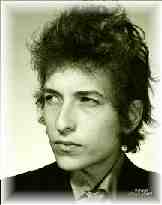
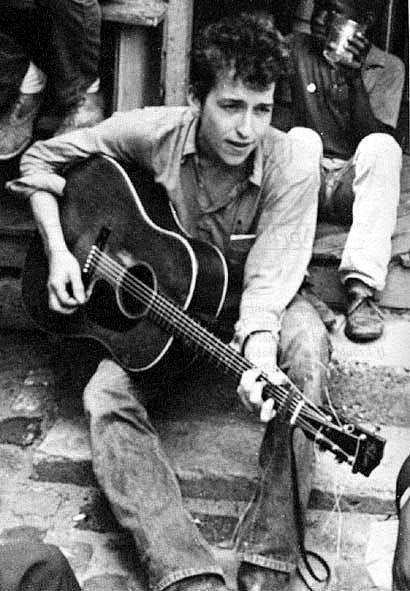
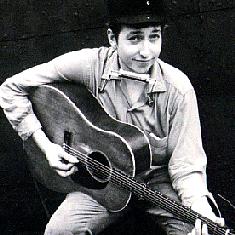
| Born in Duluth, Minnesota, Bob Dylan hitched his way to New York City in 1961, at 19 years of age. He survived by playing old folk songs of Woody Guthrie's at basket houses around the city, until landing a spot at the prestigious Gaslight club. Here, John Hammond Spotted him. |
|
|
|
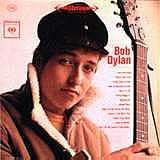
Dylan was offered a contract by Hammond for Columbia records, and his first album, "Bob Dylan" was released. Dylan then went on to write "Blowin' in the wind", making himself known to the folk community and critics. Indeed, Dylan was pivotal in bringing folk music to mainstream America. Critics were astounded by Dylan's vision and awareness at such a young age. |
| Dylan began to write more protest songs. "A Hard Rain's A-Gonna Fall" was written in the wake of the Cuban missile crisis. Dylan said of this, "I had a whole buncha songs ready to be written, but after this, I...I didn't think there'd be much time left, so I just put them all together and that's how it turned out". He released his third album, "The Times They Are A-Changing" in early 1964. The album was full of protest songs. |
|
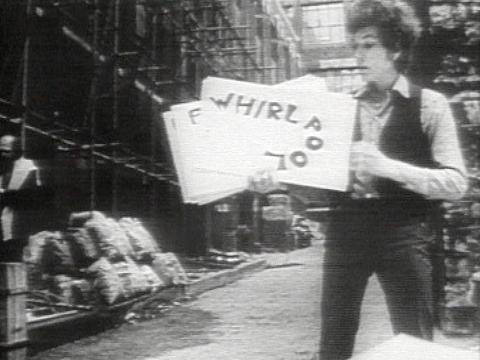 |
Dylan began to grow restless with the Folk community. He began to experiment with wild imagery and symbolist lyrics in his work. He released an album called "Another Side of Bob Dylan" which contained mostly personal songs, both shocking and angering the Folk community. |
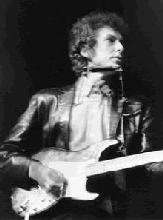
| Dylan further angered the folk community at the Newport Folk Festival in 1965. Introduced as "bringing the popular face of folk music to the mainstream", with the crowd roaring with anticipation, Dylan appeared onstage with an Electric guitar. The crowd's roar turned into a silenced hush, and then into Boo's. Dylan sang "I ain't gonna work on Maggie's Farm no more" signifying that he wasn't going to play the protest singer game any more. |
|
|
|
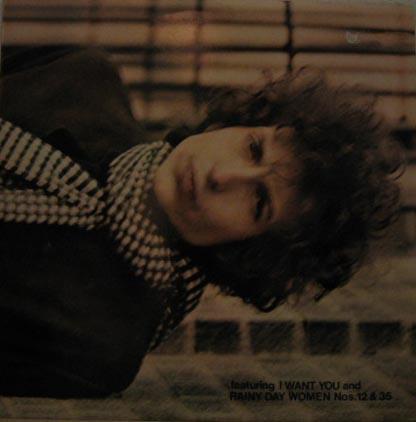
Dylan would go on to release 3 electric albums in just 20 months: Bringing it All Back Home (with the mystical "Mr Tambourine Man"), Highway 61 Revisited (with the scathing "Like a Rolling Stone"), and Blonde on Blonde (pictured right, which some see as the greatest album of Dylan's career). With the release of Blonde on Blonde, Dylan's stardom increased. Dylan revolutionised the way popular music looked at lyrics, with lines such as "And if you hear vague traces of skipping reels of rhyme, throw your tambourine in time". |
| Dylan tired of his stardom very quickly. He moved out of New York City in the hopes of being forgotten, and moved to Woodstock. Unfortunately people soon found his new home, and began to climb over the fences to catch a look at the "messiah" of pop music (indeed, this is why the Woodstock festival appeared at Woodstock, because Dylan moved there). Dylan sought to alienate the fans, but didn't know how to, so he decided to play country music. |
|
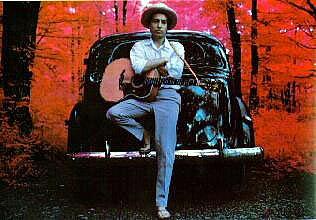 |
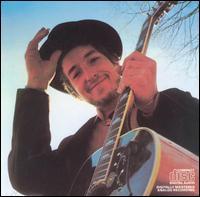
Bob Dylan released "Nashville Skyline" in 1969. Unbelievably, this wasn't Bob's first Nashville album - Blonde on Blonde was actually recorded there. The album was unlike anything Dylan had recorded before, and as well as alienating the folk community, Dylan also managed to alienate the rock and roll community. |
| In Dylan's autobiography, Dylan says that the album was released to distance himself from fame at a time when he simply wanted to spend time with his family. Dylan followed up "Nashville Skyline" with "Self Portrait" (pictured, right), an album filled with covers and bizarre choices, including a cover of Paul Simon's "The Boxer" in which Dylan sings both parts of the harmony dubbed together. |
|
|
|
Bob Dylan released "Blood on the Tracks" at a time when he and his wife Sara were going through separation. The album is widely considered to be Dylan's deepest and most personal work. The album covers all the different terms of love, including loss in Tangled Up in Blue, Anger in Idiot Wind, to acceptance in Buckets of Rain. |
| Dylan went on tour to play tracks from the album. The Rolling Thunder Revue became one of the most iconic images of live rock and roll in the history of popular music. Resembling a gypsy carousel, the band (including Scarlet O'Hara, whom Dylan picked up from the streets to play with) stormed into various arena's around the country playing a wild myriad of music. |
|
|
|
The simple twist of fate in the tale, is that halfway through the tour, Sara Dylan actually joined up with the Rolling Thunder Revue. This prompted Dylan to write a lament called "Sara" in which he renews his love for her. Unfortunately, this didn't quite pan out, leading to perhaps the angriest renditions ever of Idiot Wind. |
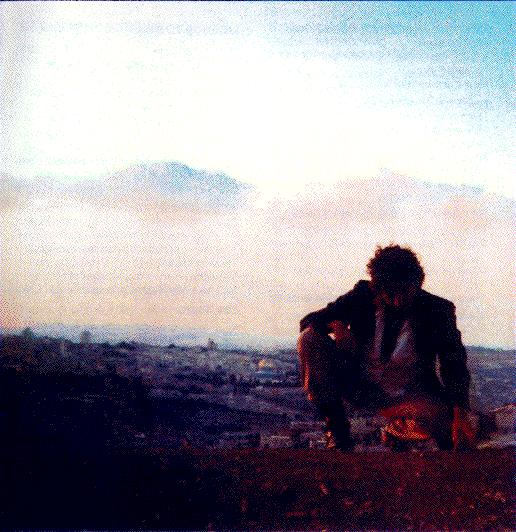
| Dylan (pictured right here in Jerusalem) felt uncomfortable with the way his career was panning out. Without his wife Sara, he felt somewhat empty. The album Street Legal was released to mixed reviews, and it seemed like Dylan was searching for something to make him complete. He decided to go on tour. |
|
|
|
Dylan toured, and one night in San Francisco, a fan threw a cross on the stage. This struck a chord with Dylan, who took it as a sign from God. He went straight to the studio and began to record "Slow Train Coming", an album filled with gospel styled Christian songs, including "Slow Train Coming" "I believe in you" and "Precious Angel". |
| Dylan took these songs on tour almost straight away. Instead of playing his old favourite hits, Dylan concentrated solely on his new Christian material, much to the disdain of his fans. Dylan even began to preach and read from the bible in between songs. Fans were disappointed that their hero who had once warned "Don't follow leaders" was now preaching "You're gonna have to serve somebody". |
|
|
|
Dylan suffered something of a decline during the 80's. He wasn't able to compete with newer pop acts of the time, and was producing albums that were less than stellar, such as "Empire Burlesque", "Knocked Out Loaded" and "Down in the Groove". However, after a tour with the Grateful Dead, Dylan decided that this all had to change. He decided to form the never ending tour, in which he would play over a 100 dates a year, in smaller venues. |
| Dylan wanted to have an album to accompany this tour. From the recommendation of U2's Bono, he enlisted the help of producer Daniel Lanois. Lanois created a darker sound around Dylan, giving songs such as "Most of the Time" and "The Man in the Long Black Coat" a spooky feel. The album was released in 1989, and was the best Dylan album for years. |
|
|
|
Dylan released Time Out Of Mind in 1997, to fantastic reviews. It recieved the Grammy for "Best Album" and introduced a legion of younger music fans to the work of Dylan. The album was also produced by Lanois, so much of the darkness was still there. The album dealt with a man facing up to his age (Dylan had recently suffered a heart attack), and songs such as "Not Dark Yet" and "Tryin' To Get To Heaven" suggested a man coming to the end of his career. Of course, Dylan is still alive today, and has released "Love and Theft", and album which many (myself included) would consider one of his greatest albums. |

Home | Biography | Albums | Lyrics | Chronicles | Contact info |
Material Copyright © 2000 McClurg