|
Climate change is another environmental issue that the world is really experiencing. Changes of the normal condition of the atmosphere can really brought a serious problem on the lives of all the living. Now think, what makes the climate change? How does it affect to every one’s lives? |
|
Causes of Climate Change |
|
Natural causes |
|
The earth’s climate is influenced and changed through natural causes like volcanic eruptions, ocean current, the earth’s orbital changes and solar variations.
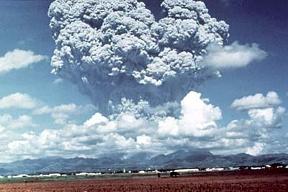
Volcanic eruptions - When a volcano erupts it throws out large volumes of sulphur dioxide (SO2), water vapor, dust, and ash into the atmosphere. Large volumes of gases and ash can influence climatic patterns for years by increasing planetary reflectivity causing atmospheric cooling. Tiny particles called aerosols are produced by volcanoes. Because they reflect solar energy back into space they have a cooling effect on the world. The greenhouse gas, carbon dioxide is also produced however the CO2 produced is insignificant when compared to emissions created by humans.
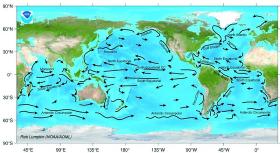
Ocean current - The oceans are a major component of the climate system. Ocean currents move vast amounts of heat across the planet. Winds push horizontally against the sea surface and drive ocean current patterns. Interactions between the ocean and atmosphere can also produce phenomena such as El Niño which occur every 2 to 6 years. Deep ocean circulation of cold water from the poles towards the equator and movement of warm water from the equator back towards the poles. Without this movement the poles would be colder and the equator warmer. The oceans play an important role in determining the atmospheric concentration of CO2. Changes in ocean circulation may affect the climate through the movement of CO2 into or out of the atmosphere. |
|
A huge cloud of volcanic ash and gas rises above Mount Pinatubo, Philippines, on June 12, 1991. Three days later, the volcano exploded in the second-largest volcanic eruption on Earth in this century. Timely forecasts of this eruption by scientists from the Philippine Institute of Volcanology and Seismology and the U.S. Geological Survey enabled people living near the volcano to evacuate to safer distances, saving at least 5,000 lives. |
|
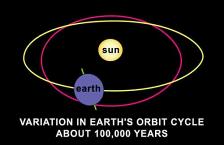
Earth orbital changes - The earth makes one full orbit around the sun each year. It is tilted at an angle of 23.5° to the perpendicular plane of its orbital path. Changes in the tilt of the earth can lead to small but climatically important changes in the strength of the seasons, more tilt means warmer summers and colder winters; less tilt means cooler summers and milder winters. Slow changes in the Earth’s orbit lead to small but climatically important changes in the strength of the seasons over tens of thousands of years. Climate feedbacks amplify these small changes, thereby producing ice ages. |
|
The Earth’s orbit can vary in shape |
|
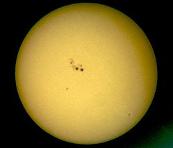
Solar variations - is the change in the amount of radiation emitted by the Sun and in its spectral distribution over years to millennia. The Sun is the source of energy for the Earth’s climate system. Although the Sun’s energy output appears constant from an everyday point of view, small changes over an extended period of time can lead to climate changes. Some scientists suspect that a portion of the warming in the first half of the 20th century was due to an increase in the output of solar energy. As the sun is the fundamental source of energy that is instrumental in our climate system it would be reasonable to assume that changes in the sun's energy output would cause the climate to change. |
|
Sunspots imaged on 22 June 2004 |
|
Human Causes |
|
Human activities now a days are the major contributor of climate change. A new NASA-led study shows human-caused climate change has made an impact on a wide range of Earth's natural systems, including permafrost thawing, plants blooming earlier across Europe, and lakes declining in productivity in Africa.
|
|
Some human acts that cause climate change are:
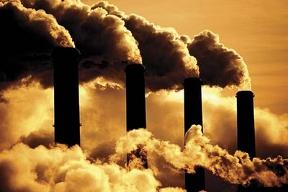
Burning of coal, oil, and natural gas: when these materials are burned, the release big amount of carbon dioxide in the atmosphere
|
|
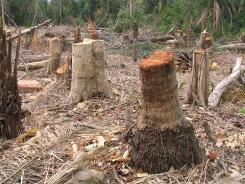
Deforestation: when wood is burned, the carbon contained in the trees is released as carbon dioxide. When wood rots in swamps methane can be produced. Only plants can remove carbon dioxide from the atmosphere as they use it in photosynthesis process. |
|
Farming: rice paddies, cattle, coal mines, gas pipelines, and landfills produce methane, another greenhouse gas, which today causes about 30% as much warming as carbon dioxide.
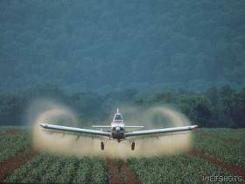
Fertilizers and other chemicals release nitrous oxide, which today causes about 10% as much warming as carbon dioxide. |
|
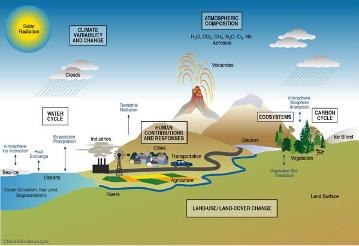
Climate change is a long-term change in the statistical distribution of weather patterns over periods of time that range from decades to millions of years. It may be a change in the average weather conditions or a change in the distribution of weather events with respect to an average, for example, greater or fewer extreme weather events. Climate change may be limited to a specific region, or may occur across the whole Earth. |
|
There are many human activities and natural processes that contribute to climate change. Some of them provide input that might raise temperatures, others provide inputs that might lower temperatures. Image from ClimateScience.gov |
|
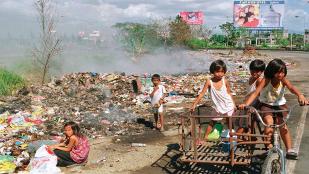
Garbage dump near Manila, Philippines |
|
Pakistan has the highest rate of deforestation in all of Asia |
|
Plane spreading fertilizers on the crops |

|
How does Climate Change affects lives? |
|
Climate change can really affects the lives of plants, animals and human beings. The normal temperature of the environment changes from time to time like too much heat or too much cold in different areas of the globe. The living organism there could hardly adjust there body to the changing environmental condition. Heavy rains in the Philippines during summer time, the melting of glaciers in polar regions and the increasing heat in equatorial areas are some of the signs of abnormality in the atmosphere– that is due to the different factors mentioned above. |
|
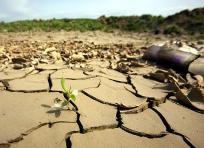
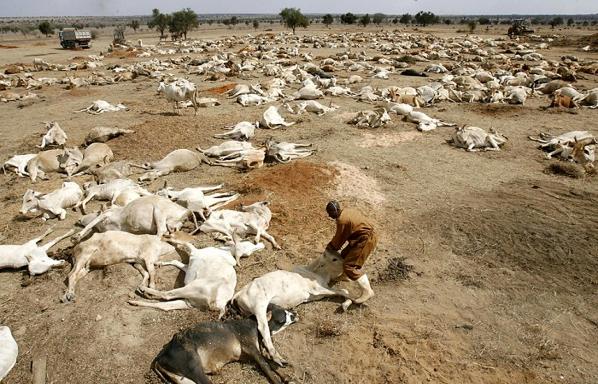
Kenya-Drought - Effects of Climate Change |
|
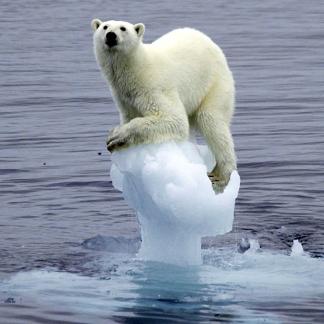
"In the next 50 years, the central Arctic is going to be warmed by approximately 3-4 degrees C" |
|
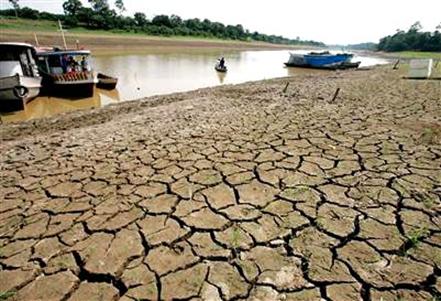
(Picture: An image of the 2005 Amazon drought, when lack of rain caused rivers and lakes to dry up completely) |
|
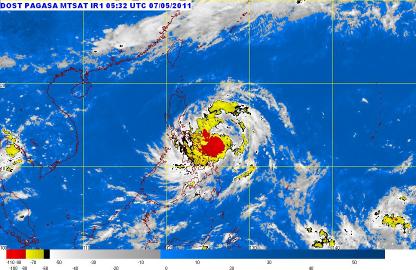
Unusual tropical depression “BEBENG” hit the Philippines in the middle of its summer season on May 07, 2011 Source: http://www.pagasa.dost.gov.ph/ |
|
What is climate change? |
|
Works Cited |