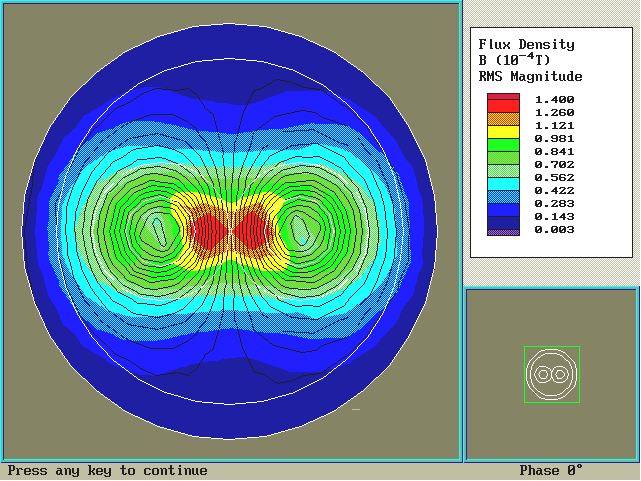
Shows the magnetic field density of the twisted pair
at 20 kHz.
Note the magnetic field does not readily penetrate the shield, and the maximum magnetic field density is between the two wires. There is also a significant amount of magnetic field in the crease between the two wires insulation, which if a conductor (such as a shield) were present, would tend to be shorted out somewhat.
Shows the current flow density in the conductors.
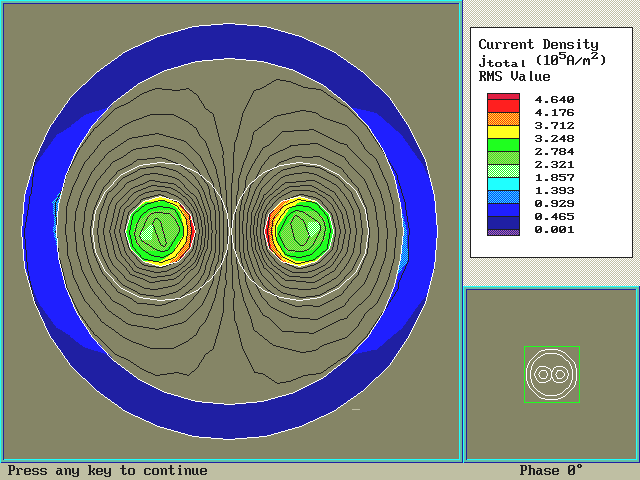
Note the approx. 3 to 1 difference in current density from the outside edges of the wire pair to the inside, due to the mutual inductance partially canceling the self-inductance. The phenomena of self-inductance, mutual inductance, and skin effect all come into play here. This is also known as current bunching.
Also note the current flow in the shield, even though it is spaced away from the pair of wires. Even more spacing would reduce this, while if the shield were closer, as is more typical for commercial twisted pairs, it would be greater still.
All applicable copyright laws apply, all rights reserved, except transmission by USENET and like facilities granted. Any use or inclusion in print or other media are specifically prohibited. The informational content is not warrantied in any way or form, and any use of said content are at the reader's own risk, the author shall not be held responsible in any way for any damages or injuries arising from the content of this web site. Common safety practices are encouraged at all times. Do not fold, spindle or mutilate.