Press shell to return to the caves
 Press shell to return to the caves
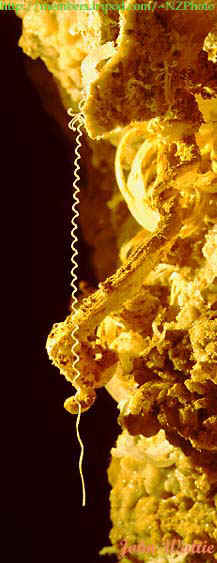 |
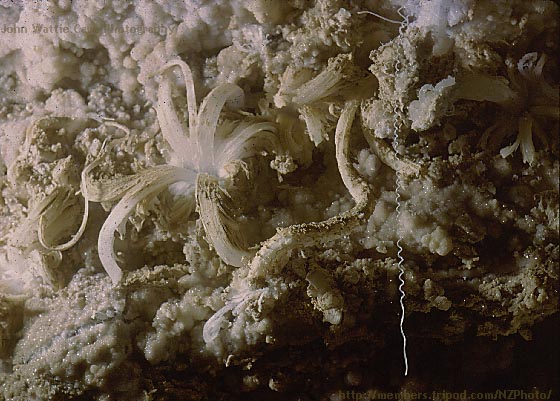
CaS04.2H2O Hydrous calcium sulfate. (English spelling: sulphate). Gypsum is formed when mineralised water evaporates. It is very common in dried salt pans and frequently occurs in sedimentary rocks, such as limestones that make caves. It often dries out as anhydrite, which is calcium sulfate without the water of crystallisation.When water combines with anhydrite, the mineral changes to gypsum and expands in the process. It is this expansion of anhydrite when in contact with water which makes the idea gypsum flowers are extruded through holes in the limestone wall of caves a likely story. As the gypsum expands, it comes out like toothpaste and the shape of the resulting formation depends on the characteristics of the hole in the wall. The orange colour comes from tungsten light. Go to Electronic flash version |
Here is the spiral, surrounded by gypsum flowers. Electronic flash light.