

A comfortable night bus would take us to our next destination, Arequipa.
O
L
C
A

|
|
|
|
|
|
|
|
|
|
|
|
|
|
|
|
|
|
|
|
|
|
|
|
|
|
|
|
||||||||||||||||||||||||||
|
||||||||||||||||||||||||||
| BACK TO OVERVIEW | ||||||||||||||||||||||||||
| CORDILLERA BLANCA | ||||||||||||||||||||||||||
| Pisco-Arequipa (10-13 Oct. 1999) | ||||||||||||||||||||||||||
|
||||||||||||||||||||||||||
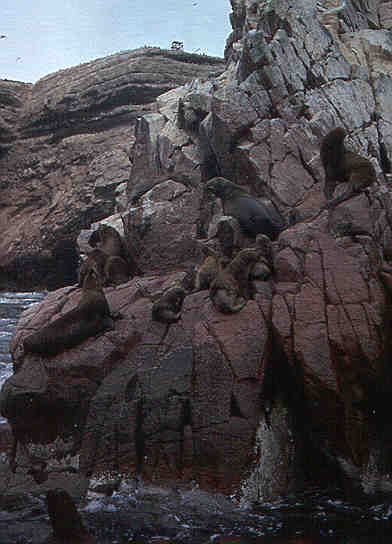
| We arrived in the tiny bus station of Pisco around lunch time. Although the town was close to the Pacific, we didn't really reach the sea until the day after when we joined a guided tour to Islas Ballestas, the main attraction in the area. We reached a harbour north of the Paracas peninsula where we immediately encountered the characteristic birds of the area, including the pelican. We headed off in a fast motor-boat towards the Pacific horizon. The Ballestas islands were in some places shaped like natural tunnels, which made it possible to see islands through islands. Beaches and rocks were filled with sea lions. One beach was absolutely packed-out with sea lions. Incredible amounts of sea birds and one lonely little Humboldt penguin gave any keen orthologist one million reasons to stay on the islands over night.The old guano mining cottages would have been an exciting accomodation option, but logically enough no tourists were allowed to go ashore on this natural reserve. This was a really interesting trip despite of the cloudy weather. Back in Pisco we jumped on the bus to Nasca. Ica was one of few villages that were passed on this ride through a desert area. | ||||||||||||||||||||||||||
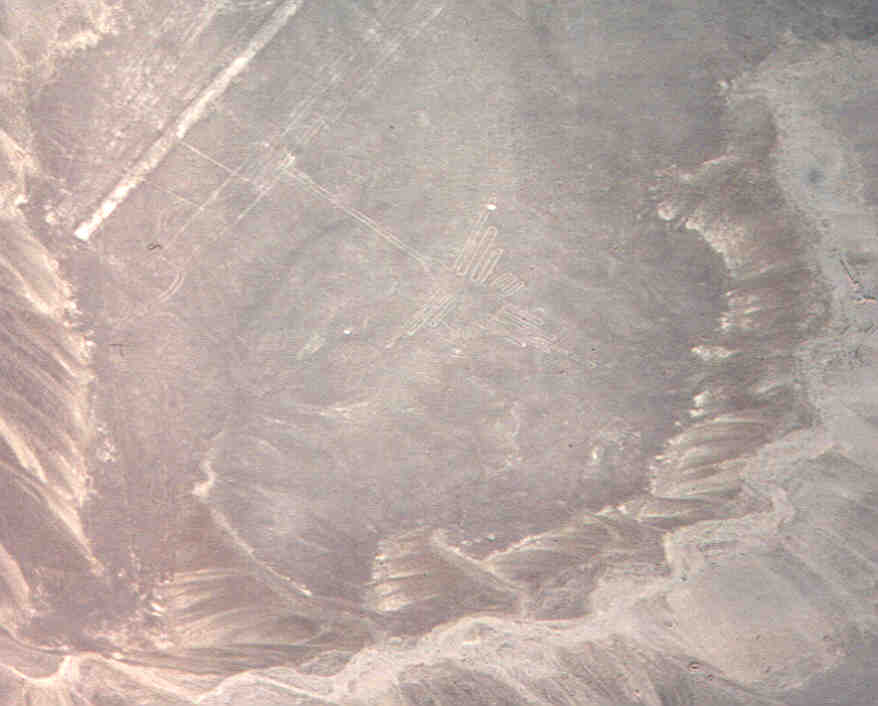
| In Nasca we managed to find a cheap and nice place to stay before making a survey of the different touristic companies that offered aeroplane trips over the famous Nasca Lines. A price of US$ 25 was less than we had expected and we decided to go on a tour the next day. We partly enjoyed the flight, but a really long wait at the airfield before taking off and subsequent motion sickness were definite drawbacks. Every time we approached a new desert figure the aeroplane leaned over so that we would be able to spot the figure. The leaning made me feel sick and the figures were really hard to spot. The bird to the left was actually one of the most easily spotted! A definite bonus was the great views of the surrounding desert area. A comfortable night bus would take us to our next destination, Arequipa. |
||||||||||||||||||||||||||
|
||||||||||||||||||||||||||
|
||||||||||||||||||||||||||
| C O L C A |
||||||||||||||||||||||||||
|
||||||||||||||||||||||||||
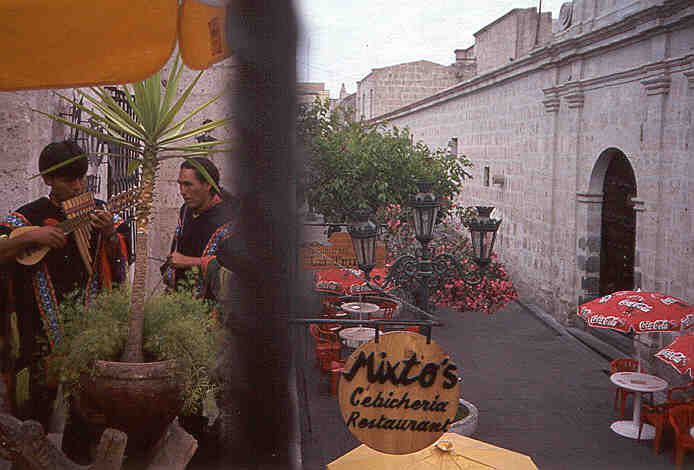
| Arequipa was supposed to be a beautiful city. It had some interesting buildings and a volcano called Misti, but just like most cities in South America the sightseeing value was moderate. The well-known pickpocketing street San Ju�n kept its promise though and gave me what I should have expected. Even so, I was completely fooled. Unfortunately for the thieves, Anna realized what was about to happen and shouted "G� d�rifr�n!" Even if we didn't lose any money we were a bit annoyed, but were soon happy again when a couple of nice priests started to chat with us outside the church. The number of beggars was uncomfortably high and we ended up giving a descent amount (for our standards) to some typical street musicians that at least offered something in return (see above). In the middle of the night we left our prison-like hotel and walked to the bus station. Delayed as always, we got on our way to Colca Canyon early in the morning. We expected a cold six hour trip. It was terribly cold, and six hours, well... | ||||||||||||||||||||||||||