

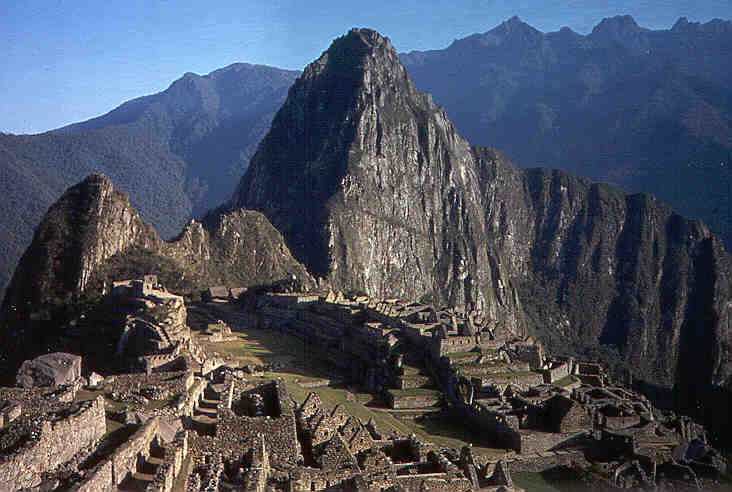
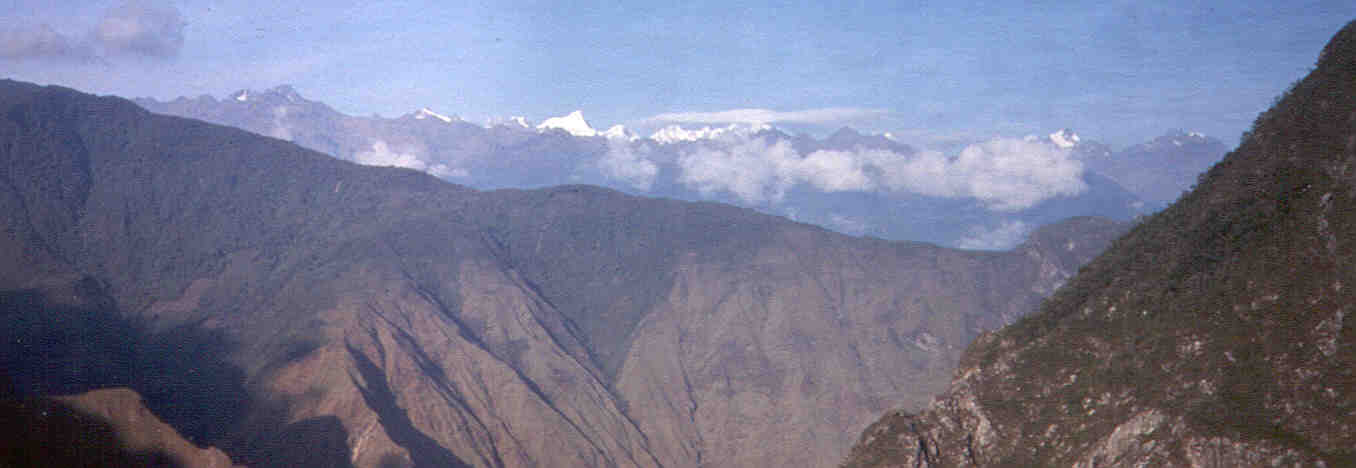
With or without camera, the site was magnificent. The views were great, not just of the ruins, but also of the fantastic surrounding scenery (see e.g. Cordillera Vilcabamba below). Anna didn't like the fact that they were renovating the ruins, but I was more disturbed at my camera loss, especially when we climbed the adjacent hill called Huayna Picchu (2660 m.a.s.). The climb was well worth its time and effort. The views of the surrounding mountains and valleys were even more impressive. We tried to adore the ruins a bit more when we got back from our climb, but in the afternoon we became tired of the place and joined a bus towards the valley. The serpentine road provided earnings to a young Peruvian boy that amused the passengers by running short cut after short cut and shouting loudly every time the bus passed. When reaching the village Aguas Calientes in the valley, we jumped on the first train towards Cusco.
Puno is located inside a huge bay of the Titicaca lake. We wanted to visit Isla Taquile, an island known for its genuine society. After having spent one day in Puno we headed for the island on the October 24. On the way to the island the boat stopped for a visit at the floating islands of Urus. In spite of the touristic exploitation, we found the islands quite amazing. Some of the old women's handicraft was just too beautiful and cheap. For example, we could have bought an absolutely terrific hand-made chess set with the Spaniards (white) and Incas (black) for just US$ 10. Unfortunately I believed we were short of money. I still regret it!
After a long boat ride, we joined the touristic gang to a restaurant that served dangerous food. Anna got really bad in her stomach during the night that followed. The timing was bad, considering that we had left our medicine in Puno. Before she started to feel sick, we had a wonderful day at island, though. Away from all tourists, strolling around in the cosy agricultural landscape, we really enjoyed the great weather and the clear views over the enormous Titicaca lake towards Cordillera Real in Bolivia. The people were quite special too. Our host was really happy when we wanted to stay at his place for US $1 per person. We gave him fruits and some remaining spaghetti that he, curiously enough, thought should be eaten unboiled. The next morning when we showed Anna's vomit on the earth floor in our room, he just brought his spade, took away the "pizza" and filled the floor with new earth. Anna had a really rough day. She started to feel a bit better when we were waiting for the boat on the beach beside the harbour. A cold bath in the world's highest navigable lake for me and exposure to extremely strong rays of sun for both of us preceded the long trip back to Puno.
After our last night in Per�, we left Puno for Bolivia by bus.
