
|
Contents
Introduction Budget Journal Maps Photo Albums Guestbook Feedback Destinations Kashmir Amritsar Himachal Pradesh Agra Rajasthan Calcutta |
 |
||
|
The land of eternal snow peaks, takes in the transition zone from the plains to the high Himalayas and, in the trans-Himalayan region of Lahaul and Sptit, actually crosses that mighty barrier to the Tibetan plateau. 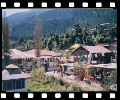
The regions that today comprise Himachal were in ancient times crossed by trade routes to Tibet over the Shipki La, and Central Asia via the Baralacha La and Leh, and in addition commanded the Sach Pass that led to Kashmir. Himachal Pradesh is dominated by mountains, associated rivers and valleys. Several major rivers run through the state, including the Beas River, which flows through the Kullu Valley. A lot of Himachal Pradesh can be easily segregated according to the various valleys. The Kullu Valley, about 80 km long and often less than two km wide, is developed and tourist-oriented. The Parbati Valley joins the Kullu Valley at Bhuntar, and heads northeast, following the smaller, but pretty, Parbati River. Both were popular and managed to retain a very peaceful and unhurried atmosphere. 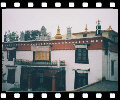
Typical British hill stations can be found in the Chamba and Kangra regions. The residence of the Dalai Lama is in Upper Dharamsala, known as McLeod Ganj, which has become a centre for Buddhism, and the headquarters of the Tibetan Government in Exile. Shimla, the famous colonial hot-weather capital, remains Himachal's seat of government. Guestbook | Feedback Home |
||
|
Copyright © 2001 Joe Corner. All rights reserved. |
||