PART 4
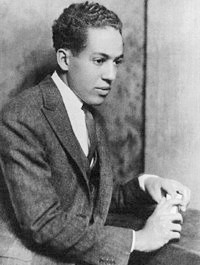 “You done taken my blues and gone, you sing 'em on Broadway, and you sing 'em in Hollywood Bowl, you mix ‘em up with symphonies, and you fix ‘em so they don’t sound like me”.
 The things that the Black Africa mind has produced are all around us, but as the poet Langston Hughes said, they have been mixed up so much that we can no longer recognize them.
In Egyptian mythology, the Egyptian God Osiris was chopped into 14 pieces. His wife, Goddess Isis, was able to find all of the pieces of his body except his penis.
So that which was dedicated to an African is now a monument to a European, George Washington. Millions of Americans and foreigners pass this structure every year, not knowing the Black roots of its very foundation. 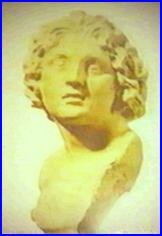
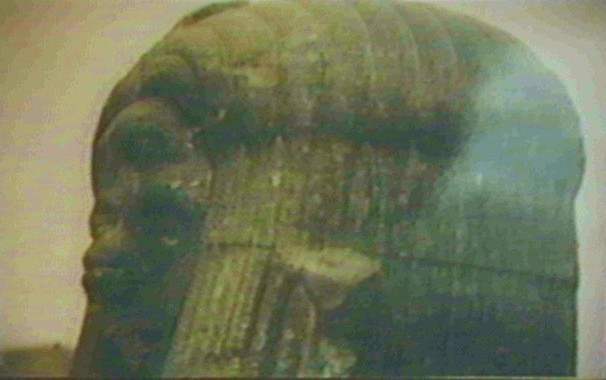 For example, we know that practically all of the so called Greek Philosophers studied in Egypt, but if you were asked if the figure on the left or the one on the right looks like the people who taught the Greeks.You would probably say the one on the left, one and you would be WRONG.
On the left is Alexander of Greece, and on the right is an Egyptian Pharaoh, King Amenemhat III .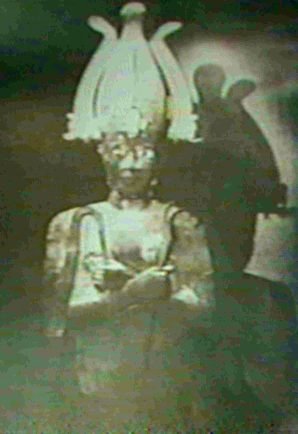
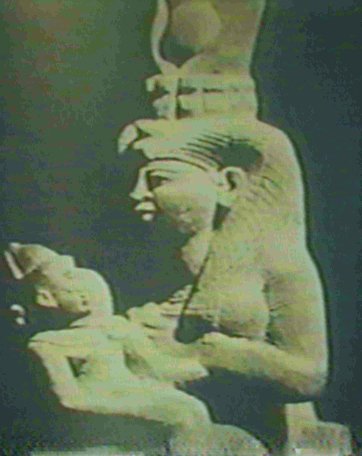 She ordered that a type of structure be built to symbolize the creative principles.
The ancient Egyptians called that structure the Tekhenu; the Greeks later changed the name to the Obelisk, but it is known in America as the Washington Monument.
She ordered that a type of structure be built to symbolize the creative principles.
The ancient Egyptians called that structure the Tekhenu; the Greeks later changed the name to the Obelisk, but it is known in America as the Washington Monument.
God Osiris
Goddess Isis
“You done taken my blues and gone.”
 King Amenemhat III about 2000 BC, and all of the kings before him, referred to the pharaoh’s capital as the Double White House, the centre of government.
Double White House
Tekhenu/Obelisk


That is the story which we can now document even better than it ever could have been previously, and a part of that documentation is demonstrated in the image shown here.
In order to get this story straight however, we need to follow certain rules. Wherever possible, we need to use primary sources rather than secondary sources. We need actual objects rather than hearsay, we need to see them rather than hear about them. That’s one of the rules that will be followed.
It’s because we don’t see the actual sources that we can easily be mislead about the information, and even dismiss it. We also have to keep the sources in proper sequence, in the right order, because if it is not put in the right order, the information still may not mean any thing to us. In other words, one reason that causes people to believe that Egypt is a white civilization rather than a Black civilization is because most of the information they have is of the last dynasty, that is, the Greco-Roman dynasty and not the first dynasty.
Those images will be put in order; things will be compared in a context, and instead of showing the picture of one person, you will be able to see the brother, sister, mother, father, aunts and uncles, so that when they are all looking alike, you can’t call the one person who looks Black disfigured, as they did with Akhenaten.
The proper Kemetic names will also be used as much as possible since much of African history is lost because others often use words that Europeans use to call African people. In other words, European settlers and explorers always change African names to European names, so that most of the names that we currently know Africa by are names that are not native African names. For example, if I were going to do a history of Cush, then the history of Black people in the world would be assured. But if the history of Africa is written, frequently it is written because initially it was called Africa by the Greeks, therefore you would be starting it at the point where the Greeks had knowledge of it, and this would be too late in African history.
So you will see that names are important. “Ethiopian” for example is important even though it’s a Greek word that means burnt face, or Black skinned people, which shows you the Blackness of Egypt. That’s what the Greeks were talking about at the time which was only a part of the continent of Egypt.
You will also see why it is important to use photographs as opposed to sketches by artists. Many of your history and archaeology books have artists sketches to show the images of pharaohs and queens, but you will find that they lose their African-ness and African definition when that is permitted to happen. So wherever possible, photographs of the primary sources will be used. Those are the rules being used to try to create this presentation.
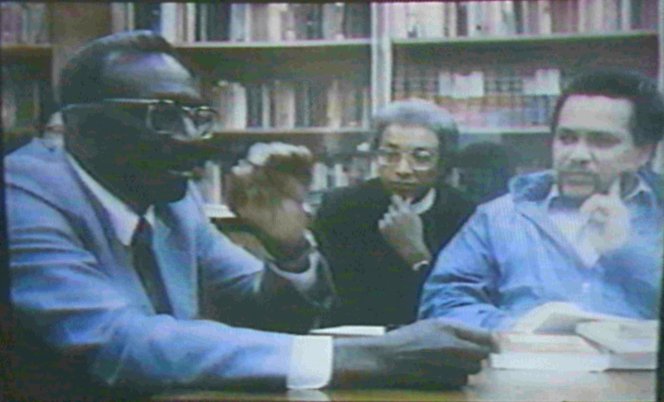 It is appropriate that this presentation is started with Doctor Geoff who was the single most important person in forcing the academic establishment in Egyptology to re-write the history of Africa. He forced UNESCO to join in the development of new book on African history called “The General History of Africa” by UNESCO. He debated his professors, and every time that he had debated them, the observers were almost unanimous in their agreement that he has defeated them with his information when discussing the African-ness and African origin of Egyptian civilization. That’s professor Cheikh Anta Diop on the left. When Dr. Geoff, debated his professors and others from Europe and Cairo at the Cairo symposium, the report was written in a book called “The Peopling of Ancient Egypt and the Deciphering of the Meriotic script.”
At the end of that report is this underlined conclusion, although the preparatory working paper from the appendix, that is to say, all the scholars who were coming to debate whether the Egyptians were Black or white, were told what they were supposed to do.
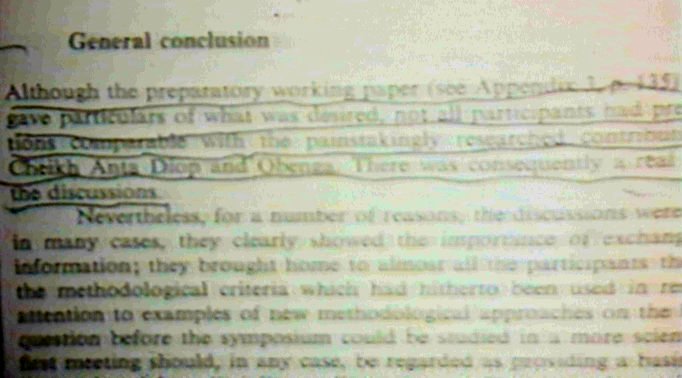
Although everybody was advised about the particulars, not all participants had prepared their work comparable to the painstakingly prepared contributions of professor Dr. Cheikh Anta Diop and Dr. Theophile Obenga. The important line is the last one which states that there was consequently a real lack of balance in the discussion, in other words, when it came time to put evidence on the table, only Dr Cheik and Obenga impressed those who were in attendance at that Cairo symposium.
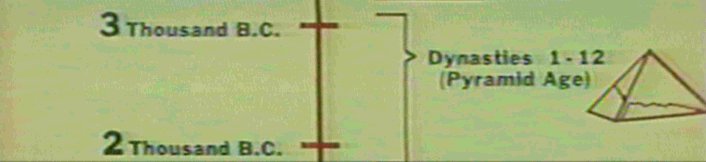
A chart has been summarized because when you use dates, it is important to keep this general framework of Egyptian history in mind, which starts around 3100 BC as the young child of Cush, so the focus will be mostly on Egyptian history since the best records are there.
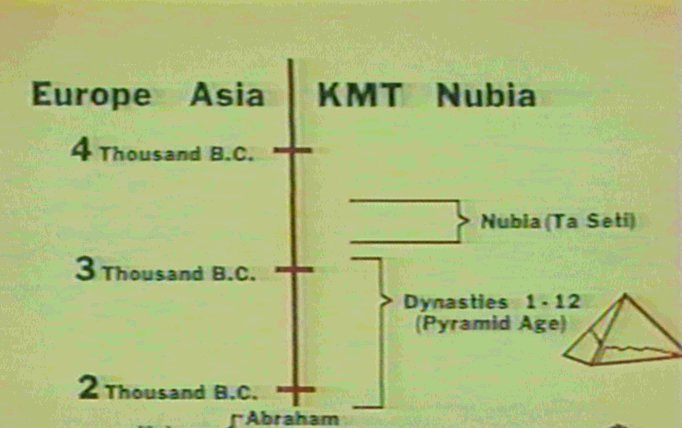
This line is about 4,000 miles long, and the importance of it is that it divides Egyptian history into African and African people’s history into 6 periods, from 4000 BC to 2000 AD, which gives you the chance to take a look at the history of Egypt in summary form.
You will notice that for the first 1,000 years, there are no invaders of Egypt from the outside.
At the top note Europe, Asia, KMT (Kemet) and Nubia, and on the right there is Nubia or Ta Seti, and that little bracket puts Ta Seti, the world’s first nation located south of Egypt, in Nubia. The date of Ta Seti is about 3300 -3500 BC which is much earlier than Egypt, and this is very important because it would be the parent of Egypt. It would be from the south, from this Ta Seti area, that the first king who unifies Egypt will come.
Notice that from 3000-2000 BC there are about 12 dynastic periods or 12 families of kings who ruled Egypt during that 1000 year period. The little pyramids to the side to show that the pyramid age occurred before Africa was invaded successfully by anyone from the outside. In other words, all the pyramids that were built in Egypt that matter were built in the first 12 dynasties. No Hyksos and no Asian invaders at that point
It is during the period of the 18th kingdom and during the period that Moses lived, that Black people take charge again. Notice the little building there, it indicates the temple age. That’s the first time you will see buildings that look like post office buildings which we say is Greco-Roman architecture. You’ll see why it’s called Greco-Roman architecture though it’s really African architecture. The Greeks and the Romans copied this architecture from the Africans.
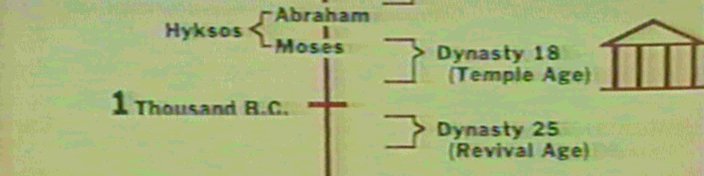
Note that in dynasty 25 there is a gap between 18 and 25, because during that period there are other Asian invaders and families that are either mixed or foreign that rule in Egypt. The Africans come back in during dynasty 25, and this is referred to as the restoration or revival age since they began to restore the culture of Africa.
Then we find the period when the Greeks and Romans come in. Remember it was stated earlier that one reason why people believe that Egypt is a white civilization is because they see what the Greeks and Romans who were there, left behind. But notice when they come in, at the 30th dynasty, about 300 years before Christ and 300 years after Christ. The Greeks had it for 300 years up until the time when Christ was born.

There is one other thing on this chart that’s important which is in Cush. The last bracket shows the period of the Kandake queens overlapping the period of Greco-Roman rule in Egypt. In other words, while the Greeks and Romans were ruling Egypt, women pharaohs were ruling Cush in Nubia; in other words, they were the queens who we call the Amazon queens. They actually had interaction with the Greeks and Romans. Alexander never conquered these women, Caesar never conquered these women, in other words, Greek and Roman rule went no further than Egypt, and it did not get into Cush in any meaningful way. There were some battles between one or two of the Caesars and one of the Kandake queens which occurred toward the end of the period.
Looking at our period again from the top, you will notice that the important factors are the nation of Ta Seti, the first 1,000 year pyramid age, the 18th dynasty temple age, the 25th dynasty revival age which signalled the end of political Black rule in Egypt, but not the end of Black cultural rule. This does not terminate until the establishment of a western church, the Christian Catholic Church at that point after the Council of Nicea. Then there was a 200 year war that was waged on African cultural units and leadership which resulted in finally either eliminating or driving underground the cultural leadership of Kemet, which then caused the destruction of Egyptian civilization.
This is the overall picture that will be shown using images, so that people will be able to refer to a time chart.
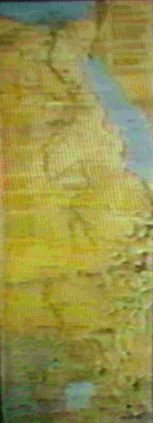 This is a very important map of the whole Nile Valley. At the bottom you will see a lake which is the source of the Nile River, called Lake Nyanza also known as Lake Victoria. Lake Victoria feeds one branch of the Nile, the White Nile, which begins a 4,000 mile journey from the highlands of Africa down to the Mediterranean leading to the top of the map. It is going down when it goes that way. It will be joined by a river that’s fed by a lake in Ethiopia, called Lake Tana, and that river is called, the Blue Nile.
A lot of people eat in Ethiopian restaurants most of which are called The Blue Nile all over the country. That’s because the Blue Nile is in Ethiopia. It is a fast river and most of the water that gets into Egypt actually comes from Ethiopia, but the slow river, which is The White Nile, comes out of Lake Nyanza but they join at Khartoum making this Nile the cultural highway of Africa through which the rest of the world is fed, and it is also the source of civilization.
In the middle of the map you will see where the Ethiopian civilization developed, and then later, when the river filled-in in the delta with enough dirt to build on, Egypt was then built as the child of Ethiopia.
Egyptians, always in their own history which they wrote as opposed to the history that other people wrote under the slavery and colonization period, had recorded this information. There were professors of history who wrote during the time of slavery and colonization who were much like the professors of history that would be in South Africa today. You would not expect them to write the truth about South Africa today, not if they are trying to justify their alien presence in a foreign land.
So what these professors did was to create an image that the Egyptian civilization was created by people who came from Asia, but you can’t find that Asian parent anywhere. Where are the buildings, the writings, and the cultural material that gives you the evidence that there was something from Asia that came before something in Egypt which created the things you saw in Egypt? There is no evidence whatsoever, but you will find plenty of evidence that the reverse was true, including the words of the Egyptians themselves; “we came from the source of the Nile”.
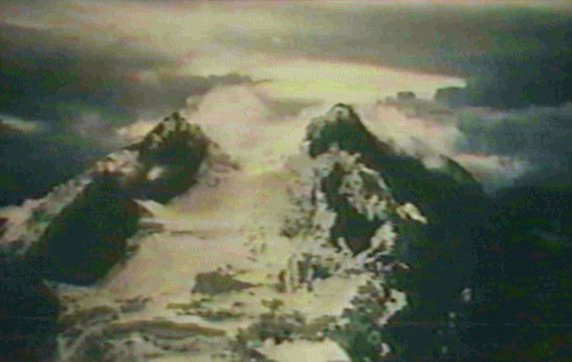 If you look at that map it means that they either came from Ethiopia or Uganda. “We came from the foothills of the mountains of the moon”. Mount Ruwenzori and Mount Kilimanjaro are both called Mountains of the Moon.
In fact Mount Kilimanjaro in Kiswahili translates into English as Mountain of the Moon, so if you take the Egyptians own words as to where they came from, then they came from the hinterlands of Africa, up river, up south in the mountainous areas, up the Nile, near the mountains of the moon which would take them either into Ethiopia or the Uganda, Kenya, Tanzania areas.
So these Egyptians created one of the world’s first civilizations and did not come out of the sky, we’re not space people or aliens on space ships, but came from the inner part of Africa?
They came from the little villages of Africa, and those little villages by the way at sometime may have been much larger that we imagined. This highway was always heavily populated for all the 6 types that came down that highway finding their way into other parts of the world.
You can take your biblical history if you want, where many of our people are labouring under the myth of the curse of Ham believing that Black people are in trouble because Ham was cursed by God. Of course the Bible never said that, it says that Noah cursed Canaan not God cursed Ham, so we got that all confused.
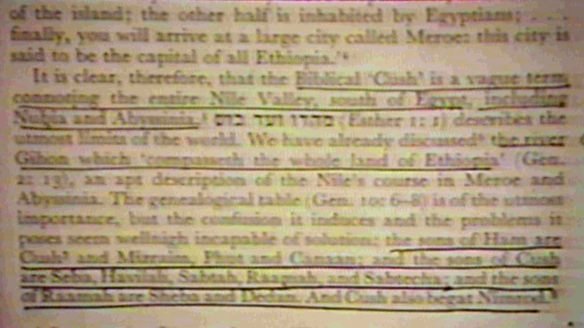
Canaan was a child of Ham who represented the Black people in biblical history, and this included all the people starting with Egypt going all the way to the south. This conforms to the archaeological and historical traditions.
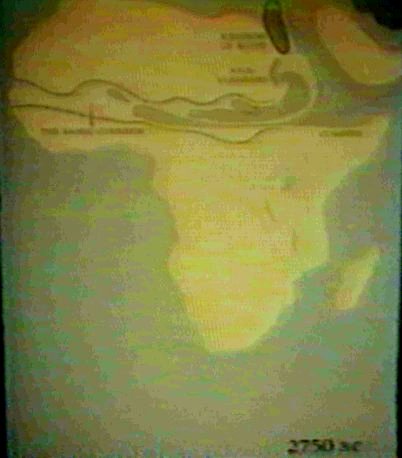 This penguin map of Africa attempts to represent the fact that about 2,700 BC, there were migrations from East Africa over to West Africa. What looks like water or smoke going across the continent to the left is moving from the Nile Valley over to the area where Nigeria, Ghana, Sierra Leon and so on are, in other words, what this shows is that over time there were many migrations, with this one occurring around 2750 BC right down the Sahile corridor. So the explanation for where did the Nigerians, Ghanaians and Malians come from, is that they were originally Nile Valley People who either migrated out or were driven out of the Nile Valley. So that there is a physical and cultural connection between West Africans and East Africans, that is, both North-East and South-East Africans.
But some people will ask, “so why are you spending so much time talking about the Nile River, about Kemet or Egypt, when in fact, Black people came to America from Liberia, Ghana, Nigeria and so forth?” That is not even correct, because most Black people came to America at the time the United States got into the slave trade about 50 years before it stopped, and by that time the main source of the slaves was Angola and Mozambique.
In other words, most Black people came from East Africa, Mozambique, Angola, West and Central West Africa to America, which was the largest crop of Black folk that were brought to America during the slavery period. So it doesn’t matter except to show that the migratory pattern across the continent suggests exactly what Dr. Diop had talked about, which was the cultural and physical unity of the African people throughout the continent of Africa.
Here is a picture of a monument in Africa that is called the sphinx by the Greeks, but you can tell by the spelling that it is not an African name. The African name for this monument is Hor em Akhet or Horus, meaning (God) of the horizon.
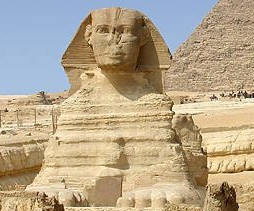
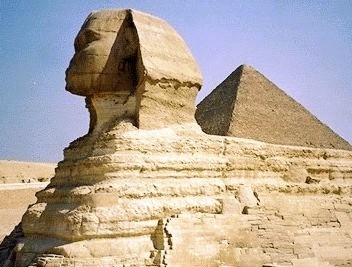 Some people suggest that it’s actually the face of a woman, maybe Virgo, and that the lion’s body could be Leo, but this is not known for sure. It is not known either if it is Pharaoh Khafre, one of the pharaohs of the 4th dynasty, as suggested by some scholars.
There is not a mark on this monument where any pharaoh claims that he built it, so this would be pure speculation that it is Khafre. However, there is some information that Khafre repaired the statue during his reign, but it doesn’t say he built it, only that he fixed it.
John Jackson in his book provides the evidence for the fact that it is really about 10,000 years old, and this would take it way back before the beginning of Egypt, even before the time of the pyramids.
Most people try to make it after the step pyramids and during the time of the building of these other pyramids that you can see behind. In any case it doesn’t matter for this argument whether it’s old or young, but if that is Pharaoh Khafre, then we have got something that is very interesting with respect to the Black origins of the Egyptians.
Notice that the nose and mouth on this are damaged. Chancellor Williams makes a big point of the fact that the officers and men of Napoleon’s army in 1798/9 actually trained their rifles and cannons in an attempt to destroy and deface this monument. The beard is gone now, which is in the British museum, and it is believed that the nose is also in the British museum.
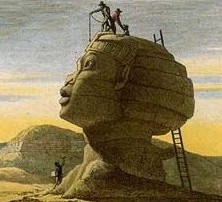 Now take a look at that same monument not from the front, which is what most tourists see, but from around the side where the buses don’t stop when they come down the hill, and look at his profile. But first, take a look at his profile as drawn in a book by Baron Denon who saw it when Napoleon was there. He was one of the 75 or so professors whom Napoleon took with him to study Egyptian history, and this eventually became the beginning of what is now called Egyptology. That is, Napoleon took professors with him when he conquered in Egypt and brought back information, since Napoleon had a lot of respect for the information that existed in Egypt, even though he may not have had much love for the colour of the people who did it. So this is the side view of that monument.
Now because one of the rules is that you should never depend on sketches when you have a chance to look at the information first hand, let’s go back to the side view of this sphinx and you can see at the profile the high cheek bones, the thick lips and even with the full nose missing, you can clearly see what all historians in the past have recognized as an African, a proto-typical African. So anyone who would look at this and say they are looking at a white person has to be guilty of perceptual distortion or denial of reality.
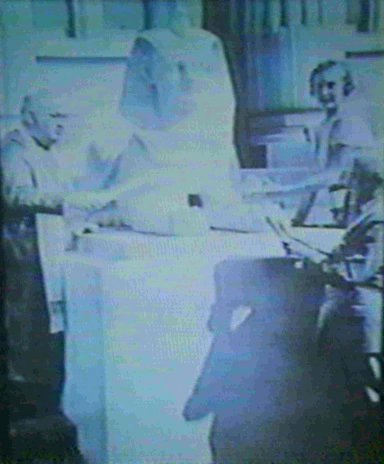 Then if that one is real, who authorized this one? Where did this sphinx come from? The question would be, which one is older? Clearly this one was developed in the United States at the Rosicrucian museum in San Jose, California, and so anyone going through the museum and looking at this image might get the impression that the ancient Egyptians were white.
You would have to know that this was created specifically for this building and did not come from anywhere in Egypt, but even if it did and it looked like that, it would have come during the Greco-Roman period which as you saw on the time line, is the last dynastic period when the Greeks and Romans began to imitate the art and architecture of the ancient Egyptians.
This is an example of the power which the culture of Africa had over the minds of its conquerors, so that those conquerors were so impressed that they began to imitate the cultural forms, not merely the dress, but the religion, the politics, the economics and so forth.
Who are these Rosicrucians?
Rosicrucians are one of the secret brotherhoods or societies like the Masonic Order, and it is interesting that they turn to Egypt as the source of their symbolism and as the source of the organizing principles of their brotherhood, as do churches and others, because that really is the source. It is not strange therefore that Rosicrucians or the Masons would do that, but also Christians, Jews and Arabs do it, they all have to Return to the Source in order to explain their own beginning.

 |
 |
 |
 |
 |


