 |
|
|
|
|
|
|
|
|
|
|
|
|
|
|
|
|
|
|
|
|
|
|
|
|
|
|
|
|
The Possibilities of Solar Energy and How PV Cells Work |
|
|
|
 |
|
|
|
 |
|
|
 |
|
|
|
|
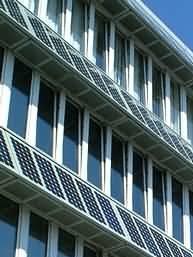
On a bright, sunny day, the sun shines about 1,000 watts of energy per square meter of the earth's surface. If we could collect all of that energy through photovoltaics, we could easily power homes and offices everywhere for free. |
|
|
|
|
|
|
|
|
|
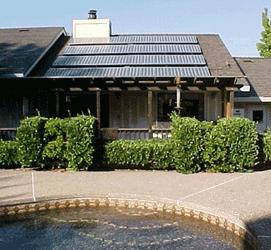
Using Photovoltaics, we could power all of our homes and offices, which would save us a very significant amount of money as well as keep our environment much, much more clean. |
|
|
So, How do PV Cells Work? |
|
|
|
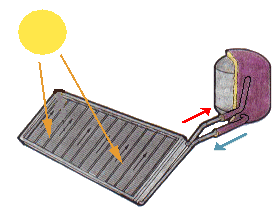
Photovoltaic is the most popular and efficient type of solar energy converter. Photovoltaic cells convert sunlight directly to electricity, bypassing the mechanical generators required for conventional electricity. PV stands for photo (light) and voltaics (electricity). Essentially sunlight photons free electrons from silicon. |
|
|
|
 |
|
|
|
|
Photovoltaic cells are composed mostly of a material called the semiconductor. The semiconductor absorbs the sun's light and the photons in the light knock free electrons in the semiconductor. These loose electrons are then attracted to metal receivers on either side of the PV cell. The metallic bonding in the metal allows a current of electrons, which is then the source of your new solar electricity. |
|
|
|
|
|
|
http://www.re-solutions.org/English/Hotwater.htmlhtt |
|
|
|
|
|
Previous Page |
|
|
|
|
Next Page |
|
|
|
|
|
|