|
What
is Henna?
What is Mehndi, Mehandi, Mehendi?
What is the colour of the henna stain?
How long does the stain last?
How is henna paste applied?
Is henna application painful?
What
is Henna?
Henna,
also known as Lawsonia inermis is a shrub native to Asia and the
Mediterranean coast of Africa, and thrives mostly in warmer climates
all over the world. Its leaves contain hennotannic acid, a red
dye that bonds with the collagen in skin cells and keratin of
fingernails and hair, staining the area in shades of red or brown.
The
leaves of the henna plant are harvested, dried, and ground into
a fine powder. This powder is widely used as a hair colorant with
conditioning properties, and for the ancient art of mehndi.
What
is Mehndi, Mehandi, Mehendi?
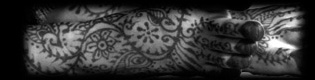
Mehndi
is the name of the ancient art of painting patterns on the body
with henna paste, and the resulting stains left on the skin. The
paste is made from powdered dried henna leaves and a variety of
ingredient, some of which are: lemon or lime juice, black tea,
coffee, rose petals, orange blossoms, essential oils, cloves,
tamarind, and sugar. Mehndi is a temporary form of body painting
and adornment.
What
is the colour of the henna stain?
Once
the paste has dried and scraped off, the initial stain is usually
yellow-orange in colour. Over the next 24 to 48 hours, with exposure
to air, the stain will oxidize and darken. The final stain will
be in the range of dark orange, red or brown.
Variation
in the exact shade and darkness of the final stain depends on
the body chemistry of the individual, the area of body painted,
and the length of time the paste is left on the skin.
How
long does the stain last?
The
longer the paste is left on the skin, the deeper the dye will
penetrate the epidermis (outer most layer of the skin), resulting
in a darker and longer lasting stain.
It
would last longest, up to 2 weeks, on thick, dry and coarse skin
texture such as hands and feet. On areas where the skin is thinner,
such as arms, chest and back, the stain would fade more quickly,
lasting anywhere from 3 to10 days. The stain will fade gradually
following the natural skin exfoliation and regeneration process.
For
the darkest and longest lasting stain, apply the paste to hands
and feet, keep the painted area warm, and leave the paste on at
least 8 hours.
How
is henna paste applied?
There
are many different ways to apply the henna paste on the skin.
For example, in Morocco, henna artists often use syringes with
a blunt point. The tool of choice in India is rolled up plastic
cones similar to pastry piping bags. In Africa, saliva is mixed
into the powder and then formed into balls and lumps of paste
for a rudimentary application and design.
Throughout
the centuries, the methods of application have been varied and
creative; from twigs, porcupine quills, pieces of silver wire
to saliva. Modern day henna artists mostly use plastic cones,
syringes or small squeezable bottles to transfer the paste to
the skin.
Is
Henna application painful?
No,
the application process is not painful at all as the mud-like
paste is applied or “laid” on the skin surface. The
skin is not pierced or broken as in tattooing with ink. The henna
paste will feel cool on the skin due to the cooling properties
of the henna plant. If the paste has been added with essential
oils like eucalyptus or tea tree, some tingling sensation might
be felt. It’s pretty much like applying medicated oil on
the skin!
|