|
|
||
 |
||
|
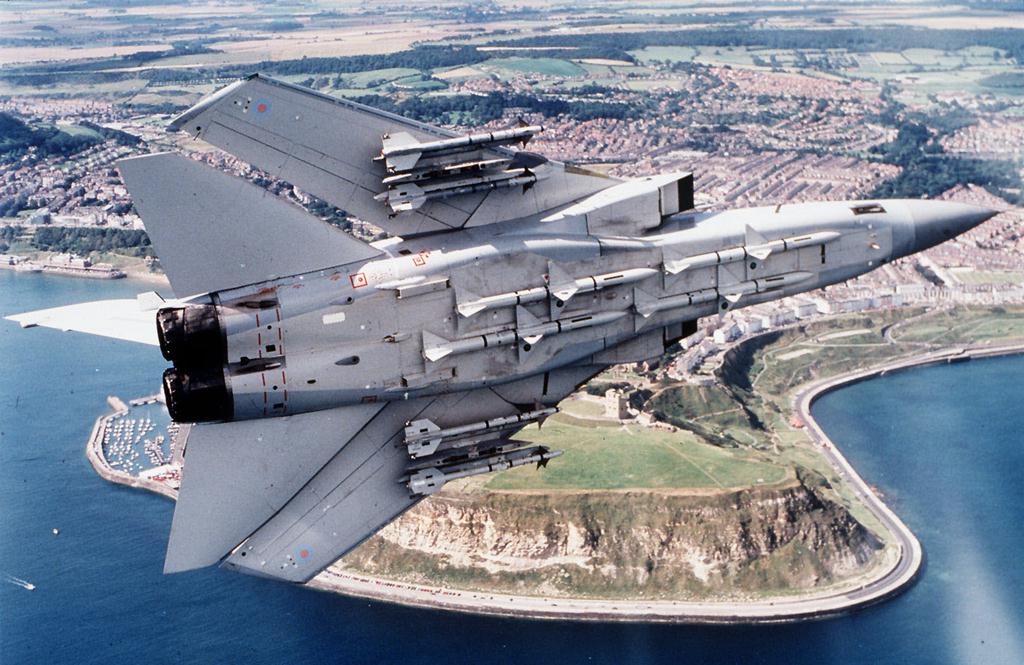
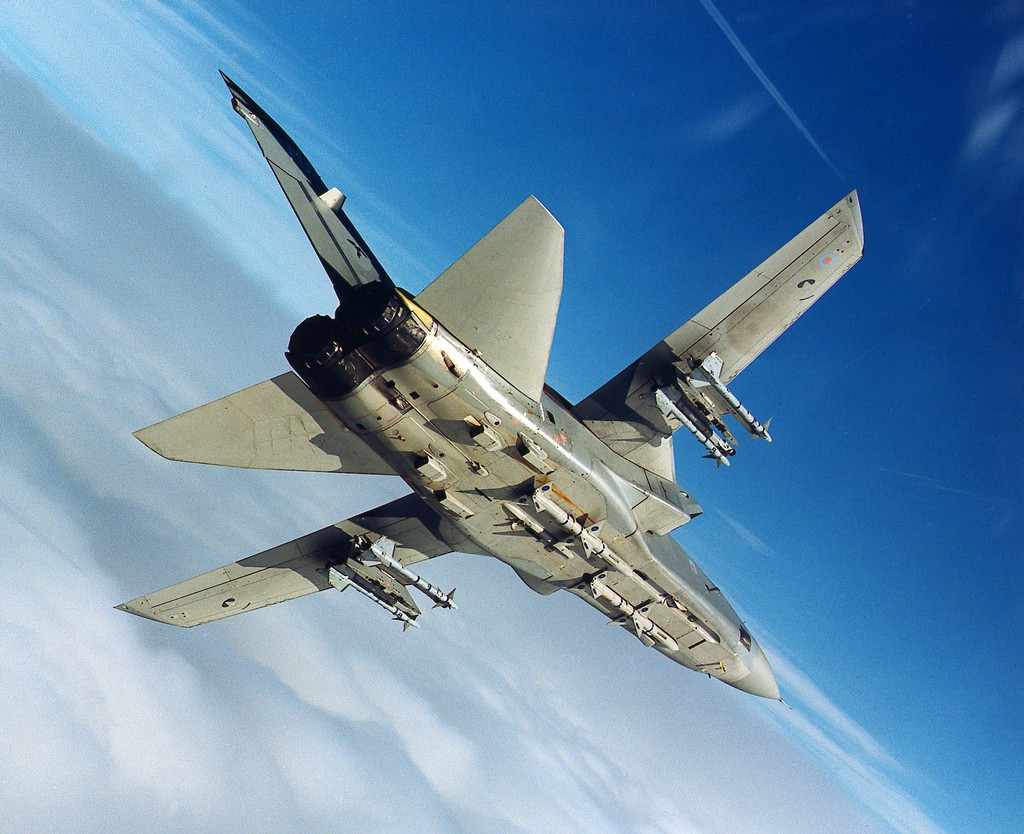
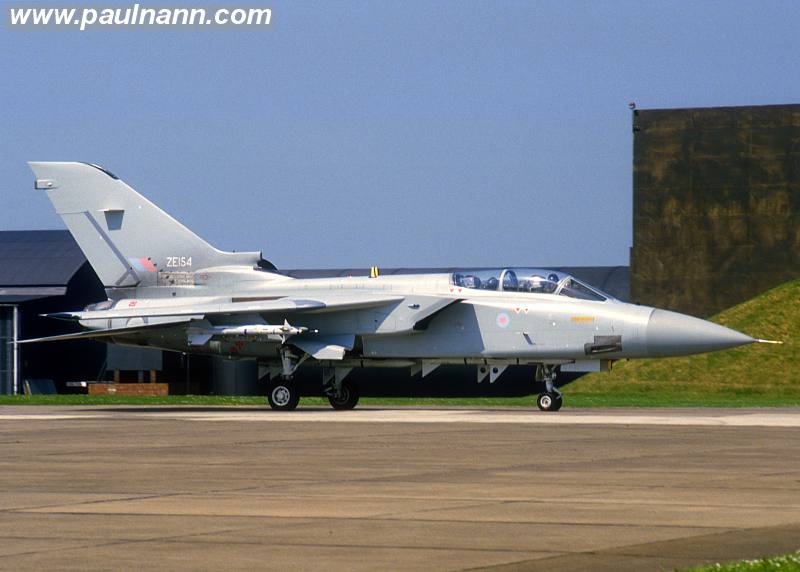
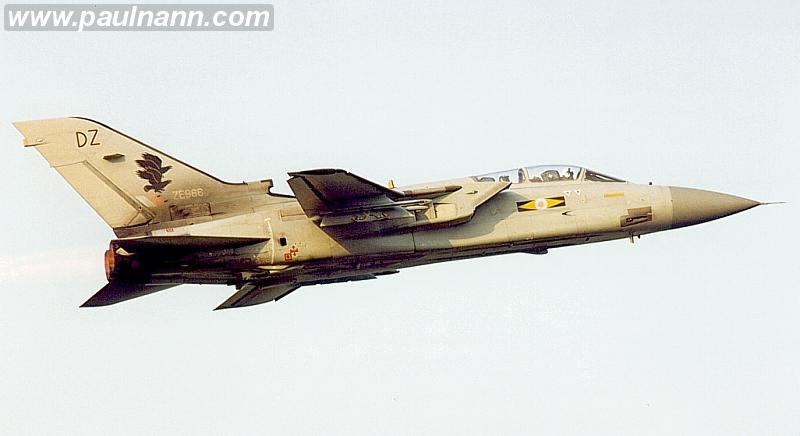
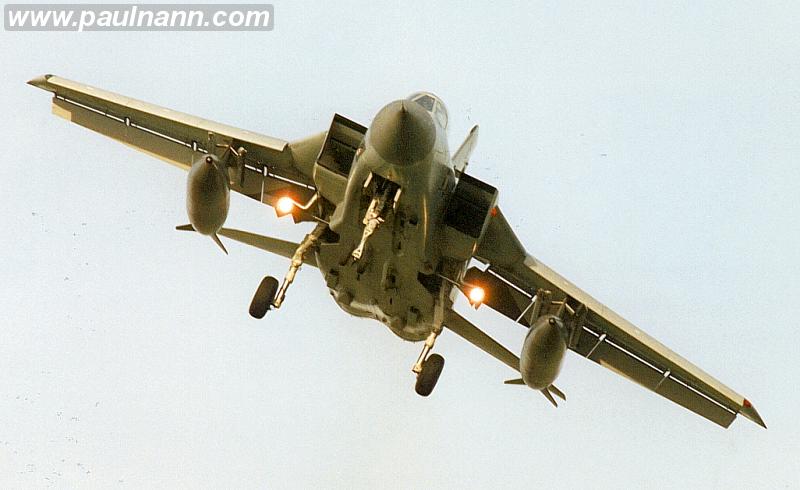
The Tornado ADV (Air Defence Variant) is the RAF's primary interception aircraft. Developed from the Panavia Tornado IDS, the ADV is optimised for interception & is designed to engage its targets with medium or long-range air-to-air missiles. An RAF requirement for a Phantom replacement led to Panavia (which had nearly completed the MRCA (Multi-Role Combat Aircraft) project it had been set up to produce) submitting designs to the RAF for an all-weather air defence aircraft fitting the requirement based on the Tornado. The project was initiated officially in March 1976. Development was speeded by the fact that the ADV shared 80% commonality with the IDS, & so existing IDS airframes & equipment could be used instead of building new ones. One of the major differences between the ADV & the IDS was the ADV's larger nose radome & extended fuselage to accommodate the new Texas Instruments AI-24 Foxhunter radar. The ADV would have to defend a massive area of airspace known as the UKADR (UK Air Defence Region), & so would have to have increased fuel capacity. The ADV also had an increased service ceiling (70,000ft) & uprated engines. The Tornado's primary task during the Cold War was to intercept Soviet bombers & escort them away from the UKADR. The bombers were expected to be armed with long-range ALCMs if they were to strike against the UK, so the Tornado would have to be able to both detect & fire on a bomber before the bomber either detected the Tornado or fired its missiles, & also intercept the missiles if they were fired. As a result, the British Aerospace Sky Flash AAM was selected to arm the Tornado. It had the advanced capabilities & performance to perform in the long-range interception role, & formed the Tornado's primary armament. The drag imposed on the aircraft by the missile was sufficient enough to slow down the Tornado, & so the missile was recessed in the fuselage. The ADV could also carry AIM-9L Sidewinders & had two 27mm Mauser cannon similar to those in the Tornado IDS. The Tornado ADV performs three main missions. These are: Subsonic Intercept (Unrefuelled): In this, the Tornado can intercept to a range of over 1,000 nm, allowing for 10 minutes combat on a high-level transit. Supersonic Intercept (Unrefuelled): The Tornado intercepts to over 300 nm, with 10 minutes Combat. Combat Air Patrol (CAP) Short Range, Long Duration: CAP distance from base is over 325 nm, with a medium level loiter. After the Cold War ended, the ADV had little to do, but was involved in the Gulf War & several other recent conflicts in the CAP & QRA Intercept roles. Only the UK ordered the ADV initially, but Italy's AMI was leased 24 aircraft by the RAF & Saudi Arabia ordered 24 aircraft built to F.Mk2 standard. The RAF's order totalled 18 F.Mk2s & 155 F.Mk3s, all of which will be replaced by the Eurofighter. |
||
 |
||
|
Panavia Tornado ADV Role: All-weather air defence aircraft Powerplant: two 7,493kg (16,520lbs) Turbo-Union RB.199-34R Mk104 turbofans Performance: Max. Speed 2,337km/h (1,452mph); Operational ceiling about 21,335m (70,000ft); Intercept radius more than 1,853km (1,150 miles) Dimensions: Wingspan 13.91m (45ft 7.75in) spread & 8.6m (28ft 2.5in) swept; Length 18.68m (61ft 3in); Height 5.95m (19ft 6.25in); Wing area 26.6m2 (286.3ft2) Weights: Empty 14,501kg (31,970lbs); Max. take-off weight 27,987kg (61,700lbs) Armament: two 27mm IWKA-Mauser cannon with 180rpg; six external hardpoints with provision for up to 5,806kg (12,800lbs) of stores, including Sky Flash & AIM-9L Sidewinder AAMs & drop tanks Service: The Tornado ADV is in service with the RAF (155 F.Mk 3s) & RSAF (Saudi Arabia) Operational Status: The RAF's Tornado F.Mk 3s will be replaced by the Eurofighter Typhoon |
||
|
[Back to Air Defence] [Home] [Jet Net UK Warzone] [Jet Net UK Photo] [Contact Jet Net UK] |
||
