Arts Abound
Painting
You’ve got your acrylic paint, your work surface, and you’re really inspired to paint. But how exactly do you do get started? Here’s a guide to acrylic painting techniques for beginners that will help you begin your artistic journey.
Once you’ve assembled all of the necessary tools for acrylic painting, you’re ready for the fun part: putting paint to paper or canvas. Here, we’ll explore some easy key techniques for applying paint, mixing color, and building paintings so that you can paint like a pro in no time.
Basic Techniques
Dry brush
When paint is applied to canvas or work surface using a dry brush and paint undiluted by water, you’ll create a strong current of color on the page. Your lines will be uneven, as they won’t have water to soften the edges, but this can be a purposeful painterly effect. Dry brush application lends texture and movement to lines.
Washing
You can treat acrylic somewhat like watercolor when you dilute the paint with enough water. You can use the watered down paint to apply translucent washes on your surface. However, unlike watercolor, the acrylic paint will set permanently. Mixing wash and dry brush methods can be very effective in creating a variety of textures in a single piece.
Stippling
This is a method used in drawing which can also be used with paint (Georges Seurat’s work is a fine and famous example). Creating an assemblage of tiny dots to create imagery can be an effective way to show texture and to create a compelling scene with subtle variations in color.
Flicking
Using a fairly wet brush, you can flick paint onto a work surface for an uneven splatter effect. It’s fantastic for creating an abstract landscape or a starry night or for just adding texture to a piece.
Dabbing
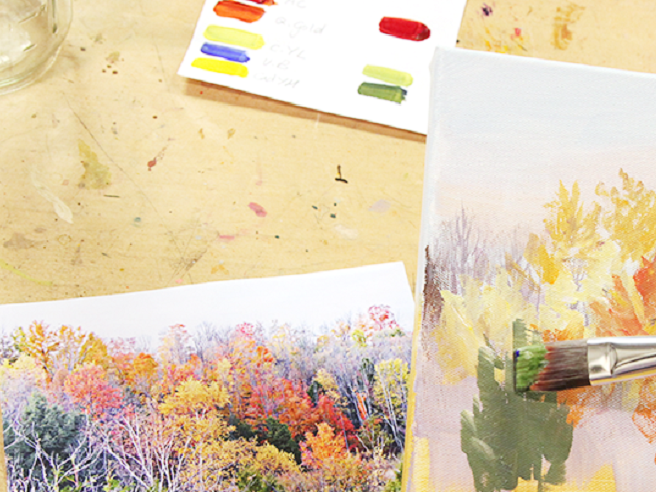
Using a corner of a sponge or even a piece of paper towel, you can dab on accents of color. Think of it like very artistic sponge painting. Dabbing adds a lot of texture and movement to a piece. For instance, on the painting above, dabbing with a sponge perfectly captured the texture and movement of trees swaying in a light breeze.
Detailing
A small, fine brush can be used to apply details, such as the whites of eyes or the glisten on the wing of a bird. In our tutorial on how to draw eyes, you’ll get a fantastic primer on detail work in acrylic, which can carry over to different subject matters.
Palette Knife
Applying paint with a palette knife is an instant way to make your painting “artsy.” It might seem intimidating or advanced, but it’s a technique accessible even to beginners. Simply use the palette knife to scrape up a bit of paint and apply it to your work surface. Pretend that you’re artfully spreading buttercream on a cake or even butter on bread, and you’ll get the idea pretty quickly.