CONDITIONING YOUR BREEDING PAIR
Spawning is very stressful for the male and female. They must be in good health, conditioned well with live foods and multiple feedings at least 2 weeks in advance before you put them in the breeding tank. Live food can include white worms, micro-worms and hatched brine shrimp. You also can use along with the live food, freeze-dried bloodworms and freeze-dried brine shrimp. Be sure to keep the water very clean during this time.
BREEDING TANK SET-UP
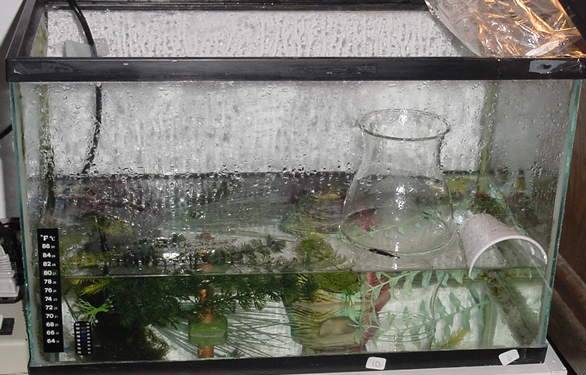
* 5 or 10 gallon tank
* Thermometer
* Some live plants to put in the breeding tank. (Ex. Java fern or moss)
* Heater
* Half of a styrofoam cup
*Hurricane Lamp to put the female in
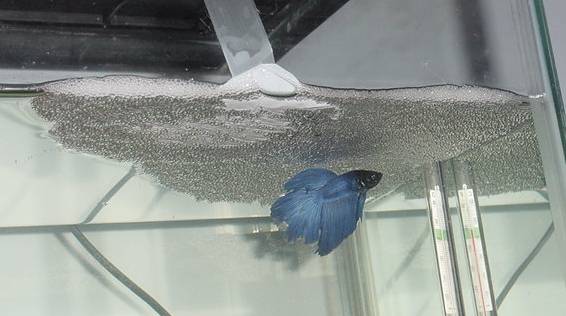
Find a quiet undisturbed place to set up your breeding tank. Put the water level to about 7 inches and put in some plants for the female to take cover in. Attach half of a styrofoam cup in one corner for the male to build his nest under. Put your heater in and get the water temperature between 80 -84 degrees.
INTRODUCING THE PAIR
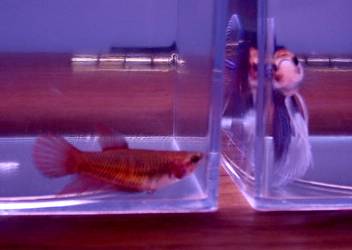
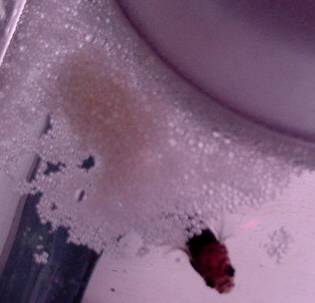
Place your female in the breeding tank and put the hurricane lamp over her. The hurricane lamp works great because it does the least amount of damage to the bubble nest when you pull it out to release the female. Then place your male in. He will immediately start to flare and show- off to the female. Usually within the hour he will start building his bubble nest. By the next morning he should have a nice size nest in the works. Now you need to consider releasing the female. Release the female if she is showing the following signs of being ready to spawn:
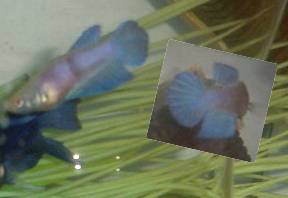
* Vertical stripes (very noticeable in darker colored females)
* Plumped with eggs
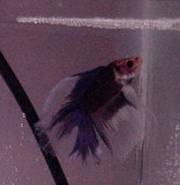
* Swims in a head down position, following the male instead of avoiding him when he approaches the hurricane lamp.
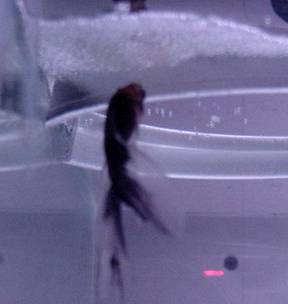
Once the female is released the male will usually start chasing and nipping at her fins right away. The female gets very stressed from this and the change in her appearance can be distressing to see. She actually looks swollen and her fins are clamped tight. She will either stay absolutely still, as if thinking the male won't notice her, or she is being chased around the tank. He will alternate chasing her and working on his bubble nest. This can go on for the whole day into the next. Do NOT turn off the tank light at night. It needs to stay on. When the female is ready to mate she will try to approach the male under the bubble nest. He will usually attack her and try to chase her away. She will usually do a couple of laps around the tank and then come back under the bubble nest swimming in a head down position. There usually is some biting from the male but once he realizes she is ready he will stop attacking and attempt to "wrap" her. (note: if spawning has not taken place within 36 hours then you may want take them out of the breeding tank to try at a later time)
THE SPAWNING
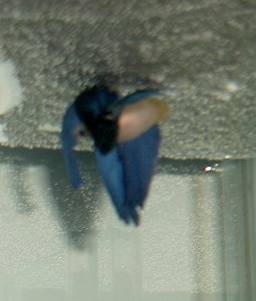
The male will wrap his body around hers and squeeze the eggs out of her. Usually you won't see any eggs drop the first few attempts. Then they will start dropping. After each embrace the female will seem to be stunned and float to the top in the "S" position while the male gathers up the eggs and blows them in the bubble nest. The female will "come to" after a few seconds and help the male pick up the eggs. This activity can go on for a couple of hours or even up to 12 hours. When the male is finished he will then chase the female away from the bubble nest. That is the time to remove the female from the tank. Put her back in her bowl with some BettaMax. You should also do this for the male when it is time to remove him. Make sure to feed them right away too.
HATCHING
The male will stay diligently under the nest moving the eggs around. The eggs will start to hatch in 24 to 48 hours. You will start to notice movement in the eggs and then if you look very carefully you will see little tails poking through the eggs. Usually LOTS of little tails! Then the fry will start to drop out of the nest. This is when the male gets really busy. He picks them up with his mouth and puts them back in the bubble nest. Make sure to leave a night light on at night in case they start to hatch. It is important that the male can see the eggs to pick them up. Also do not put any gravel in the bottom of the tank for the same reason. The eggs usually start dropping all at once. Each spawn is different. Sometimes all the fry will drop continually and then other spawns hardly any fry will drop at all. The male will be picking up the fry to blow them back into the bubble nest literally all day and night for sometimes up to 48 hours. That is why it is so important that the male be in good health and well fed before breeding him. He usually will not eat during this time.
When you notice that the majority of the fry are free swimming and not dropping to the bottom this is the time to remove the male. His job is done. You risk having him start to eat his fry if you leave him in any longer. When the fry are free swimming that means that they have eaten the yolk of their egg that sustained them the first 24 to 48 hours. Now is when they will start looking for food.
Now you are ready to go to Fry Care 101!